

























































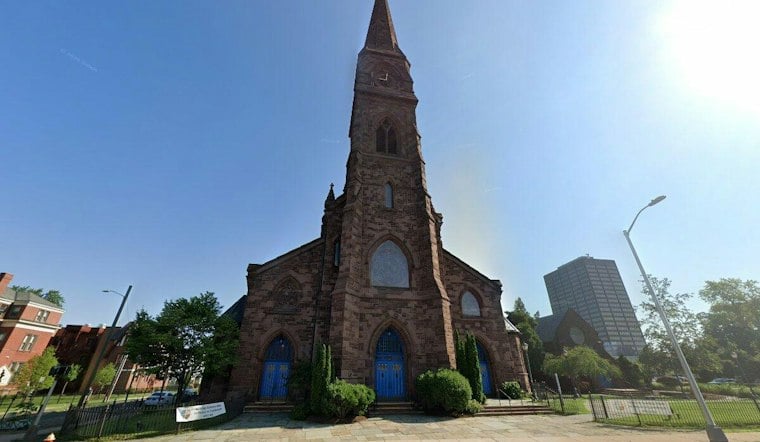
Asylum Hill Congregational Church’s new King and Queen costumes are one part of a larger wardrobe effort: the church says it owns, stores and maintains costumes for a cast of more than 100, including garments for performers of different sizes. For the festival’s 60th-anniversary year, the committee replaced costumes that were about 30 years old with designs made from scratch, We-Ha reported. The outlet said the festival was scheduled for Jan. 9 and 10 and that the new outfits were expected to be ready.
The church’s costume program has developed beyond occasional repairs or replacements. Its account traces a shift from simple early garments, including bathrobes, and rented period clothing to members making costumes themselves after some were purchased in the 1980s. The effort grew to producing about 20 costumes a year, according to the church’s history of the program. The church account and We-Ha report describe the collection and this year’s new costumes, but do not say what will happen to the replaced garments.
Different approaches to theatrical wardrobes
The church’s work is one model of costume stewardship: maintaining a collection for its own recurring festival. Hartford Stage offers a professional-theater comparison, not a description of the church’s methods; the theater’s assistant costume shop manager has described productions involving hundreds of built, pulled or rented costumes in the shop, according to Hartford Stage. Separately, the New York City-based Broadway Green Alliance says it collects select items for reuse and recycling for the local theater community. That program is a reuse outlet, not evidence about the fate of Asylum Hill’s retired costumes, according to the alliance.
The broader waste context is substantial, though the available data do not measure the church’s wardrobe: a 2009 statewide study cited by Connecticut DEEP estimated textiles at about 4%—96,500 tons—of Connecticut’s disposed waste. That figure describes the state’s waste stream in that study, not the reuse or disposal of these particular costumes, DEEP says.
The festival also belongs to a wider tradition with a documented American history. The Living Church reports that the Boar’s Head Festival began as a public celebration in the United States at the Episcopal Hoosac School in Hoosick, New York, in 1892, while noting that earlier origins are uncertain. That history provides context for the pageant tradition, but does not establish a direct link between that school’s celebration and Asylum Hill’s costume program, The Living Church reports.





