

























































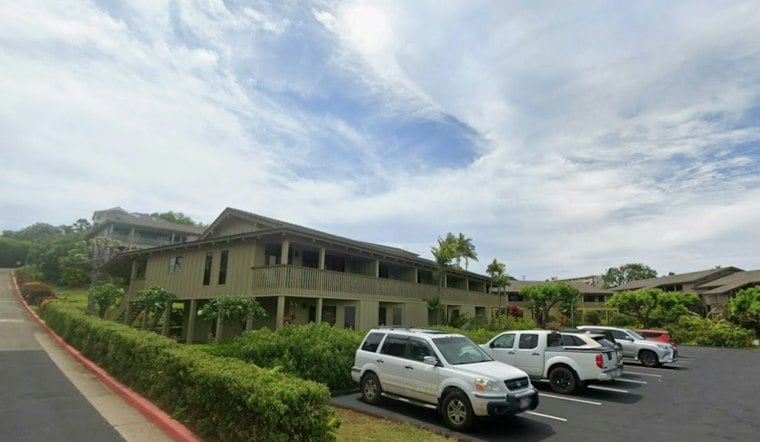
Two nonresident visitors who stayed at Nihi Kai Villas, a multibuilding condominium property on Kauaʻi, have been confirmed with Legionnaires’ disease, and state health officials say they are now investigating the cases. The announcement came in a news release dated November 4, with the Hawaiʻi State Department of Health’s social media post about the cases displayed as published on the same date.
According to a post from the Hawaiʻi State Department of Health
, the agency is investigating two confirmed cases of Legionnaires’ disease in nonresident visitors who stayed at the Kauaʻi property. The department’s post described Nihi Kai Villas simply as a multibuilding condominium complex on the island, without specifying which building or unit may be involved. No information on how the visitors may have been exposed, when their symptoms began, or their current condition has been released.
Legionnaires’ disease is a severe form of pneumonia caused by Legionella bacteria, which typically spread through contaminated water systems rather than from person to person. As a report on a separate Kauaʻi case noted, published by KHON2, “the disease is not spread from person-to-person.” That detail applies broadly to how the illness functions, though the Nihi Kai Villas investigation itself has not disclosed any findings about a source of exposure at the property.
A Second Kauaʻi Property Faced Similar Scrutiny in 2016
A Kauaʻi lodging property had also drawn a Legionnaires’ investigation in 2016. KHON2 reported that officials separately confirmed two cases of Legionnaires’ disease involving people who had stayed at the WorldMark Kapaa Shores Resort. In that earlier case, the station’s report said the department was apprised of the cases in mid-May and advised the hotel at that time, after which the hotel secured an environmental consultant to evaluate its water system.
The same report noted that the department was later notified of a possible third case involving someone who had also stayed at WorldMark around the same time as the two confirmed cases. That investigation involved a different Kauaʻi property than Nihi Kai Villas, and nothing in the available record ties the two cases together beyond their shared location on the island.
Mainland Cases Show How Investigators Trace the Bacteria
Legionnaires’ outbreaks tied to lodging facilities are not unique to Hawaiʻi. In Illinois, two confirmed cases of Legionnaires’ disease were linked to the Hilton Garden Inn North Shore/Evanston, according to NBC Chicago. Testing by the Illinois Department of Public Health in August found Legionella bacteria in both the pool and hot tub areas of that hotel, and those areas had been closed since September 2 in response to the findings, the outlet reported.
That same Illinois report cited state data showing 134 Legionnaires’ disease hospitalizations and 14 deaths in the state that year, underscoring how serious the illness can become when it spreads through a building’s water or ventilation systems. Nationally, the CDC tracks reported Legionnaires’ disease incidence by jurisdiction going back to 2014, though the agency notes that its 2024 and 2025 figures are still based on provisional data.
No such testing results, closures, or remediation steps have been reported at Nihi Kai Villas. The Hawaiʻi State Department of Health has not released additional details beyond confirming the two cases and identifying the property, and it remains unclear what, if anything, investigators have found regarding a possible source at the Kauaʻi complex.




