

























































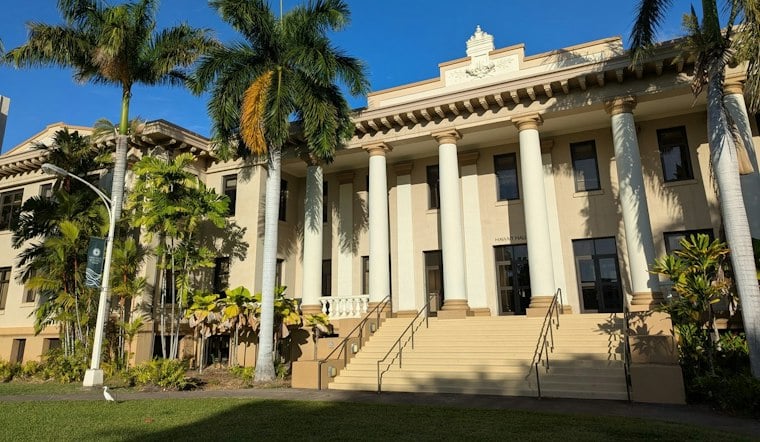
Hawaiʻi has landed the No. 2 spot nationally for the lowest college costs relative to household income, according to a new report, with the state's higher education expenses equaling just 35.87% of median household income. Only Utah scored lower, at 27.58%, while Nevada came in just behind Hawaiʻi at 35.88%.
The ranking comes from a national report on college education costs that WalletHub released on November 12, as detailed by the University of Hawaiʻi System News. The study evaluated in-state undergraduate tuition, room and board, and additional college costs relative to local earning power, placing Hawaiʻi 47th out of 48 states assessed for higher education costs relative to household income. WalletHub's methodology, as described by International Business Times, compared attendance costs for full-time, in-state undergraduates living on campus — including tuition, fees, room and board, books, supplies and other expenses — against each state's median annual household income. That same reporting cautions that the resulting percentages do not represent the share of income families actually spend on college.
Alaska and Wyoming were excluded from the sample due to data limitations, according to WalletHub. In the broader comparison, 21 states had annual college attendance costs exceeding half their median household income, while Rhode Island sat at the opposite end from Hawaiʻi, with one account from Becker's Hospital Review putting its costs at roughly 90% of the state's median household income.
UH Officials Point to Low Debt Burden
UH President Wendy Hensel said attending an in-state public institution offers value and a path to debt-free graduation, according to the university system's news release. Hensel added that UH is committed to keeping high-quality education accessible and affordable for local students.
That framing lines up with separate debt figures UH has highlighted. Hawaiʻi borrowers ranked second-lowest in student debt among states, per a September 2026 WalletHub report cited by the university. Among UH community college graduates in 2024-25 who had started as first-time freshmen, 94% completed their credentials with zero student debt, while 67% of UH four-year university graduates in 2024-25 who had started as first-time freshmen earned degrees debt-free.
Hawaiʻi News Now reported a related but distinct set of figures from the same period: 80% of first-time undergraduates across UH's 10 campuses graduated debt-free during the 2024-25 academic year, with a separate breakdown showing 65% of four-year campus graduates and 90% of community college graduates finishing without loan debt. The university's own 2024-25 figures and the Hawaiʻi News Now breakdown both point to the same broad pattern of low debt among UH graduates, though the exact percentages differ between the two accounts.
How the Hawaiʻi Promise Grant Fits In
Part of that debt-free pathway runs through the Hawaiʻi Promise scholarship, which covers qualified local UH Community College students' unmet direct costs — including tuition, fees and books — after other financial aid is applied. Per the University of Hawaiʻi Community Colleges, the grant money never has to be repaid, since it is not a loan. To qualify, applicants must be Hawaiʻi residents eligible for in-state tuition, enroll in a degree-seeking UH Community College program, take at least six credits per semester and maintain at least a 2.0 GPA.
In the 2024-25 academic year, Hawaiʻi Promise awarded $5.5 million to 1,941 students, with an average award of $2,933 per student, according to the program's own figures. UH has also proposed keeping undergraduate and graduate tuition unchanged for academic years 2027-28 and 2028-29, with increases beginning in 2029-30 — a schedule that, if approved, would take effect in fall 2027. The university said tuition has remained relatively flat for a decade while operating costs have continued to rise, though the proposal still awaits approval.
National Cost Pressures and Conflicting Figures
Nationally, the picture looks far less favorable. WalletHub reported that the average cost of attending a four-year public college has increased by about 26% over the past 20 years. On student debt, WalletHub cited an average nearing $44,000, while KHON2 reported more than $39,000 per borrower.
A separate KHON2 account placed Hawaiʻi at 46th out of 50 states with a cost share of 35.35% of median household income — a different figure and ranking than the 35.87% and 47th-of-48 result cited elsewhere, underscoring that multiple reports with differing scopes have circulated this year. The College Board's Trends in College Pricing and Student Aid report found that average published in-state tuition and fees at public four-year institutions nationwide reached $11,950 in 2025-26, up 2.9% from the prior year before adjusting for inflation, even as those costs declined 7% in inflation-adjusted dollars over the past decade.
Hawaiʻi's relatively favorable ranking also reflects the state's income levels. The state's median household income rose 1.5% from 2024 to $105,000 in 2025 after adjusting for inflation, according to USAFacts, which found that figure 23.9% higher than the national median and good for fifth among all states.



