

























































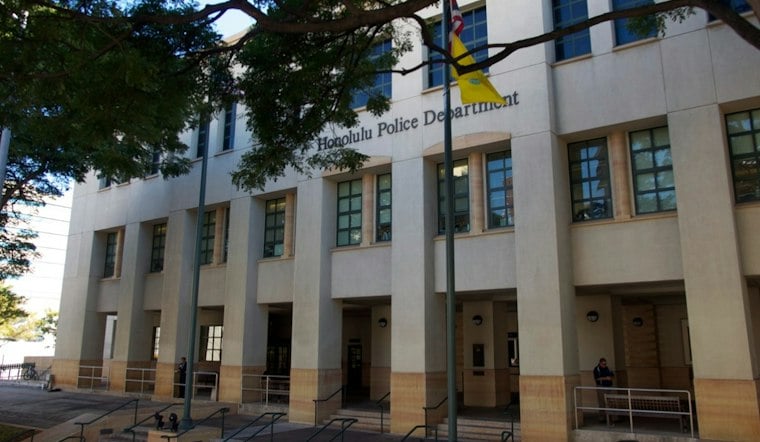
Hawaii reported 59 deaths in 2025 after patients ingested medication prescribed under the Our Care, Our Choice Act, the highest annual total since the law took effect in 2019. The figures arrive as Honolulu police investigate the October 2024 death of an 88-year-old woman who had received a prescription under the law. The case has drawn calls for outside scrutiny, but it does not establish whether the program’s safeguards were followed in other cases.
Different counts answer different questions
The Hawaii Department of Health’s 2025 annual report records 74 qualified patients known to have died that year; 59 of those deaths followed ingestion of aid-in-dying medication. These are not interchangeable measures: one counts known deaths among qualified patients, while the other counts deaths reported after ingestion. The Honolulu Star-Advertiser reported that cumulative deaths following ingestion reached 254 by the end of 2025.
The department’s reports also describe limits on what can be counted. In its 2024 annual report, the department said not all deaths following ingestion are documented and recommended removing the deaths-per-5,000 metric, calling it arbitrary and uninformative. The Star-Advertiser has reported that follow-up forms can be missing or list requested information as unknown, and that providers may not learn whether a patient later died or ingested the medication. A missing form, the department has cautioned, does not by itself show that a provider failed to comply with the law.
Those reporting gaps mean the published totals cannot describe every patient’s outcome or establish how often complications occurred. The department’s follow-up form asks about complications after ingestion, but the Star-Advertiser reported that the annual statistics do not break out those responses. The figures therefore provide an incomplete account of outcomes, not proof of a particular pattern of harm or compliance.
What the homicide investigation establishes—and what it does not
The Star-Advertiser reported that the Honolulu Medical Examiner’s Office classified the woman’s death as a homicide after an autopsy. The newspaper also reported that investigators allege her attending physician administered the prescribed medication and continued after she began choking and motioned for him to stop. The police investigation is ongoing; the reported allegation is not a finding that the physician is guilty, and the case does not by itself show how the program operates in other cases.
The newspaper reported that Right To Life chief executive Alisdair Hungerford-Morgan is asking Gov. Josh Green to commission an independent inquiry into the program’s death counts, available complication information and identification of suspected unlawful deaths. The request centers on questions the public reports cannot fully answer. A review could assess the records and reporting process, but the existing statistics alone do not resolve the facts of the homicide investigation.
Other states illustrate follow-up differences
Hawaii’s reporting limits are not the same as a count of unreported deaths. Other states’ reports show why ingestion status and known deaths need to be distinguished. Oregon’s 2025 report said ingestion status was unknown for 179 patients, or 28%, at the time of reporting. Washington’s 2024 report recorded 641 known participant deaths: 491 after ingestion, 57 without ingestion, and an unknown ingestion status for the remainder. These are examples of different follow-up categories, not directly comparable totals or evidence that the states’ programs produce the same outcomes.