

























































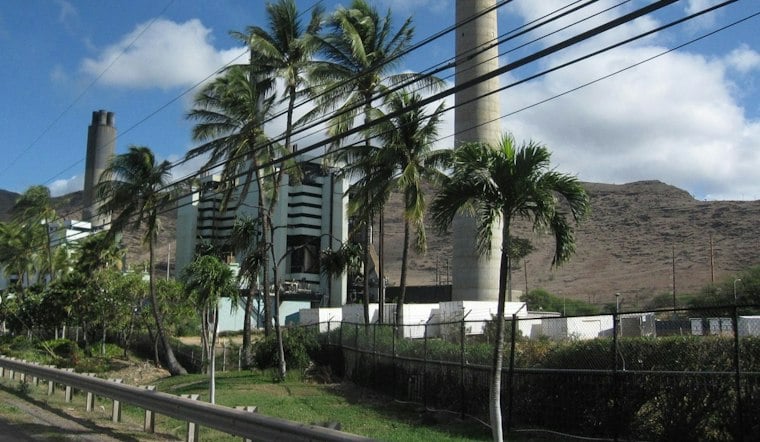
Hawaiian Electric Industries posted a third-quarter profit even as back-to-back hurricanes battered its finances, forcing a Kauai biomass power plant's owner into bankruptcy and racking up an estimated $14 million in extraordinary pre-tax storm-related expenses, including emergency power-line repair work. The parent company of Hawaiian Electric leaned on gains from its stake in a Honolulu bank to stay in the black, even as it continues confronting the long financial shadow of the 2023 Maui wildfire disaster.
Hurricane Lala struck in August 2026 and Hurricane Lowell followed in September, together causing what the company called an estimated $14 million in extraordinary expenses, including emergency work to repair downed power lines, according to the Honolulu Star-Advertiser. The damage was severe enough on Kauai that it prevented the restart of a biomass-fueled power plant owned through HEI subsidiary Mahipapa LLC, and the subsidiary subsequently declared Chapter 7 bankruptcy. HEI cut the value of Mahipapa's assets by $51 million, the Star-Advertiser reported, and now regards the remaining value as salvage only — though HEI's own earnings-call transcript, carried by The Motley Fool, lists the Mahipapa-related Pacific Current asset impairment at $50.7 million.
Before the storm hit, HEI had an agreement to sell the 7.5-megawatt plant, which had sold electricity to Kauai's customer-owned utility, Kauai Island Utility Cooperative, per the same report. Hurricane Lowell's impact was concentrated mostly on Kauai, and Hawaiian Electric sent crews to help the island cooperative restore power even though the storm fell outside its own direct service territory.
Bank Stake Sale Cushions the Blow
The quarter's profit was driven largely by $64 million in realized and unrealized gains from HEI's minority ownership stake in Honolulu-based American Savings Bank, the Honolulu Star-Advertiser reports. In September, HEI sold about one-third of its 9.9% stake in the bank for roughly $30 million, producing an $18 million pretax gain, and it also recognized a $46 million pretax gain on its remaining 6.4% stake, which it intends to sell.
Figures for the quarter's bottom line vary depending on the source. The Star-Advertiser reported HEI earned a $35 million profit in the July-through-September quarter, up from $31 million in the same quarter a year earlier, while the company's own earnings-call transcript gives consolidated GAAP net income as $35.5 million against $30.7 million in the prior-year quarter. Core net income, according to a separate company release carried by FinancialContent, came in at $23 million for the quarter, down from $33 million a year earlier — a decline the release attributed primarily to storm-related expenses at the utility — though the earnings-call transcript puts the prior-year core figure at $32.8 million rather than $33 million. That same FinancialContent release put Hawaiian Electric's own net income at $13 million for the quarter, compared with $37 million in the third quarter of 2025, and confirmed that both GAAP and core results included $14 million of incremental pre-tax storm costs from August and September.
Storm Response and Wildfire Mitigation
HEI CEO Scott Seu said winds from Lala caused power outages for over 40% of customers and that 95% of affected customers had service restored within three days, the Star-Advertiser reported. Hawaiian Electric serves about 474,000 customers across Oahu, Hawaii island, Maui, Molokai and Lanai, meaning that 40% figure equates to roughly 189,600 customers losing power.
The company has pointed to years of wildfire-mitigation spending as a factor in its storm response. Hawaiian Electric spent $120 million on wildfire risk mitigation in 2024 and expects to spend another $450 million from 2025 through 2027, the same report states. On the earnings call, Seu said the company's liquidity position was more than five times what it was just after the 2023 Maui wildfires and more than twice what it was just before them, while HEI also reported that its wildfire insurance premium price per million fell by 52%, which it attributed to insurers recognizing the utility's risk-mitigation work.
Maui Wildfire Settlement Still Looms
HEI still owes a $2 billion share of a $4 billion settlement tied to litigation over the 2023 Maui wildfire disaster, which killed 102 people and destroyed most of Lahaina, according to the Star-Advertiser. That settlement is being funded in four annual installments; HEI raised $558 million in 2024 by selling new shares of its own stock to cover the first payment, and the company has also contributed $75 million to a state fund set up for wildfire victims who forgo litigation.
Meanwhile, Hawaiian Electric's proposed rate increase remains under review by state regulators. The utility is seeking a 5.3% base-rate increase over two years that it says would boost annual revenue by $170 million. The state Public Utilities Commission has been gathering public input on the proposal and will hold a quasi-judicial hearing before issuing a decision, per the same report.
HEI's stock has taken a battering alongside its finances. Shares closed Friday at $8.42, near a 52-week low of $8.21 set on Oct. 26, a steep drop from the stock's 52-week high of $17.08 reached on Feb. 6, the Star-Advertiser reported. Separately, the earnings-call transcript disclosed that HEI reported consolidated liquidity of $1.3 billion, consisting of $224 million in unrestricted cash and roughly $1.1 billion in available credit and receivable facilities.
For comparison, Hawaiian Electric noted that Hurricane Iselle damaged or destroyed 210 poles, mainly in the Puna district, and knocked out power to about 25,000 customers back in 2014, according to Hawaii News Now. By contrast, the utility said it lost only 174 of its roughly 60,000 poles on Hawaii Island during Hurricane Lala, a comparison the company has pointed to as evidence that its storm-hardening investments are paying off.





