

























































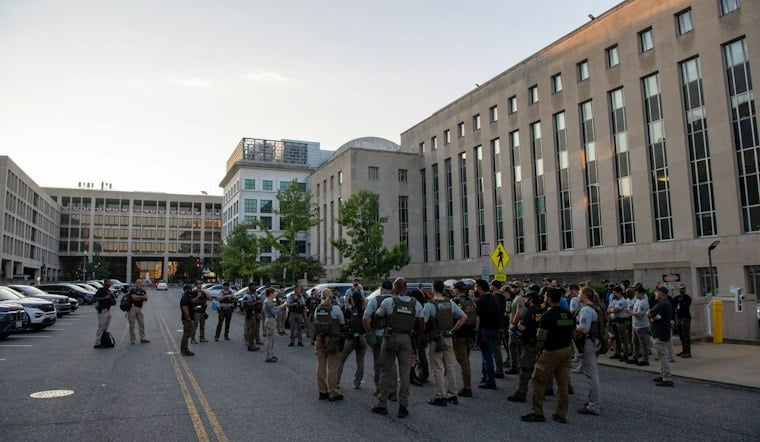
Defense Secretary Pete Hegseth has signed off on a major expansion of what National Guard troops can do on the streets and waterways of Washington, D.C., authorizing the use of 60 military police cars, tactical vehicles, patrol boats and portable light towers as part of stepped-up patrols across the city. The move deepens a deployment that has already drawn a lawsuit from the District and remains tangled in federal court.
What the New Memos Actually Allow
Hegseth signed two memos on Oct. 29 approving the expanded capabilities, according to The Independent. The memos call for expanding visibility patrols, a longtime fixture of the Guard's mission in the capital, and deploying 20 portable light towers to improve force protection in patrol zones. Guard members will also be permitted to carry rifles during some operations, though not inside Metro rail stations, per the same memos.
Even with the added firepower and vehicles, the rules of engagement remain tightly bounded. Guard members can drive patrol cars and tactical vehicles to support police officers during drug busts, but they are not allowed to pursue suspects or make arrests, POLITICO reports. The memos also forbid troops from engaging in high-speed chases. Patrol cars must be marked as National Guard vehicles, and troops must remain in uniform while using them.
Boats on the Anacostia, But No Surveillance
One of the more notable additions is the use of National Guard patrol boats, which will provide what the memos describe as operational maritime support. Per POLITICO's reporting, those vessels will handle perimeter security for police operations targeting suspected gang leaders and drug traffickers in Anacostia, but they will not conduct surveillance on U.S. citizens. Hegseth's memo specifies that federal officers must always be aboard the Guard boats to help arrest any criminal suspect, since Guard members themselves cannot make arrests.
The expanded mission also leans on a dedicated unit: the D.C. National Guard's 260th Special Purpose Brigade, which has functioned as a quick reaction force and will help protect key federal leaders while securing federal facilities. The memos grant the U.S. Marshals Service use of that brigade, as noted by The Independent. Not every request got the green light, though — a Marshals Service request for National Guard helicopters and troops to clean up abandoned tires in specific D.C. areas was denied in a Nov. 4 memo.
Thousands of Troops, a Lawsuit Still Pending
Nearly 3,100 Guard members from multiple states are currently stationed in Washington, including more than 500 from Georgia — the largest contingent behind the District of Columbia itself, which had 514 members involved as of Monday, according to The Independent. That figure marks a jump from an earlier Axios report that put the deployment at about 2,950 members, down from a summertime surge of roughly 5,000 during America's 250th anniversary celebrations. Two-thirds of the deployed troops come from Southern states, Axios reported. Hegseth has said the maximum deployed strength will stay capped at 3,500, below that summer peak.
The Pentagon confirmed Hegseth authorized the continued use of National Guard personnel and capabilities in support of what it calls the Make D.C. Safe and Beautiful mission, which POLITICO reports will remain in place through the end of the year. A separate report from WJLA states the broader deployment is currently scheduled to continue through January 2029, though the evidence does not explain how that longer timeline relates to the year-end mission window.
The Legal Fight Still Hanging Over the Deployment
President Trump first deployed the National Guard to Washington in August 2025 for what was billed as a crime-fighting mission, and troops have since supported law enforcement operations, neighborhood patrols, homeless-camp dispersals and citywide cleanup efforts, as reported by WTOP News. The deployment has not been without incident — the outlet's reporting describes arrests of Guard members and the shooting of a guardsman while he was breaking up a fight.
The District sued over the deployment in September 2025, arguing that the National Guard mobilization amounts to an illegal use of the military for domestic law enforcement. A lower court sided with the District in that challenge, and a federal appeals court panel heard arguments in the case on Oct. 14. A court document from the U.S. Court of Appeals for the D.C. Circuit indicates the lower court held that the deployment injured the District's sovereign power and usurped its rights to self-governance, though the evidence does not establish that an appellate ruling has been issued.
The D.C. case isn't happening in a vacuum. On Oct. 23, the Ninth Circuit ruled that President Trump violated federal law by seizing control of the California National Guard and deploying troops to Los Angeles during immigration protests the previous year, according to The New York Times. That decision applied the same reasoning the Supreme Court used when it found Trump lacked the power to send Guard troops into Chicago last year, the Times reported — a legal backdrop that looms over how D.C.'s own case may ultimately be resolved.




