

























































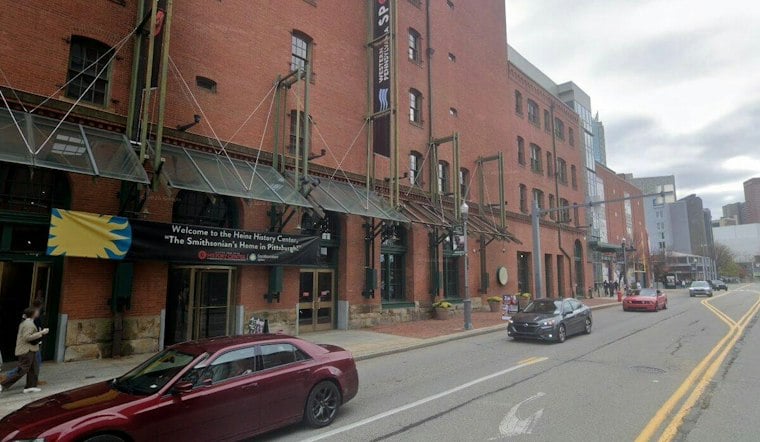
A Lithuanian immigrant who once painted portraits ended up capturing the literal fire of Pittsburgh's steel industry, and starting Saturday, the public can see 44 of his paintings gathered under one roof at the Heinz History Center. The exhibition, called A.H. Gorson: Painting the Steel City, opens Nov. 14 on the museum's fifth floor and will remain on view through Sept. 19, 2027.
According to WPXI, the show opens in the museum's Barensfeld Gallery and gathers works by Aaron Harry Gorson, who arrived in Pittsburgh in 1902 and was originally trained as a portrait painter. The exhibition brings together 44 of Gorson's paintings from museums and private collections, including several that have never been publicly exhibited, according to the Heinz History Center.
Gorson was a Jewish immigrant from Lithuania who, soon after settling in the city, was commissioned to paint frescoes in Rodef Shalom's downtown synagogue, per the museum's account. But it was 1904 when his focus shifted for good — from portraiture to the industrial landscape unfolding around him, as WPXI reports.
From Portraits to Mills Ablaze
Once he made that turn, Gorson kept coming back to the same subject for years. The museum notes that he began painting the mills in 1904 and returned again and again to capture the fire and smoke emanating from working mills such as Jones & Laughlin on Pittsburgh's South Side, focusing on the light and color within those working mills.
A related account of Maxwell King's new biography of the artist, reported by the Herald-Standard, describes Gorson settling in Pittsburgh and painting powerful and dramatic nighttime scenes of the city's steel mills until the early 1920s. That book, titled Fire in the Night Sky, is what inspired the History Center's exhibition in the first place. The Herald-Standard notes King's biography features 39 Gorson paintings and places them within the larger story of Pittsburgh's steel industry — five fewer works than the 44 the museum has now assembled for public view.
Photographs, Film and a Danger Sign in Eight Languages
The exhibit isn't just paintings on a wall. It pairs Gorson's canvases with historic photographs, archival records and physical steelmaking objects, including a 1904 photograph of a Jones & Laughlin open-hearth crew and an industrial danger sign from Rivers of Steel printed in eight languages, according to the museum. There's also 1931 footage shot inside a Pittsburgh steel mill, giving visitors a moving-image counterpoint to Gorson's static scenes of fire and smoke.
For younger visitors or anyone who wants to get hands-on, the museum says the exhibition includes an interactive experience allowing visitors to play with light and create their own Gorson-inspired artwork — a direct nod to the artist's fascination with how light and color behaved inside a working mill.
Who's Backing the Show
Mounting a show like this doesn't come cheap, and the museum lists a roster of funders behind it: The Heinz Endowments, The Richard King Mellon Foundation, The Fine Foundation, The Roy A. Hunt Foundation, Allegheny Regional Asset District and Visit PA all supported the exhibition, per the Heinz History Center.
Taken together, the paintings and artifacts aim to let visitors see Pittsburgh through Gorson's eyes during the city's run as the primary center of American steel manufacturing — a period the artist spent years rendering in oil, long after most of those mills and the industry that built them have faded from the skyline.




