

























































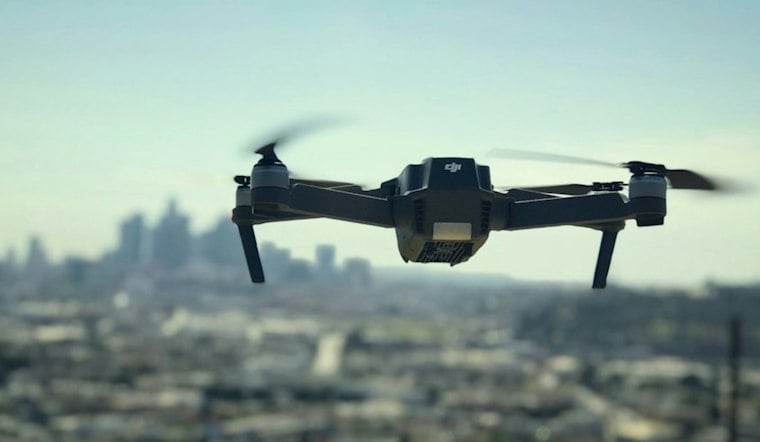
Henderson police are moving to keep drones flying as a permanent part of how the department responds to emergencies, after a 30-day demonstration found the unmanned aircraft often beat patrol officers to the scene. City officials say the Drone as First Responder program would give officers a real-time view of an incident before they ever arrive, helping them make faster, smarter and safer decisions once they do.
Drones Beating Patrol Cars to the Scene
According to FOX5 Vegas, Henderson is looking to make drones a permanent part of its public safety response after the 30-day test showed the aircraft arriving first on scene more than 71% of the time. On top-priority calls, the station reports drones beat patrol officers to the location by an average of three minutes and 29 seconds. The Henderson Police Department first detailed the results in a Facebook video posted Tuesday, describing the technology as a way to let officers see a scene before they get there.
FOX5 Vegas also reports that the drones helped resolve more than 16% of incidents without the need to send police or fire crews at all. A document submitted to the Nevada Office of Emergency Management states that during the pilot, drones responded to 529 calls for service, arrived first on scene in 71.5% of incidents, and provided operational value in 99.8% of deployments — though those precise figures come from a single filing and have not been independently confirmed elsewhere.
Regional Operations Center and Grant Funding
Under the plan described by FOX5 Vegas, the program would run through a regional drone operations center, with funding coming from a federal Homeland Security grant and donations from the Henderson Police Foundation. The station reports the technology could eventually support firefighters, search-and-rescue teams and emergency management beyond routine police calls. The Henderson Police Department says the drones have uses across the city spanning fire response, search and rescue, severe weather monitoring and infrastructure checks.
The move fits into a broader national shift toward drone-based emergency response. The Electronic Frontier Foundation reports that as of February 2026, more than 1,000 public safety agencies nationwide had received the Federal Aviation Administration waivers needed to automate drone flights and launch similar programs. The organization notes the FAA issued more of those waivers between April 2025 and February 2026 than in the previous seven years combined.
Other Departments Testing Similar Programs
Henderson is far from alone in exploring the technology. WRAL reports that Durham and Fayetteville police departments in North Carolina both approved drone-as-first-responder programs this year, with Fayetteville folding its plan into a six-year, $17.4 million contract with Axon that also covers body cameras and tasers. Fayetteville's chief told the station the goal is to have drones deployed within the first three months of 2027, while Durham police said they were still in early research and planning, with two drones on hand that are not yet in use.```
Other agencies have been flying drones far longer. The same WRAL report notes the Forsyth County Sheriff's Office has run a drone-as-first-responder program since 2022, and a study published in the American Journal of Criminal Justice via Springer describes a California municipal police agency that launched its own program in 2023 using a fleet of 12 drones deployed remotely from docking boxes on 11 rooftops. Overseas, the Western Australian Government recently announced its Drone as First Responder X program had launched in Baldivis, with flights also covering Kwinana and Rockingham.
Mixed Research, Local Rules
The broader research on drone-based response is not entirely settled. One CrimRxiv paper describes two preregistered randomized controlled trials — one in Philadelphia involving 1,546 randomized calls and another in Montgomery County spanning 151 days — and reports that assignment to a drone response reduced receipt-to-closure service time in Philadelphia. A separate CrimRxiv paper, however, states that no existing studies had incorporated robust causal mechanisms to empirically link drone deployment to measurable effects on situational awareness, response times, crime reduction or officer safety, reflecting an ongoing debate among researchers rather than a settled conclusion.
Locally, Henderson already has rules on the books governing drone flights. The City of Henderson requires a drone waiver before operating near critical infrastructure within city limits, asking applicants to submit it at least seven days before a flight, and it notes that operators must earn a Remote Pilot Certificate under the FAA's Part 107 rule. The city also lists a $50 annual fee for recreational drone permits, valid for one year from purchase. State law separately addresses the issue: the Nevada Legislature's statute includes provisions on when law enforcement agencies need a warrant to operate unmanned aerial vehicles and what uses are prohibited for public agencies, though the full conditions and exceptions were not detailed in the available text.
Henderson's interest in aerial technology isn't new. The Las Vegas Review-Journal reported back in 2018 that the Henderson Fire Department planned to use drones for fires, search and rescue, training and hazardous materials operations, though the current status of that earlier effort is unclear. What's new now is the push to lock in permanent funding and infrastructure for a program that, so far, has only been tested for 30 days.




