

























































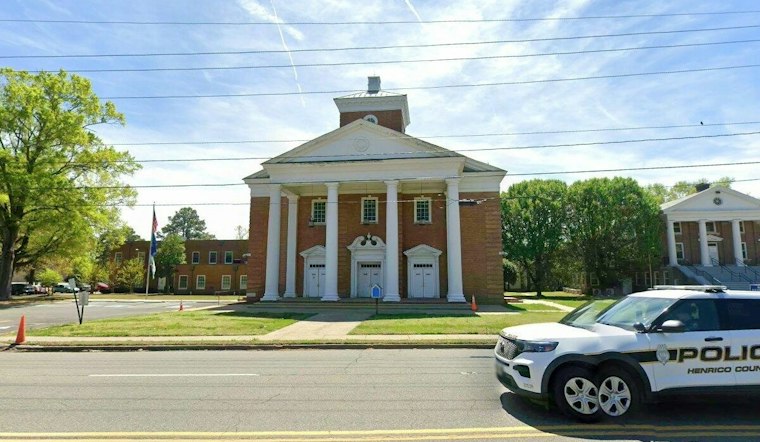
Henrico County’s school board is writing down how employees should handle immigration agents at school facilities, and how the division treats students and parents regardless of immigration or citizenship status. The proposal came up for review Thursday, with a vote recommended for the board’s Dec. 10 monthly meeting.
The outline, reported by the Henrico Citizen, would put staff procedures between an agent and nonpublic parts of a campus. It would also bar certain status-based obstacles to enrollment and school activities. The language is still a proposal.
What an Agent Would Encounter
Employees would have to request identification and copies of any warrants presented by immigration or other law-enforcement agents arriving at school facilities.
An administrative immigration warrant would not, by itself, open nonpublic school areas. A judicial warrant could authorize that access, but only after legal counsel reviewed it.
Axios reported that employees would have to refer agents to district officials and legal counsel before granting access to restricted areas, students, or student information, subject to legal exceptions. Staff would also have to document the encounter and notify the school safety director as soon as possible afterward.
Enrollment and Information Staff May Not Offer
The proposal would prohibit denying or discouraging enrollment, attendance, or participation in school activities because of a student’s or parent’s actual or perceived immigration or citizenship status.
Employees would also be barred from volunteering information about students’ or parents’ locations, schedules, or immigration status unless the law required it. Axios reported a related limit: staff could not collect or disclose immigration information except as permitted or required by law.
The practical effect is a narrower lane for hallway judgment. Status is not a reason to turn a student away from class or an activity, and location, schedule, and immigration details are not information an employee is supposed to offer up.
How Richmond Already Handles Requests
Across the line in the city, a Richmond School Board resolution declares Richmond Public Schools a safe zone for students seeking support when immigration enforcement interferes with learning.
Under that resolution, a request by ICE or another agency to visit a school site is supposed to go to the superintendent’s office for review before agents appear. A request for student information is referred there as well, for review under the Family Educational Rights and Privacy Act and Section 22.1-287 of the Code of Virginia.
The resolution also directs the district to create a rapid response team within 30 days, specifically to prepare for a student left without adult care because of a federal enforcement action. Axios reported in February 2025 that Richmond had adopted a formal response policy and was the first locality in the region to do so. Henrico’s draft covers some of the same ground: identification, warrants, counsel, and limits on what staff may disclose.
A Wider Fight Over School Access
NPR reported that at least 23 states considered legislative proposals this year concerning federal immigration officers and K-12 public schools. Of 40 proposals NPR reviewed, 35 sought to limit federal officers’ access to campuses and students. One sought to ensure school cooperation with ICE.
That is a recent surge on top of an existing patchwork. At least eight states already had laws governing immigration enforcement in K-12 schools at the start of 2026, NPR reported. Axios has also reported that the Trump administration opened schools to immigration enforcement on Feb. 5, 2025, which is the backdrop for districts now writing their own procedures.
Henrico’s board is expected to take up the proposed policy on Dec. 10. Until that vote, the rules on warrants, referrals, enrollment, and what employees may volunteer remain a recommendation, not adopted division policy.



