

























































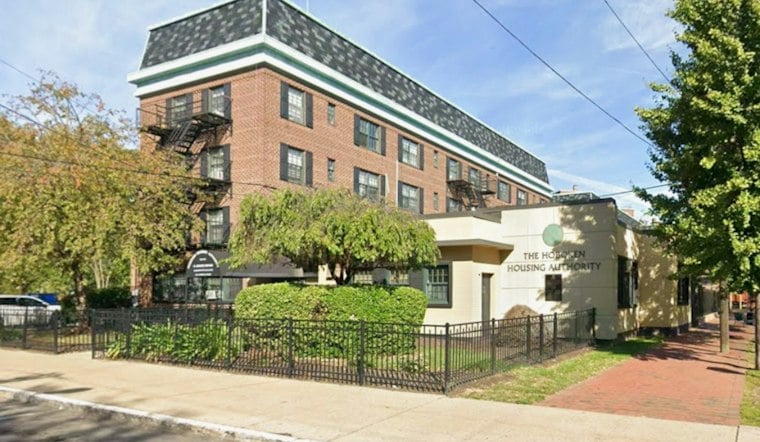
A mural celebrating the history of Hoboken Housing Authority residents is headed for the front wall of 401 Harrison Street, with city officials describing the project as a way to preserve residents' identity and stories before redevelopment reshapes the area. The plan calls for a series of still-life paintings based on personal artifacts belonging to residents, offering a visual record of the community before construction begins nearby.
The Hoboken City Council heard the proposal from Annie McAdams, the city's public art administrator, according to TAPinto Hoboken. McAdams presented the planned artwork at a recent council meeting, laying out a process built around community participation rather than a design handed down from above. The mural itself will be painted by an artist known as Distort, who is set to create still-life images of residents' belongings along the building's front wall.
Residents' Belongings Take Center Stage
Under the plan, Housing Authority residents will be invited to offer suggestions and submissions that shape the final design. Residents will present meaningful artifacts from their homes across five planned workshops, giving the project its raw material: everyday objects turned into the subjects of public art. Local photographer Gary Spector is expected to photograph those artifacts as part of the process, work that will likely feed directly into Distort's eventual compositions.
Hoboken City Council member Ruben Ramos framed the effort in personal terms, saying residents will tell their story through the project. The Hoboken Arts Advisory Committee described the mural in similar language, calling it a way to honor a community that made the Hoboken Housing Authority its home for more than 70 years — a framing that puts the building's long residential history, not just its upcoming redevelopment, at the center of the project's purpose.
Funding and Costs Laid Out
The mural project carries a listed price tag of $16,475. The listed allocations are $10,525 for the artist, $4,800 for the photographer, and $950 for supplies, which add up to $16,275. McAdams said the project will be funded through the city's Public Art Fund, which is financed by a 0.01% set-aside drawn from existing bonds issued for public art.
The same fund is expected to cover any future maintenance the artwork may require once it's installed. Officials also said the mural project is planned to happen before construction of the new development begins, and that the 401 Harrison Street building itself will not be demolished during the planned redevelopment — meaning the mural, once painted, should remain standing even as other changes move forward around it.
The mural is being planned against a redevelopment expected to unfold over many years. Hoboken’s City Council adopted the Housing Authority redevelopment plan in December 2023; it calls for rehabilitating or replacing the authority’s 1,354 existing units while keeping current residents from being displaced. The plan followed public meetings, surveys and other community input, and received a 2024 Smart Growth Award from New Jersey Future. That larger effort gives the mural’s focus on residents’ stories added weight: the surrounding housing stock is slated for substantial change, even as the plan aims to preserve residents’ homes. The city’s description of the redevelopment plan lays out its scale and no-displacement goal.
Public Questions on Funding, Vandalism and Housing Conditions
Not every comment at the meeting was celebratory. Resident Manual Rivera Solare raised a question about how the mural would be funded, prompting the explanation of the Public Art Fund's financing. A member of the public also raised concerns about possible vandalism and graffiti targeting the finished mural, to which McAdams responded that protective covers could help guard the artwork from attempted vandalism.
Patricia Waiters voiced support for the mural initiative overall, but she also asked that similar concern be extended to residents' current housing conditions — a request that surfaced alongside the celebration of the building's history. Before any brushes touch the wall, design renderings from Distort must still clear approval from the mayor, City Council, and the Arts Committee.
The project also sits within a city program that supports public art beyond individual installations. Hoboken’s Cultural Affairs division administers the Public Art Fund, which maintains the city’s existing public-art inventory and supports new permanent works. The city’s broader commitment to putting art in public spaces dates at least to 2018, when then-Mayor Ravi Bhalla signed an executive order directing city bond ordinances to include a public-art allocation. The city’s Cultural Affairs division describes the fund’s ongoing role, while the 2018 announcement records the bond-policy initiative.
A Modest Local Precedent
Public art tied to the Hoboken Housing Authority isn't entirely new. Hoboken Housing Authority records point to a 2020 Arts Advisory Committee project involving painted art boxes, though details on that earlier effort's scope are limited. The new mural at 401 Harrison Street is planned around resident workshops, professional photography, and a dedicated public funding stream.
Hoboken has also used murals to connect public space with local history and identity. In 2021, the city and the Hoboken Business Alliance unveiled a 70-by-45-foot mural by artist Beau Stanton at 51 Newark Street, depicting city founder John Stevens alongside details inspired by Hoboken Terminal. The city said its mural efforts had expanded since 2019, when artist Ricardo Roig’s “Michael Chang, Hoboken Hero” was unveiled at Columbus Park. The city’s announcement of the Stanton mural offers a local precedent, though the 401 Harrison project centers residents’ personal artifacts rather than a civic landmark.
For now, the project remains in its planning stages, with resident workshops and Distort's eventual design renderings still ahead before the mural can move toward final approval and installation.





