

























































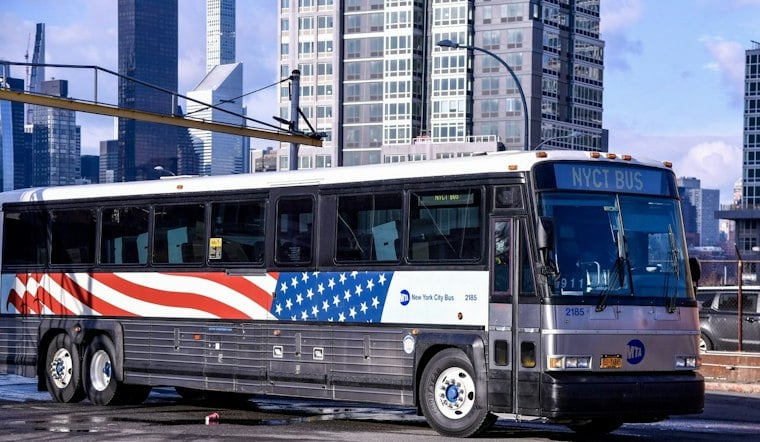
New York City will pay the MTA $200 million less for buses in fiscal 2027, and the authority, not the city budget, is the party expected to make up the difference.
Gov. Kathy Hochul allowed Mayor Zohran Mamdani to reduce the city's annual payment to the MTA bus division by that amount, with the transit agency absorbing the shortfall, according to a Reinvent Albany report cited by Streetsblog. The cut is a one-time item in the city's budget papers, not a new subway or railroad formula.
What the May Announcement Left Out
On May 12, Hochul and Mamdani announced a deal Streetsblog described as $4 billion in gap-closing support. Neither official specifically said that $200 million of the city's regular payment to the MTA would be forgiven or deferred.
The city is carrying an estimated $6.2 billion budget deficit for next year. Those two figures do not match, and the bus item was not the number on the May podium.
Hochul spokesman Sean Butler later put the subsidy inside the larger package. "Allowing a reduction in New York City's FY27 subsidy of MTA bus service was part of a comprehensive package to address the city's deficit and has zero impact on bus service for New Yorkers," he said.
The Comptroller's Paper Trail
The May Plan included a one-time $200 million reduction in city bus subsidies to the MTA for FY 2027, according to the city comptroller's comments on the executive budget and the financial plan through 2030.
In June, City Comptroller Mark Levine said the change was not included in the state's enacted budget and had to be reflected in the MTA financial plan. The reduction was concrete enough for the city's documents. It had not been written into the budget Albany passed.
The Bill Lands at the MTA
The MTA is the state-run authority that operates New York City's subways and buses and two commuter railroads. This change is narrower than that system. MTA financial documents show the city paying $200 million less in subsidy payments to fund buses.
By July, the authority's preliminary budget said the reduced city reimbursement would be covered by MTA resources. Reinvent Albany's reading of the same hole is blunt: the $200 million loss roughly offsets the revenue the MTA expected from next year's fare and toll increase.
A city keeps money it would have sent for buses. An authority that had been counting on higher fares and tolls is told to cover a gap of about the same size from its own resources.
A 2004 Agreement, and a Service Pledge
Rachael Fauss of Reinvent Albany said the aid was supposed to sit outside this kind of bargain. "The MTA Bus aid in this case is supposed to be protected under a 2004 agreement between New York City and the MTA," she said.
The governor's office has answered that history with Butler's service pledge, not with a public walk-through of the 2004 deal. On the documents that are in view, FY 2027 is the year the city payment drops, and MTA resources are the line assigned to fill it.



