

























































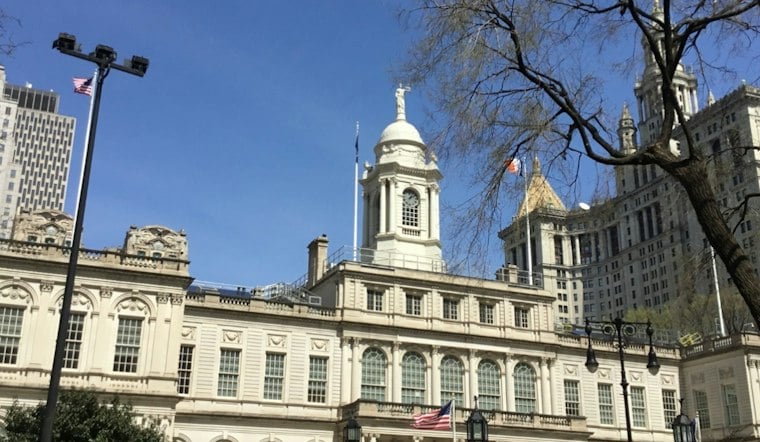
A 50-year-old man who built a sprawling sidewalk encampment across from the Brooklyn Bridge entrance near City Hall has lived there for about six weeks, occupying roughly 200 square feet of Centre Street walkway with a plywood-box bed, a clothing rack, fake plants, a rolling bin and delivery totes. On Thursday, Mark Roggemann packed up and moved his entire setup 35 yards north, a shift that resets the clock on New York City’s seven-day encampment cleanup process just as a city deadline to vacate approached.
The move came days after the Department of Homeless Services issued Roggemann a cleanup notice on Nov. 6 ordering him to vacate the site by Friday, according to the New York Post, which first reported on the encampment. Roggemann told the paper he plans to return to his original concrete plot before a new seven-day cleanup clock elapses. City policy requires a seven-day engagement process before any cleanup or relocation effort takes place, a rule that has become central to how encampments like his persist for weeks at a time.
The Post also reported that Roggemann had previously camped at Union Square Park before authorities removed him because living in city parks is illegal.
A Seven-Day Clock That Keeps Resetting
The rule Roggemann is navigating traces back to a broader shift in how the city handles street homelessness. Mayor Zohran Mamdani placed the Department of Homeless Services, rather than the NYPD, in charge of encampment sweeps, according to City Limits. Under the process, NYPD and the Department of Sanitation still assist with sweeps on day seven if a site includes a built structure in an area not designed for habitation, the outlet reported.
City Councilwoman Joann Ariola, a Queens Republican whose district includes neighborhoods affected by homeless encampments, said a 35-yard move like Roggemann’s resets the cleanup clock, according to the Post. She criticized the city’s rules as too easy to game. Marie Colon, also cited by the Post, said moving Roggemann for a cleanup only to let him return would not help him or the neighborhood.
Since Sept. 22, 311 complaints about homeless encampments have been routed to the Department of Homeless Services rather than the NYPD, City Limits reported. In the first two weeks after that change, the department said it had received roughly 1,500 encampment reports and responded to callers within four and a half hours on average, per the outlet’s reporting. Mamdani administration officials also told the City Council that outreach teams had cleared 40 homeless encampments since January and referred 85 people to the shelter system, though officials did not specify how many actually came inside, City Limits noted. The administration also said it opened 106 new Safe Haven beds in lower Manhattan in February.
Roggemann Says His Fight Isn't With the Mayor
Roggemann told the Post that he did not choose Centre Street to attract Mayor Mamdani’s attention and that his dispute was with the Department of Homeless Services, not the mayor. He accused the department of corruption and harassment, the paper reported. The Mayor’s Office did not return the Post’s messages about Roggemann.
The Department of Homeless Services said the administration seeks to connect homeless New Yorkers to shelter, medical care and services for permanent housing, per the Post. The paper reported that Roggemann has access to a taxpayer-funded apartment in Brooklyn provided by the department but told the Post he left it in July because he said it was horrific and hot. He said he believed a lack of air conditioning in the building caused two dogs belonging to an upstairs neighbor to die.
The city’s annual outdoor count tallied 4,991 people sleeping outside this year, an 11% increase from 2025, according to Gothamist. That single-night count excludes people in shelters, where more than 82,000 New Yorkers stay nightly; Gothamist reported that less than 5% of the city’s homeless population is unsheltered.
How the Policy Differs From the Adams Era
The shift toward DHS-led outreach marks a departure from the approach under former Mayor Eric Adams, whose encampment sweeps were led by police and sanitation crews, with only a fraction of those targeted accepting temporary shelter, according to NBC New York. Under the newer process, officials post a notice and send outreach workers to a site daily for a week before sanitation crews dismantle it on the seventh day, the station reported.
At a press conference, Mayor Mamdani said each of the seven days is meant to involve outreach from city workers trying to connect people at a site with services, including shelter or medical care, according to a transcript from the NYC Mayor's Office. It remains unclear, based on available city materials, whether the Centre Street site met criteria for a day-seven clearance or what enforcement action, if any, followed Roggemann’s move.
What Earlier Cleanups Achieved
An audit of the city’s earlier encampment-cleanup program found that 119 of the 2,308 people present during cleanups from March 21 to Nov. 30, 2022, accepted temporary shelter, according to the New York City Comptroller’s Office. Auditors later observed homeless activity at 31% of 99 cleared sites.



