

























































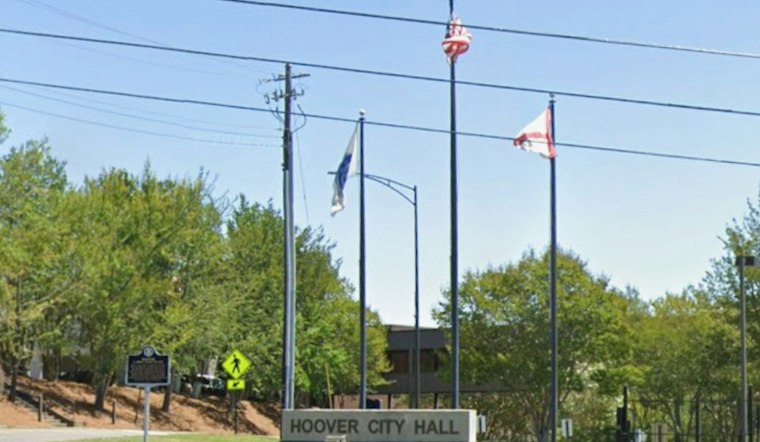
Hoover City Council has approved a nearly $4.5 million early debt payment, part of a broader push by city leaders to chip away at a total debt load that stood at $165,697,060 by the end of fiscal year 2026. The move is the latest step in a strategy officials say is meant to free up more money for everyday city needs rather than mandatory bills.
According to AL.com, the council approved a $4,390,000 payment six months ahead of its scheduled repayment plan, along with a smaller $100,000 payment made 18 months early. Those two payments were part of three advanced loan payments Hoover officials made during fiscal year 2026 specifically to cut costs and reduce the city's overall debt. A related early payment was previously detailed by HooverSun.com, which reported the council was set to consider paying off $4.49 million in debt principal that wasn't otherwise due until July 1, 2028 — a move Chief Financial Officer Melinda Lopez estimated would save the city about $20,000.
Hoover's debt picture includes several distinct obligations. The city's general warrants payable totaled $141,984,510, while its sewer debt came to $14,055,490. Hoover also owed $9,657,060 on an outstanding loan agreement with Alabama Power Company, according to the same report from AL.com.
Why City Leaders Are Racing the Repayment Clock
Lopez said debt counts among the city's major mandatory spending obligations, and that reducing that kind of spending is key to building a more sustainable budget. Her stated goal, per AL.com's reporting, is to shrink mandatory costs so more money is freed up for discretionary general needs.
That matters because debt service and sewer-related costs already consume a significant slice of the city's budget. Hoover's fiscal year 2027 budget dedicates roughly 7 to 8% of total general fund expenditures to debt service, and sets aside between 18 and 19% of general fund expenses — including principal payments — for sewer fund costs. City debt, as AL.com's reporting notes, directly reduces the amount of discretionary spending available for other priorities.
Hoover officials maintain that residents pay no additional taxes because of the city's debt, according to AL.com. Lopez said the city is working to identify another debt issuance that could be paid off early, and officials are also looking into new methods to cut costs more broadly.
Competing Demands on a Strained Budget
The early payments come as Hoover faces steep capital needs elsewhere. City departments identified nearly $150 million in capital needs for fiscal years 2026 through 2030, a figure the Shelby County Reporter noted was more than twice the city's $74.5 million General Fund reserve balance. Against that backdrop, the council approved a capital budget of roughly $15 million for fiscal year 2026.
Mayor Nick Derzis has pointed to deferred maintenance as a driver of costly, unplanned repairs, telling the Shelby County Reporter that “reactive spending is more expensive and disruptive than planned” work. The tension between paying down debt early and funding deferred capital projects underscores the balancing act facing city leadership heading into the next budget cycle.
Separately, city leaders have taken other steps tied to the broader financial picture. Hoover established a minimum total General Fund balance of $60 million, according to 1819 News, which also reported that the council authorized allocating up to $4 million for stormwater repairs. Those moves, paired with the early debt payments, reflect an effort by Hoover officials to tighten financial guardrails even as the list of capital needs keeps growing.




