

























































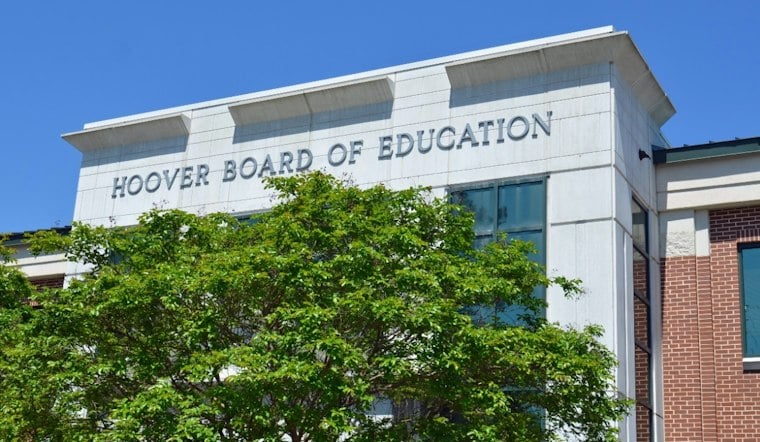
A Hoover father who donated $5,000 to install a camera in a special-needs classroom says the district mailed his check back, telling him it could not accept the money. Charles Daniel told school board members Tuesday, Nov. 10 that he had made the donation earlier that day, with specific instructions that it be used to place a camera in the special-needs classroom at Berry Middle School.
Daniel said Hoover City Schools sent him a letter thanking him for his support and his earmarked donation, but stating the district could not accept the money, according to WVTM 13. He said the district then returned his check by certified mail. Daniel refused to accept it and sent it back to the sender rather than letting the matter drop.
Daniel has been pushing for cameras in self-contained classrooms, arguing they could protect both students and staff in situations where a nonverbal student cannot explain what happened during the school day. He contends the donation itself should trigger a legal obligation under what's known as Tyler's Law, Alabama's statute addressing cameras in certain self-contained public school classrooms where at least half of regularly attending students receive special education services. Whether his specific check actually requires Hoover City Schools to install a camera remains unclear, the station's report notes.
What Tyler's Law Does and Doesn't Spell Out
Under Tyler's Law, school boards are allowed to install and operate cameras when funding is available, and the statute requires a local board to install video cameras if it receives a specific donation made for the purpose of placing and operating cameras under the law. The law does not specify whether a school board must accept an offered donation in the first place, leaving open the exact dispute now playing out between Daniel and Hoover City Schools. The law also includes privacy protections, limiting access to confidential recordings and barring their use for routine teacher evaluations or ongoing classroom monitoring.
At the Nov. 10 meeting, no board member addressed Daniel's remarks, according to the Hoover Sun. Daniel told the board that parents have been told the district cannot afford an estimated $100,000 cost to put cameras in self-contained classrooms. In a statement discussed at the October board meeting, Hoover said it instead pursues grants funding exceptional education teachers, therapists and support staff, which it believes have the greatest impact on students by keeping student-to-adult ratios low.
Parents Say the Push Dates Back Years
Parents of nonverbal students told the Hoover board in October that they had been asking for cameras in those classrooms since 2022, per the same Hoover Sun account. Daniel said he is working with state lawmakers to determine what to do next, and he hopes to speak Tuesday with a lawmaker who sponsored Tyler's Law.
Other Alabama districts have approached the camera question differently. The Huntsville City Schools Board of Education voted unanimously to approve a policy allowing cameras in self-contained resource classrooms under Tyler's Law, according to 256 Today. That district reported cameras installed in about 22 of 76 identified classrooms, roughly 40%, though none were yet operational at the time of a board workshop presentation.
Madison City installed cameras in 2022 after an internal investigation revealed mistreatment of nonverbal students in a self-contained classroom at Discovery Middle School, as reported by al.com. A $500,000 Cameras in the Classroom Grant became available statewide in 2023, but by 2024 the entire amount of state camera funding had gone to Madison City, with state Superintendent Eric Mackey saying no other districts had asked for the money.
How Other States Handle the Issue
The debate over mandatory classroom cameras extends well beyond Alabama. Supporters argue cameras document what happens in classrooms and can improve safety for students and staff, while opponents raise privacy concerns, according to Government Technology. Louisiana expanded its camera law in 2025 so cameras are now required in every public-school special-education classroom, after previously requiring them only upon a parent's request. Texas requires cameras only if requested by a parent, staff member, principal or school board, while Georgia permits video monitoring in those classrooms without mandating it.
WVTM 13 disclosed that a member of Daniel's family works at the station as part of its reporting on the donation dispute. For now, the $5,000 check has been returned to the sender rather than funding a camera at Berry Middle School, and whether Hoover City Schools will ultimately accept a future donation — or face pressure from state lawmakers to do so — remains an open question.



