

























































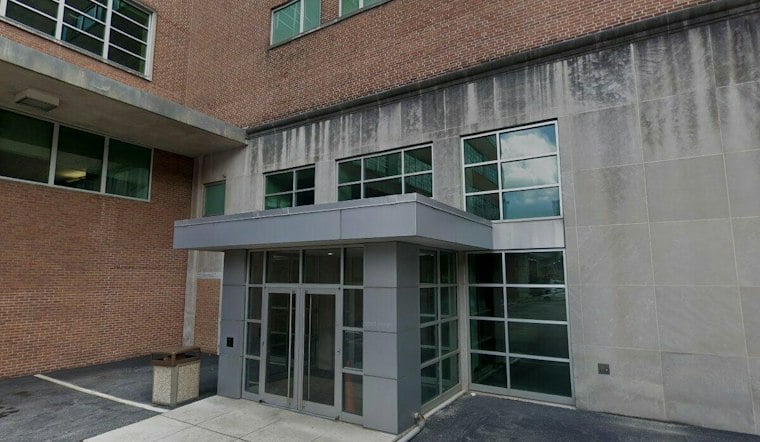
Johns Hopkins Hospital wants to add a third natural-gas turbine to its South Energy Plant in East Baltimore, a facility that already sits across the street from a public housing complex and within blocks of an elementary school. The proposal has drawn backlash from neighbors worried about the health risks of burning more natural gas so close to homes and a campus full of young children.
The medical campus currently operates two natural-gas turbines near the hospital, and could soon get a third, according to The Baltimore Banner. The new unit, a Solar Taurus 70, would produce up to eight megawatts of power and generate steam to heat the multiblock medical campus. The plant itself is located near East Baltimore neighborhoods including Dunbar-Broadway and Butchers Hill, close to residents who say they have been kept out of the loop.
Hopkins spokesperson Thomas Lentz pitched the expansion as necessary to reduce the hospital's reliance on the regional energy grid and to protect patients during periods of grid stress, framing the new turbine as the best available technology for the job. He also called it an investment that would cut the hospital's energy bill. The regional power grid is facing increased stress from data centers, and grid operators have warned that the mid-Atlantic region could see heightened risk of rolling brownouts and blackouts as soon as next summer, per the same Banner report.
Emissions Math Alarms Nearby Residents
According to Hopkins' own permit application, the plant's existing turbines already release around 70 tons of nitrogen oxides per year, and a third unit could add as much as 40 tons more. Nitrogen oxides can aggravate respiratory issues and, with longer exposure, contribute to asthma. The plant must keep total emissions below an annual plantwide limit of 104.9 tons, and the proposed turbine includes features intended to mitigate nitrogen oxide and carbon monoxide releases, the outlet reports.
Corey Brown, who worked about a decade for Constellation Energy, believes the expansion would save Hopkins money but argues that financial savings should not justify putting neighbors at risk. Stephanie Khanna said natural gas might have been an acceptable choice 20 years ago, but that cleaner alternatives exist today. Hopkins has said it explored renewable energy options, found that solar panels would not produce enough energy for its needs, and determined it lacks space for battery storage.
A School Two Blocks Away Prepares To Reopen
Commodore John Rodgers Elementary/Middle School sits barely two blocks from the power plant and is set to reopen in January 2027, with 800 families preparing to send children to its new building. Principal Marc Martin said many of those families were not aware of the proposed turbine before his conversation with the Banner, and he questioned the thoroughness of the hospital's and the Maryland Department of the Environment's outreach to low-income residents in the surrounding community, which ranks in the 97th percentile of Maryland communities vulnerable to pollution, per MDE screening.
Martin requested that Hopkins hold a meeting for the elementary school's families to walk through its plans, but Lentz said a meeting was not in the plan. Lentz did confirm that the additional turbine would not deliver power to Johns Hopkins University's planned 25,000-square-foot data center at Johns Hopkins Bayview Medical Center, a project separate from the university's broader push that also includes an artificial intelligence institute at its North Baltimore undergraduate campus.
Fuel Oil Backup And a Recent Spill
Hopkins sometimes burns dirtier fuel oil during emergencies, and the hospital used fuel oil for multiple days during the winter freeze earlier this year. The plant was also the site of a 2025 spill that released 5,000 gallons of diesel fuel into the harbor — an incident the Banner separately reported was caused by a contractor who overfilled fuel tanks, sending the spill through stormwater drains for more than a mile before it reached the harbor near Fells Point.
Maryland regulators will review whether Hopkins' application meets federal clean-air laws, including its contribution to carbon dioxide and nitrogen oxide releases, and the state could release a draft permit for public comment after the holidays. Construction would also require zoning approvals from Baltimore City. Hopkins hopes to begin installing new equipment early next year, with the turbine coming online in mid-2028, though a Baltimore CONNECT project update has separately listed the unit as operational in March 2028 — a discrepancy the available record does not explain.
A Grid Under Growing Pressure
The push for more on-site power at Hopkins comes as grid operator PJM forecasts that data centers and other large loads will add 30 to 34 gigawatts of new demand by the early 2030s, and as much as 70 gigawatts by 2038, according to Canary Media. PJM's board has directed that proposals requiring large loads to help secure their own power be sent to federal regulators for approval, and under that plan, loads without their own capacity would face curtailment starting in June 2027. Separately, PJM projects that electric supplies will fall short of its reserve margin from June 2027 to May 2028, a shortfall Spotlight PA attributes to slow replacement of retiring power plants alongside rising demand from electrification and data centers.





