

























































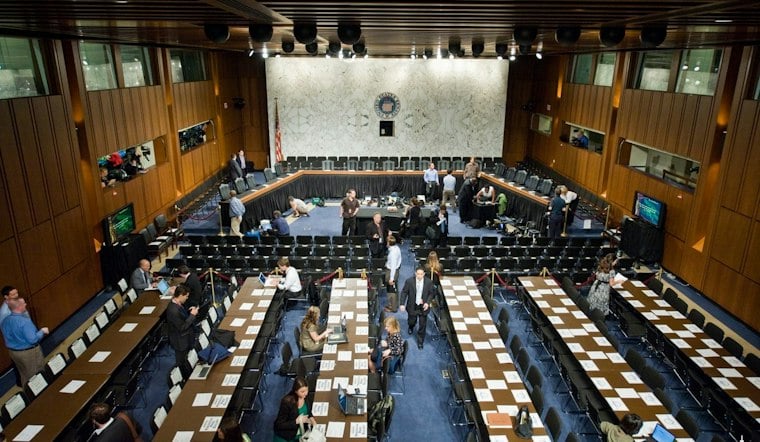
The House Ethics Committee has quietly approved a package of rule changes designed to speed up its sexual misconduct investigations, a move that comes after at least two members of Congress resigned before the panel could finish looking into allegations against them. The secretive, bipartisan committee met in a rare public session Thursday afternoon in Washington, D.C. to discuss the proposed changes before approving them.
Former Reps. Eric Swalwell of California and Tony Gonzales of Texas both resigned before the committee completed its investigations into them, according to CBS News. As reported by The Hill, both men were under investigation for alleged sexual misconduct when pressure to resign from both sides of the aisle contributed to their departures from Congress in April. Other members under similar investigations have ended their campaigns or lost reelection bids rather than face a committee ruling.
The panel unanimously passed the changes, per the same Hill report, after lawmakers from both parties had called for faster Ethics Committee investigations as high-profile cases intensified scrutiny of the process. The committee issued a news release detailing the changes on Friday.
Subpoena Power Shifts to the Chair and Ranking Member
Under the new rules, the committee has delegated subpoena authority directly to its chairman and ranking member, eliminating the need for a full committee vote before issuing one. Roll Call reports the change would give the chair and ranking member subpoena power on behalf of the committee, rather than requiring that broader vote, a shift the panel said should significantly expedite its investigations. The committee also consolidated duplicative procedural steps and simplified the investigation process overall.
Committee Chair Michael Guest said the goal is to move faster while maintaining protections for witnesses and victims, according to The Hill. The panel said the changes should accelerate investigation conclusions by several months or more while preserving due-process protections for members under scrutiny.
Public Disclosure Rules Now Codified
The committee has also codified its longstanding policy of publicly disclosing findings of sexual harassment or other sexual misconduct against a member, while protecting the identities of victims. The House Committee on Ethics' own statement says the rule changes, adopted on November 19, 2026, were aimed at improving investigation speed, increasing transparency, and protecting victims of sexual misconduct. Roll Call's reporting describes the provision as codifying the committee's policy of publicly disclosing any findings that a member engaged in sexual harassment or other sexual misconduct while prohibiting publication of the identity of any victim.
Separately, the committee expanded the circumstances under which fines and denials of privileges can be considered an appropriate sanction, broadening that category to include any abuses of position, Roll Call reported.
Democrat on Panel Calls for Zero Tolerance
Rep. Mark DeSaulnier of California, the top Democrat on the Ethics Committee, said the House must have zero tolerance for sexual harassment and misconduct and that the committee must hold perpetrators accountable while delivering justice for survivors. “On sexual harassment, all of us agree on zero tolerance, and we're going to be clear about that,” DeSaulnier told The 19th.
The scale of the problem the committee is grappling with has grown over the past year. The 19th's reporting notes that in April, the Ethics Committee published a compilation of 28 investigative matters involving allegations of sexual misconduct against House members dating from 1976 to 2026, though several more cases have since been added to that list. By November, the number of House members accused of sexual misconduct or domestic abuse who lost their seats, including Swalwell and Gonzalez, had risen to six, per the same outlet's reporting.
A Separate Bipartisan Push for Reform
Outside the Ethics Committee itself, a separate bipartisan House initiative formed this year to examine how sexual misconduct claims are handled and to propose reforms. That effort is led by Rep. Kat Cammack of Florida and Rep. Teresa Leger Fernández of New Mexico, though the initiative has not yet released its recommendations.
Congressional scrutiny of harassment rules is not new. PBS NewsHour previously reported on lawmakers reviewing sexual harassment policies on Capitol Hill, noting that those involved said they were disturbed by what they found during that earlier review. Whether this week's rule changes will measurably shorten the length of future investigations remains to be seen, but the committee's stated intent, delegating subpoena power and tightening deadlines, marks its most significant procedural overhaul amid the wave of resignations and lost reelections that have followed sexual misconduct allegations this year.




