

























































A federal judge has found that Houston violated Food Not Bombs’ First Amendment rights by trying to stop the group’s meal service across from City Hall. An earlier order protected volunteers from ticketing until a decision was reached. In the new order, U.S. District Judge Andrew S. Hansen asked both sides to submit a proposed agreement addressing future meal service.
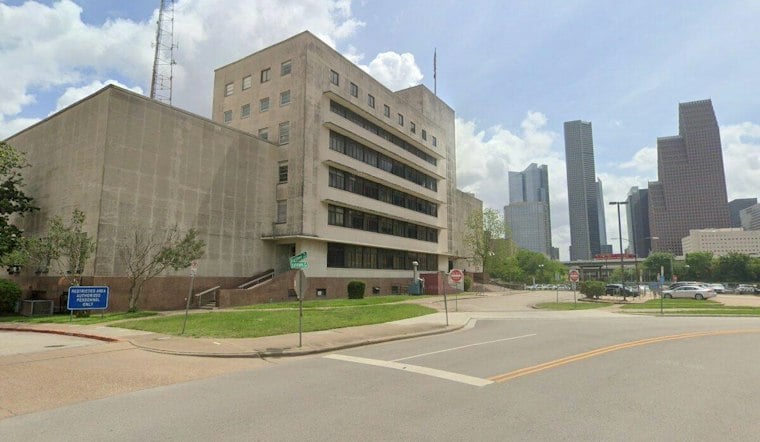
Houston began enforcing its charitable food-distribution ordinance in 2023. The city sought to move Food Not Bombs’ meal service from outside the Central Library to a former police-station parking lot outside downtown. The group faced fines exceeding $25,000 before suing in 2024, according to the Houston Chronicle. Food Not Bombs argued that sharing meals is expressive conduct protected by the First Amendment. The court found a violation of the group’s rights but did not decide the broader constitutionality of the ordinance restricting where food may be distributed, the Chronicle reported.
Reported citation totals vary by source and timeframe. Houston Public Media reported 95 citations for the group’s weekly meal service; Houston Landing counted 92 citations since March 2023, and ABC13 reported 90 tickets over the prior year. The Chronicle separately reported 111 tickets over the course of a year.
How the Legal Fight Unfolded
The legal challenge began in early 2024, when the Texas Civil Rights Project filed a federal lawsuit on Food Not Bombs’ behalf seeking to halt enforcement of the ordinance, according to Houston Landing’s account of the filing. Houston Public Media reported that a judge issued a preliminary injunction after a Feb. 12 hearing that year, pausing ticketing while the case proceeded. City leaders said meal distribution was permitted only at a police station at 61 Riesner Street, the outlet reported.
Why the City Restricted Meal-Service Locations
The reporting cited here does not spell out the ordinance’s formal adoption process. It does document a stated concern behind the city’s position: Houston Public Media reported that Mayor Sylvester Turner said in March 2023 that he wanted to restore the downtown Central Library and make it more family-oriented, noting that many homeless people congregated in the area.
Judge Hansen has asked both sides to submit a proposed agreement addressing future meal service and public-health concerns, and asked Food Not Bombs to provide proof of damages. The city had not immediately responded to a request for comment, the Chronicle reported.
The Case Remains Open
The order protects the group from further ticketing for now, but does not resolve the broader dispute. The judge’s requests for an agreement and damages documentation are part of the remaining proceedings.
Food Not Bombs traces its roots to antinuclear protests in 1980. The organization says it began serving free meals made from donated surplus food to advocate redirecting resources from the military toward human needs. The Houston chapter has operated locally since 1994, according to the Houston Food Not Bombs website.
A Backdrop of Rising Need
The ruling lands as food insecurity climbs across the region. In the Houston Food Bank's 18-county service area, 18% of residents — an estimated 1.44 million people — experienced food insecurity in 2024, up from 17% the year before, according to Axios. Harris County's rate reached 20% that year, up from 18% in 2023, the outlet reported, and Houston Food Bank senior director Melanie McGuire said new families seeking emergency food assistance are up about 10% year over year. Since November 2025, the food bank has consistently distributed 15 million pounds of food each month, up from roughly 14 million pounds per month in the prior eight months, Axios reported.
Similar Food-Sharing Disputes
Houston is not the only city where courts have considered limits on food sharing. A panel of the 11th Circuit found a rule restricting food sharing in Fort Lauderdale parks unconstitutional as applied to Food Not Bombs’ free vegan meals for homeless residents, according to the Courthouse News Service. The decision built on a 2018 11th Circuit ruling that outdoor food sharing qualifies as expressive conduct protected by the First Amendment.



