

























































Automatic doors, wider passageways, a roll-in shower and adjustable kitchen fixtures shape the new Krum home of Marine veteran Blake Watson. The house, where Watson moved on Nov. 1, was built to accommodate his injuries and was provided mortgage-free by the Tunnel to Towers Foundation, The Dallas Morning News reported.
The adaptations reach beyond the bathroom and doorways. The kitchen has lowered countertops and an adjustable-height stove, while Watson can operate lights, the thermostat and security features using a phone or tablet, according to the newspaper. The features were chosen for Watson’s needs, rather than presented as a standard design for every recipient.
Watson worked with the foundation on the home’s design and location. Construction took about six months, and the foundation covered his rent during the build, the Dallas Morning News reported. He had lived in several parts of the Dallas-Fort Worth area, including Denton, but had not owned a home before.
A tailored home within a broader housing landscape
The Tunnel to Towers home is distinct from federal assistance that may help eligible veterans adapt housing they purchase, build or already own. The U.S. Department of Veterans Affairs says adapted-housing grants can help veterans with permanent and total service-connected disabilities purchase or build an adapted home or modify an existing one. The account of Watson’s home attributes it to Tunnel to Towers; it does not say he received VA grant funding.
The foundation’s Texas smart homes offer one example of how adaptations vary with a recipient’s injuries. It says a home provided to Army Sgt. Willard “Will” Hoyum in Coleman included automatic doors; Hoyum was paralyzed from the chest down after his convoy was struck by an improvised explosive device in Afghanistan on June 19, 2012. His circumstances differ from Watson’s, so the two homes illustrate individualized design, not a broader measure of need or frequency. Tunnel to Towers’ account of Hoyum’s home describes the features and his injuries.
Tunnel to Towers associate vice president Frank Vogt told the Dallas Morning News that the foundation reviews medical records and line-of-duty documentation for applicants whose mobility has been affected. The newspaper reported that Vogt said the organization had provided nearly 300 specially adapted homes and expected to complete about 100 more in 2026. Separately, the foundation said it committed to delivering 343 mortgage-free homes across its housing programs in 2026; that figure includes programs beyond adapted homes.
The injuries behind Watson’s adaptations
Watson enlisted in the Marines in March 2009 and served as an infantryman with the 3rd Battalion, 5th Marines. On Dec. 14, 2010, during a patrol in Sangin, Afghanistan, an explosive blast severely injured his right leg, shattered his left elbow and caused a traumatic brain injury. He ultimately lost his left leg above the knee, according to the Dallas Morning News.
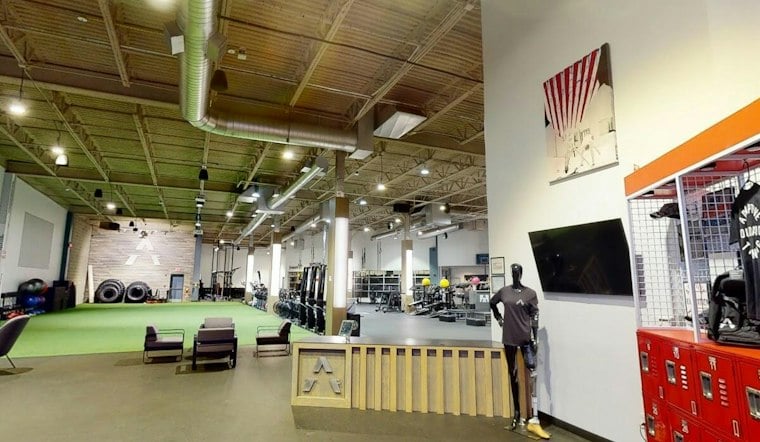
His recovery included treatment at military hospitals in Maryland and Texas, followed by outpatient care. After being medically retired in 2013, Watson later overcame an addiction to prescription opioids, the newspaper reported. He became involved with the Adaptive Training Foundation in Carrollton, where he worked on photography, video and social media and now helps newly injured veterans and athletes face the changes ahead.
The home’s practical details are the central change: Watson now has a place designed around the mobility limitations he has lived with since the blast. His experience also shows how a mortgage-free home from a nonprofit and federal adapted-housing grants are separate forms of support, with the source reporting no VA funding for this house.




