

























































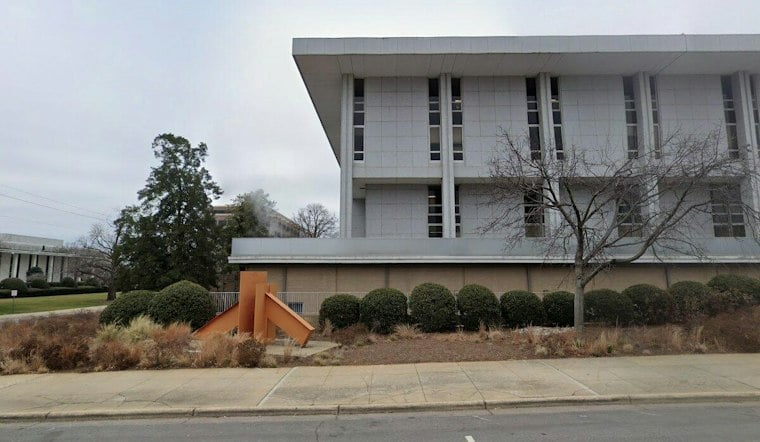
North Carolina ran a eugenics program in the early 20th century, and a new history argues it grew up alongside, and often inside, the same welfare offices that were supposed to help poor families. The state's Eugenics Board didn't operate in isolation. It functioned as part of the state welfare board itself, meeting monthly for four decades beginning in October 1933, after it was formed that February.
A Book Links Welfare Growth to Sterilization Policy
That overlap is the central argument of historian Anna Krome-Lukens's book Strong State, Weak Links: Eugenics and the Southern Politics of Welfare, published by the University of North Carolina Press, which examines how eugenics shaped the state's emerging welfare system before and during the New Deal. As The Assembly reports, the program's early focus was on poor white women, and most people sterilized in the 1930s and 1940s were poor white girls or women. In the postwar period, Black women became the main target of sterilization.
A review of Krome-Lukens's book published by the Society for U.S. Intellectual History notes that the share of sterilizations carried out outside state institutions increased after World War II, after already reaching about 40% of the state's 1,540 authorized sterilizations by the 1940s.
Caseworkers Held the Power to Refer Families
How did welfare and sterilization become so entangled? The Assembly's reporting describes a bureaucracy that mushroomed during the Great Depression: North Carolina recruited hundreds of additional social workers, and its welfare departments expanded in both number and size. The state's Board of Charities and Public Welfare trained those workers in collaboration with the University of North Carolina, and by 1941, 61% of county social workers had come through UNC's School of Public Welfare.
Those caseworkers carried enormous discretion. Per the same account, social workers investigated every recipient of relief. In a sample period in 1938, social workers denied 21% of applications, the outlet reports. Sterilization procedures could also be initiated by county welfare officials in the community.
One Orange County Case Illustrates the Pattern
The Assembly's account centers on a case from Orange County, where welfare superintendent George H. Lawrence received a call from a Hillsborough woman identified as Mrs. Oscar Chambers about a 16-year-old described as Pearl, a young white girl who had reportedly borne a child out of wedlock two years earlier and had a toddler named Peggy. According to the outlet's reporting, Chambers paid Pearl $2 a week as a housekeeper, and Pearl became pregnant again after an affair with an older man who had promised to marry her and then disappeared. Welfare officials suggested sterilization for Pearl, the outlet reports, citing a mental test that reportedly placed her IQ at 35 and a Duke Hospital examination that found her anemic and physically unfit for childbirth. Doctors performed sterilization and an abortion on Pearl, according to the same account.
Lawrence's reach extended well beyond that single case. A 1936 master's thesis by J. McLean Benson examined 21 sterilization cases Lawrence had submitted, 18 of which involved people outside institutions.
How the Board Worked
R. Eugene Brown, who became the board's secretary, had reportedly been overseeing sterilization petitions informally since 1929, well before the board's formal creation streamlined the approval process.
Who Was Sterilized, and the Numbers in Dispute
By the 1940s, North Carolina had authorized 1,540 sterilizations.
Totals for the full life of the program vary depending on the source and exactly what is being counted. DigitalNC reports that more than 7,600 people were sterilized in North Carolina between 1929 and 1974, while a North Carolina Law Review article describes nearly 7,600 people as having been authorized for sterilization over that same span — a distinction between people sterilized and people merely authorized that the sources do not reconcile.
North Carolina's Reckoning and a Compensation Question
Public criticism of North Carolina's eugenics and sterilization practices rose during the 1970s. Years later, North Carolina lawmakers took up the question of compensation: a version of House Bill 20 filed with the North Carolina General Assembly stated that a person sterilized under the state's Eugenics Sterilization Program between 1929 and 1975 shall receive compensation, though the available text does not establish whether that particular version became law or what final eligibility rules applied. Southern state expenditures on welfare more broadly quadrupled in the two decades after 1929, a mid-1930s bureaucracy that, as the Society for U.S. Intellectual History review puts it, was designed to move public welfare programs into the community — the same community infrastructure that, in North Carolina's case, also carried out sterilization decisions for decades.




