

























































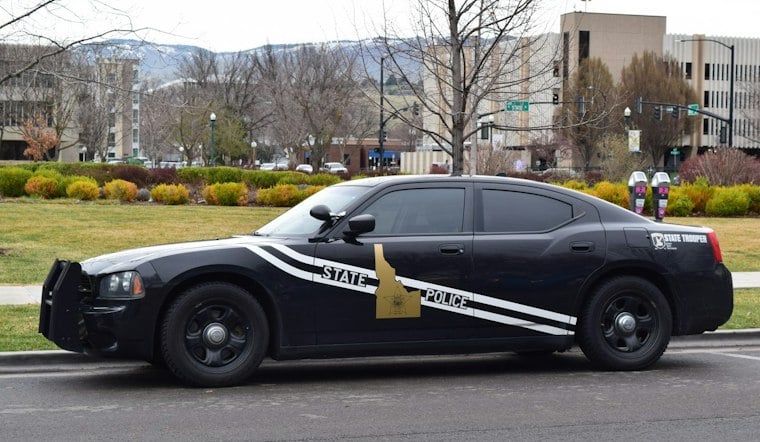
An Ada County district judge has ordered Idaho State Police and the Idaho Department of Correction to release officers’ employment dates and the reasons they left their jobs, reversing a records blackout the agencies imposed after reporters used similar data to expose alleged sexual abuse inside the state’s women’s prisons. Judge Patrick J. Miller issued the ruling on Nov. 5, siding with journalism nonprofits InvestigateWest and the Invisible Institute in a records fight that had stretched on for months.
A Records Fight Rooted In Prison Abuse Reporting
The ruling caps a lawsuit that InvestigateWest and the Invisible Institute filed against the two state agencies on June 16, after officials refused to keep providing updated officer employment histories. According to the Idaho Capital Sun, the agencies said they would no longer disclose whether an officer retired, resigned or was fired — a shift that came after InvestigateWest had already used similar records to expose alleged misconduct by dozens of Idaho prison guards.
That October 2025 reporting identified 37 prison workers accused of sexually abusing incarcerated women, with at least 18 resigning after the alleged misconduct or after it became public, per InvestigateWest. The fallout reached the Idaho Legislature: lawmakers removed a loophole in a sexual abuse law that had made it harder to charge prison staff, and ordered an independent review of how the women’s prison system handles abuse reports, according to the Idaho Capital Sun.
Judge Rejects The State’s Reasoning
In his ruling, Miller found that whether an officer was terminated, retired or resigned is public information under Idaho law, rejecting the agencies’ argument that disclosing a termination could imply disciplinary details lawmakers had exempted from release. The judge wrote that disclosing the reason for separation does not reveal the underlying details of an employee’s departure, and that information does not become nondisclosable merely because it sits in a file containing confidential material, the station’s report notes.
Idaho State Police had claimed the requested employment-history information lived in confidential, exempt decertification files, and at one point responded to a records request by saying it had no records at all. Miller found that explanation inconsistent with the fact that the state Peace Officer Standards and Training website offers its own public search tool for similar officer information, according to the same account.
Disabled Database Tool Draws Scrutiny
Court findings described in the reporting show Idaho State Police leadership had disabled a tool used to search an internal employment database, with the agency saying the report-generation tool was unreliable and returned different results for identical queries. Miller was unmoved, ruling that deactivating a tool doesn’t eliminate those records or transform them into nonexistent information. The Ada County District Court also found Idaho State Police had not shown it properly searched for the records in the first place, and ordered the agency to search again.
The judge further ruled that agencies cannot defeat public access simply by keeping records in a system they claim they cannot retrieve, disabling retrieval tools, or shifting the burden of identifying records onto requesters. He also ordered the disclosure of names of several state employees accused of misconduct, finding the names had been improperly redacted from records.
Why The Data Matters Beyond Idaho
The Invisible Institute, a Chicago-based nonprofit, uses Idaho officer certification and employment data for its National Police Index, a searchable database tracking certified police and correctional officers by state and where they’ve worked. The organization had obtained a database of all officers certified in Idaho to date, but the index’s Idaho data was last updated in May 2025, according to the National Police Index.
A February 2026 report from Boise State Public Radio found Idaho’s reduced access to officer employment data echoed changes in Alaska, Colorado, Louisiana, Montana and Virginia, deviating from the majority of states that have made such information more accessible. Separately, the Idaho Statesman reported that neighboring Oregon, Utah, Washington and Wyoming had all made officer employment information easier for the public to access, putting Idaho at odds with its own regional neighbors.
Reporters Say Transparency Is On The Line
InvestigateWest’s earlier investigation drew on interviews with 25 women who said they experienced sexual abuse across Idaho’s three women’s prisons, and found that only three women’s prison guards had been criminally charged with sexual contact with an inmate since 2015, despite at least 59 documented allegations of staff sexually abusing imprisoned women since 2020.
Jacob Fries said the public records were essential to reporting that led directly to a new state law protecting incarcerated people from abuses of power, and that the ruling advances government transparency and accountability in Idaho. The litigation was backed by grants from the National Freedom of Information Coalition through the John S. and James L. Knight Foundation, the Society of Professional Journalists’ Legal Defense Fund, and the Idaho Press Club.





