

























































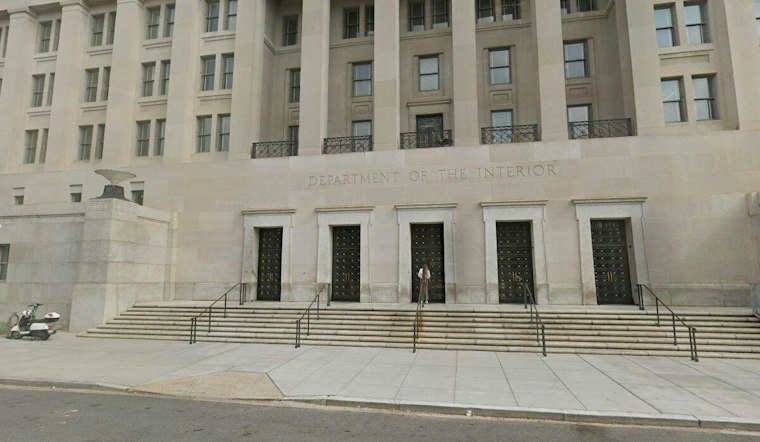
The Trump administration says it will pursue sales of federal land to states, local governments and Tribes as part of a broader push to shrink the government's enormous landholding, which spans more than 750,000 square miles, or 1.9 million square kilometers — an area bigger than Texas and California combined. The move is laid out in a new five-year strategic plan from the Interior Department, which oversees mining, drilling, grazing, recreation and other activities across a huge share of the country's public lands, most of them concentrated in Western states.
A Vague Blueprint With No Map Attached
According to the Associated Press, the strategic plan sets out Interior Department priorities and actions for fiscal years 2026 through 2030 and explicitly calls for offering federal lands for purchase by states, localities and Tribes. The Center for Western Priorities notes the plan also redirects conservation dollars to make sure the federal government does not acquire new public lands going forward.
What the plan does not do is just as notable. It does not say how many acres Interior intends to sell, which lands it considers nationally significant, or how it will price land for sale, per the same Center for Western Priorities analysis. Interior officials offered no details on what lands could be sold, nor the scope or location of potential sales, the report notes.
The Administration's Case for Selling
Agency officials said selling federal property would allow the government to focus resources on nationally significant lands, and officials also said a portion of any land-sale proceeds would go back to the buyer for conservation purposes elsewhere, though the plan does not specify what share of proceeds that would involve. The strategic plan additionally calls for strategic land transfers and exchanges to support greater energy production, reflecting what the report describes as the administration's view of most public lands as assets to be used, rather than set aside for preservation.
Interior's current strategic plan was last updated under former President Joe Biden in 2022, and nothing requires future administrations to follow the new version. It remains uncertain whether Interior Secretary Doug Burgum can achieve the administration's goals without cooperation from Congress, a question the current plan leaves unresolved.
Echoes of a Failed 2025 Push
This isn't the first recent attempt to offload federal acreage. In 2025, conservative lawmakers, including Sen. Mike Lee, sought to sell vast tracts of land in Utah and Nevada, arguing the sales could generate revenue and ease growth pressures in booming Western cities. Lee's proposal would have required the Interior and Agriculture departments to dispose of between 0.5% and 0.75% of the land managed by the Forest Service and Bureau of Land Management — roughly 2.2 million to 3.3 million acres, or about 8,900 to 13,400 square kilometers, according to Colorado Newsline.
Under that plan, state and local governments could nominate parcels of land and would be granted priority to purchase them, with eleven Western states — Alaska, Arizona, California, Colorado, Idaho, Nevada, New Mexico, Oregon, Utah, Washington and Wyoming — eligible, while Montana was notably exempt. Designated lands such as national parks, monuments, wilderness areas and national recreation areas were excluded from sale under the proposal. A separate, earlier proposal from Rep. Celeste Maloy and Rep. Mark Amodei had targeted 11,500 acres of Bureau of Land Management land in southwestern Utah and about 450,000 acres in Nevada. Those 2025 efforts ultimately failed amid bipartisan opposition.
Who Gets a Say
State and local officials have long pushed for greater control over activities regulated by the Interior Department, a tension that runs through much of the current debate over federal land policy. The Bureau of Land Management's disposal options are governed in part by the Federal Land Policy and Management Act and the Recreation and Public Purposes Act, according to the Congressional Research Service, though the detailed requirements of those laws go beyond what's been outlined in Interior's new plan.
For now, the scale of any actual sales remains an open question. The Associated Press, whose reporting on this story was authored by Matthew Brown, said it had requested comment and further details from Interior officials. Whether this new plan fares differently than the 2025 push, or runs into the same bipartisan resistance, is something only time — and Congress — will answer.





