

























































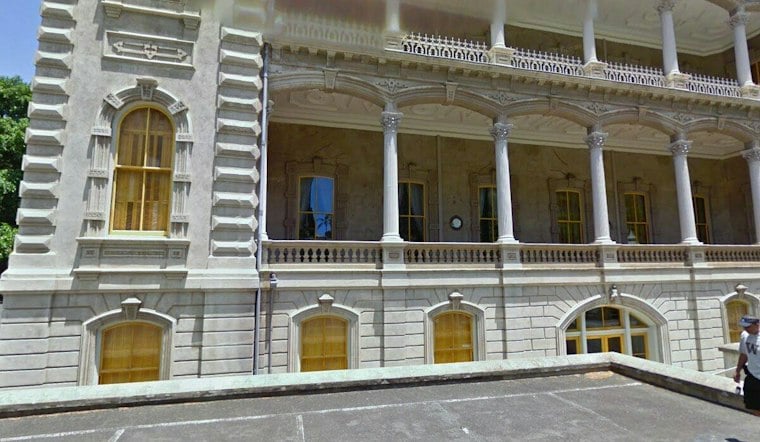
Drums, chants and the crisp march of the Royal Guard filled the grounds of ʻIolani Palace in Honolulu on Monday as the public gathered to honor King David Kalākaua's 190th birthday. The celebration folded in a tribute to Japanese culture's impact on Hawaiʻi in the late 1800s, with traditional Japanese dance performances staged alongside the live entertainment and pageantry that have long marked the occasion.
The Friends of ʻIolani Palace commemorated the king's birthday with live entertainment, a Royal Guard review and the traditional Japanese dances, according to Hawaii News Now. The Royal Hawaiian Band provided the live music, and the palace's own event listing had scheduled that performance for 11:30 a.m., with the Royal Guard review and posting set for noon, per ʻIolani Palace's program.
Paula Akana, who Hawaii News Now identifies as president and CEO of the Friends of ʻIolani Palace, said the annual celebration invites the public to the palace grounds to learn about Kalākaua's life and legacy. A separate account from Hawaiʻi Public Radio refers to Akana as the organization's executive director; the discrepancy between the two titles is unresolved. Visitors who came out for the celebration viewed rare artifacts of King Kalākaua from the Hawaii State Archives, part of the broader effort to bring the king's story to life beyond the day's performances.
Dances Tied to a King's Friendship With an Emperor
The United Japanese Society of Hawaii performed the traditional Japanese dances, drawing from the historical period surrounding the arrival of the first group of Japanese contract laborers in Hawaiʻi in 1868. According to the palace's own listing, those performances specifically highlighted the Meiji era and the era surrounding the arrival of the Gannenmono, the first group of Japanese contract laborers to reach Hawaiʻi's shores that year.
Exactly how many of those laborers arrived remains murky across the historical record. The United Japanese Society of Hawaii states that five women and 136 men, 141 people total, sailed 14 days aboard the ship Scioto from Japan to Hawaiʻi, a detail noted on the society's own website. Honolulu Civil Beat, however, has reported that 153 immigrants known as Gannenmono arrived in Honolulu in 1868, while the Honolulu Star-Advertiser has reported that a diverse group of 149 men, women and children arrived in Honolulu Harbor after setting out from Yokohama 33 days earlier. The three counts do not agree, and nothing in the record settles which figure is correct.
Lynn Araki-Regan, president of the United Japanese Society of Hawaii, said Kalākaua valued bridges between nations and cultures, and that meaningful relationships can transcend borders and generations. The Friends of ʻIolani Palace partnered with Araki-Regan's organization to share the historic friendship between King Kalākaua and Emperor Meiji, a bond that, according to Hawaii News Now, contributed to strong ties between Hawaiʻi and Japan.
A Royal Visit That Sparked a Lasting Bond
That friendship was not just symbolic. In July 1881, King Kalākaua, then 45, met the Meiji Emperor, who was barely 29, several times during a two-week stay in Japan, according to a detailed account from Honolulu Civil Beat. The visit came roughly 13 years after the Gannenmono had already begun settling in Hawaiʻi, and it cemented a relationship between the two monarchs that organizers say still resonates in today's commemorations.
The connection between Hawaiʻi and Japan has been marked before on a grand scale. The 100th anniversary of the Gannenmono's arrival, observed in 1968, included a visit from Prince Hitachi and Princess Hanako of Japan, as the Honolulu Star-Advertiser has reported. The United Japanese Society of Hawaii, for its part, lists celebrating Kalākaua's birthday among its legacy events and says on its website that it has carried out its mission to keep that tradition alive since 1958.
Free Tours and a Palace Dressed for the Occasion
Beyond the performances, ʻIolani Palace offered free audio tours for kamaʻāina. The palace's event listing specified that the self-led tours ran from 9 a.m. to 3 p.m., required a valid Hawaiʻi ID and were limited to the first 500 tickets. The listing also noted that the palace grounds were decorated as they had been for Kalākaua's 50th birthday, giving visitors a glimpse of how the monarchy once marked the occasion.
The celebration arrived the same week the Friends of ʻIolani Palace were also preparing a fundraising gala and additional festivities on Nov. 16 to mark both Kalākaua's birthday and the organization's own 60th anniversary, according to Hawaiʻi Public Radio. Together, the day's events offered Honolulu residents and visitors alike a chance to step back into the world of the Merrie Monarch, whose reach, organizers say, extended far beyond Hawaiʻi's shores.



