

























































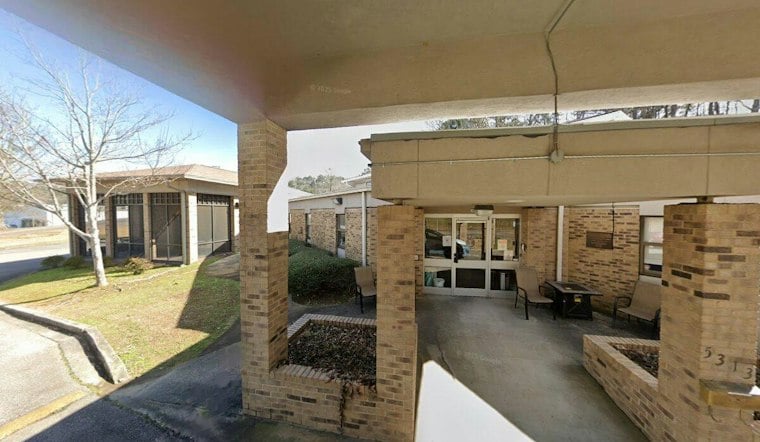
Irondale has a new place to ride out a tornado. The city held a ribbon cutting on Tuesday for a community storm shelter at 5313 Beacon Drive that can hold up to 113 people, giving residents without a basement or safe room a place to shelter when severe weather rolls through Jefferson County.
According to The Trussville Tribune, the city offered tours of the shelter to attendees and media following the ceremony. The 12-by-50-foot steel structure was manufactured by Safe-T-Shelter of Hartselle and installed in September, and it is built to FEMA P-361 and ICC 500, the national standards for tornado safe rooms designed to protect occupants from extreme winds and flying debris.
Irondale Mayor James D. Stewart Jr. framed the project as a long-overdue safety net for the city of roughly 13,500 residents, according to U.S. Census figures. “Every family in the Dale deserves a safe place to go when the sirens sound,” Stewart said, adding that the shelter offers refuge to neighbors whose homes lack a basement or interior safe room.
Who Paid for the $697,000 Project
Construction of the shelter and its site totaled approximately $697,000, with Jefferson County funding about $438,000 and the Irondale City Council approving $259,266.60 in city funds, the Tribune's report states. Jefferson County managed the shelter's design and construction under a 2022 agreement with the city. Those figures mark a contrast with a Jefferson County Commission agenda item from February, which listed a $649,143.70 construction contract for the project, split between $198,843.70 from the city and $450,300 from county storm-shelter grant funds; the available record does not explain the difference between the two sets of numbers.
The Tribune's November 17 report lists the finished shelter's capacity at up to 113 people, while an earlier city announcement on November 2 described the shelter as designed to accommodate up to 200 people. The two capacity figures differ, and it is not clear from available reporting why they changed.
Inside the Shelter
The finished space includes a restroom, battery backup power, mechanical ventilation and a dehumidifier, emergency exit lighting, and on-site parking. Joe Knight, who represents District 4 on the Jefferson County Commission, led the project for the county. Stewart thanked Knight, Jefferson County and the city council for their partnership and investment in resident safety.
When the Shelter Will Open Its Doors
The city says it will open the shelter as soon as the National Weather Service issues a tornado watch for Jefferson County or the Irondale area. If a tornado warning is issued before a watch, the shelter will be unlocked immediately, per the same report. Officials have advised residents in mobile homes or other vulnerable housing to head to the shelter during a storm watch, before conditions worsen, and have warned that late arrivals may not be admitted once outside conditions turn dangerous.
The city will close and lock the shelter doors once a tornado warning covers Irondale or outdoor sirens sound, reopening them only after the warning expires and officials give the all-clear. Shelter openings will be announced through the city's smartphone app, TextMyGov alerts and other communication channels.
A Broader Push for More Shelters in Alabama
Irondale's new facility adds to a patchwork of public storm shelters across the state. In Morgan, Limestone and Lawrence counties, officials have said there is a need for more public storm shelters despite nearly 50 already in operation, according to Government Technology. Many of the 47 shelters in that north Alabama region measure 10 by 48 feet and hold 96 people, with costs ranging from $50,000 to more than $100,000.
The Tuscaloosa County Emergency Management Agency estimates basic storm shelters cost roughly $1,000 per person of capacity, not counting land and access-road expenses, and notes that federal matching grant funds are limited, competitive, and often primarily available only after a declared disaster. Irondale's own path to its new shelter followed that same reality, built through a multi-year partnership between the city and Jefferson County rather than a single quick grant.





