

























































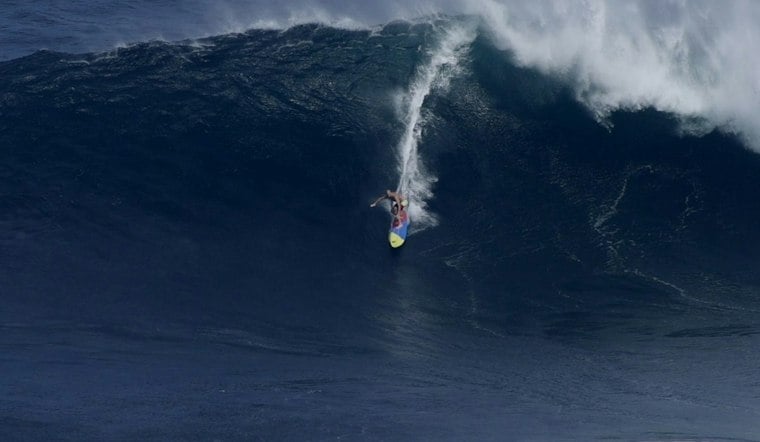
A Jackson man is paralyzed from the waist down after a surfing accident in Hawaii left him with a rare spinal cord condition, and his family is now racing to raise money for his medical care and eventual trip home. Brock Kelly was injured during a work trip to Hawaii on November 6, and doctors in Maui diagnosed him with surfer’s myelopathy, a rare, nontraumatic spinal injury, according to his family and the organizers of a fundraiser set up in his name.
Kelly’s family hopes the paralysis will not be permanent, though that outcome remains uncertain, according to Darkhorse Press. A family friend organized a GoFundMe campaign for Kelly and his wife, Mary Grace, to help cover travel, medical care and rehabilitation expenses as the family navigates what comes next.
Fundraiser Climbs Past $25,000 Toward $45,000 Goal
As of information provided Tuesday, the campaign had raised more than $25,000 from over 270 donations toward a $45,000 goal, per the same report. Organizers said the campaign came together after people began asking how they could help arrange Kelly’s travel and eventual return home.
Fundraiser organizers described Kelly as strong, resilient and kind, and said a long recovery may lie ahead while the permanence of his paralysis remains unknown. They asked the community to pray for Kelly, his medical team and his recovery, adding that prayers, messages and encouragement can help even those unable to donate financially. The campaign also provides updates and donation information for anyone following Kelly’s progress.
Family Coordinating Care Between Hawaii and Mississippi
Kelly’s family is working with neurosurgeons in both Hawaii and Mississippi on a plan to eventually bring him home for continued treatment, the fundraiser organizers said. No details on a timeline for that transfer have been released.
Surfer’s myelopathy is described in a 2026 case-series article published in the Chinese Neurosurgical Journal as a rare, nontraumatic spinal cord injury tied to prolonged spinal hyperextension, the position surfers often hold while paddling or popping up on a board. The same article estimates the condition’s incidence at 2.2 to 6.6 injuries per 1,000 hours of surfing and notes that fewer than 100 cases have been reported worldwide since the injury was first described in 2004 — figures that come from that single study and have not been independently verified.
Other Cases Show a Wide Range of Outcomes
Recovery from surfer’s myelopathy has varied widely in previously documented cases. In a Bali case series detailed in the same journal, three recreational surfers developed lower-back pain followed by rapidly progressive leg weakness and urinary retention, and all three showed partial neurological improvement before being discharged following supportive treatment.
A PubMed-indexed review of the condition found that steroids were the most common treatment among reported cases, with patients who received them improving 55% of the time and no adverse effects noted, though the same review concluded that complete neurological deficit occurred in more than half of all cases — underscoring how unpredictable the injury can be.
Hawaii has seen several notable cases in recent years. Hawaii News Now reported that David Togami suffered surfer’s myelopathy in 2019 that paralyzed his legs, but after two years of rehabilitation work, he went from using a wheelchair to walking again. In a separate case, the station reported that a 16-year-old from Los Altos, California, was left paralyzed from the waist down after a surfing lesson in Waikiki and was medically evacuated to the Shepherd Center in Atlanta for rehabilitation.
For Kelly’s family, those stories offer a measure of hope even as they wait to learn what his own recovery will look like. For now, they say what helps most is simple: prayers, encouragement, and support in sharing his story as he begins what could be a long road back.





