

























































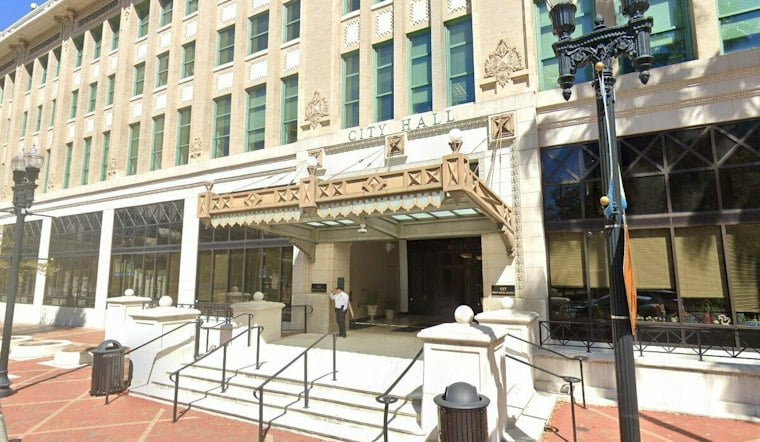
Jacksonville developers could soon pay at least $20,000 to jump to the front of the permitting line under a proposal headed for a final City Council vote next Tuesday. Ordinance 2026-0885 would let qualifying projects pay for expedited city permit review, with the bulk of that money flowing into the city's building inspection operation and a smaller share earmarked for affordable housing.
The legislation, set for a final Council vote on November 24, cleared three committees with near-unanimous support, according to the Jacksonville Daily Record. Rory Diamond cast the lone dissenting vote when the measure came before the Finance Committee, the paper reported. Under the plan, 90% of the fees developers pay would go into a special revenue fund for the city's Building Inspection Division, which enforces city and state building codes.
Who Would Qualify for the Fast Track
Not every builder could simply write a check to skip ahead. Projects would first have to satisfy standard city rules on land use and zoning, environmental protection, traffic, and other requirements, per the Daily Record's reporting. The ordinance would also open the expedited track to projects that create or retain at least 100 jobs, or at least 50 jobs if the development sits in an economically distressed area.
The fee itself isn't fixed forever. The Daily Record reports the ordinance would let the city's Director of Public Works raise the charge from $20,000 up to $40,000 without further legislative action, while any increase beyond that ceiling would need City Council sign-off.
Where the Conflicting Fund Numbers Come From
The remaining 10% of the fees would go toward affordable housing, though exactly which fund that money lands in depends on which account of the story you read. The Daily Record's November reporting describes that slice heading to an affordable housing special revenue fund, while an October report from Jacksonville Today described the same 10% going to an affordable housing trust fund. It's not clear from available reporting whether those two labels refer to the same pot of money.
Nina Sickler, who is involved in shepherding the legislation, told the Daily Record the proposal came together through coordination between the city and the Northeast Florida Builders Association. She also said she would provide guidance on how the fee-increase mechanism would actually work. Committee efforts to restrict the city's ability to raise fees on its own reportedly failed to gain traction before the ordinance advanced.
Builders Group Backs the Plan
The builders' trade group that helped shape the proposal is firmly behind it. NEFBA President Scott Brannock told the Daily Record by text that the association supports the legislation, a notable endorsement given the group's role in developing the measure alongside city staff.
The push for paid expedited review follows more than a year of city experimentation with speeding up permitting generally. Jacksonville reported in August 2025 that residential building permits were averaging eight days for a first review and commercial permits were averaging 13 days, according to News4JAX. The city had set a goal of finishing its separate Express Lane Permitting projects in under 30 days, a stark contrast to reviews that can otherwise stretch on for months.
Lessons From the Express Lane Pilots
Jacksonville's first Express Lane pilot, a fast-food restaurant project, saw applications submitted on June 9, 2025, with final permits issued in less than three weeks, News4JAX reported at the time. The same project took 15 days for civil review and 18 days for the building permit process overall, according to the station's coverage.
Whether Jacksonville's City Council ultimately approves, amends, or rejects Ordinance 2026-0885 next Tuesday remains to be seen. For now, the proposal sits before lawmakers as a test of whether letting developers pay to jump the line can also help fund the inspectors reviewing everyone else's paperwork — and chip in, in some form, toward the city's affordable housing efforts.





