

























































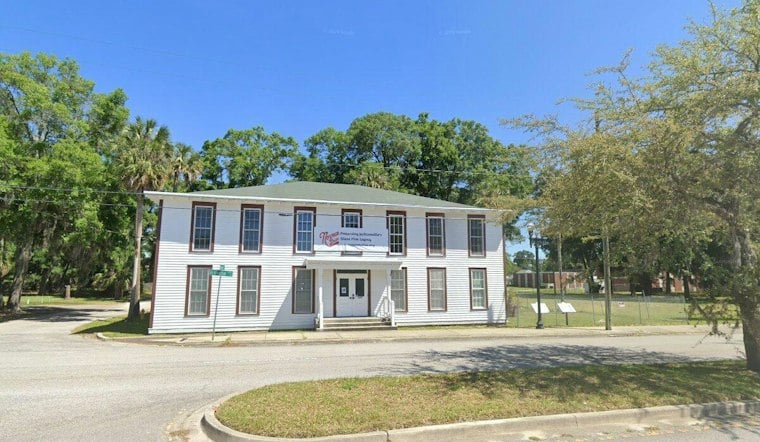
A century-old silent film shot right here in Jacksonville is getting an entirely new voice this weekend, and audiences will only get one chance to hear it. The Jacksonville Symphony is staging the world premiere of a newly commissioned orchestral score for The Flying Ace, the 1926 film with an all-Black cast that remains the only surviving feature-length movie from the city's own Norman Studios.
The film was shot in Jacksonville in 1926, with an all-Black cast, according to jacksonville.com, which reports that the symphony commissioned six composers — Carlos Simon, Jongnic Bontemps, Kathryn Bostic, Nathalie Joachim, Allison Loggins-Hull and Levi Taylor — to write the new score. The symphony will only play it once, this Saturday, Nov. 14, at Jacoby Symphony Hall, the outlet notes, and it will be the first time anyone has ever heard it played in public. Tickets for the 7:30 p.m. performance are listed at $39 to $99, per the same report. First Coast News also covered the upcoming premiere ahead of the performance, scheduled for November 14 at 7:30 p.m.
A Studio Built to Portray Black Heroes
The film holds a singular place in Jacksonville history. It is the studio's only surviving feature-length film, according to the Jacksonville Symphony, which also describes Norman Studios as the first U.S. studio dedicated to portraying African Americans in leading roles with dignity and heroism. The symphony's program notes describe the premiere as the world premiere of a newly commissioned orchestral score built specifically for the film.
Much of The Flying Ace was filmed close to home. It was shot in Jacksonville's historic Old Arlington neighborhood and in nearby Mayport, the symphony's materials state. The film's recognition extends beyond local pride — jacksonville.com reports it is the only surviving feature-length film made at Jacksonville's Norman Studios, and was added to the Library of Congress' National Film Registry in 2021.
A Mystery Plot Still Resonates a Century Later
The story itself centers on a aviation-era whodunit. According to IndieWire, Stokes and Peg must solve the mystery of who stole $25,000 from a railroad payroll — a plot that has kept the silent film relevant for modern audiences a hundred years on.
IndieWire's coverage also ties the film's centennial to broader conversations about representation, citing a study finding that only 6.9 percent of disabled characters onscreen are Black among the 100 top-grossing films of 2025. That context has shaped how other institutions are marking the film's hundredth anniversary this year.
Other Centennial Screenings Around the Country
Jacksonville isn't the only place marking the milestone. ReelAbilities is bringing the film back to movie screens on its centennial in collaboration with the Smithsonian's Center for Folklife and Cultural Heritage, per IndieWire's reporting. Indiana University Cinema held its own free, ticketed screening on Oct. 7, with live music performed by Matthew Whitaker and Robert Derke, according to the university's Indiana University Cinema listing.
That screening also built in extensive accessibility features. Bridge Multimedia Technologies notes that the program included American Sign Language interpretation and professional live CART captioning for spoken portions, assistive-listening and audio-description devices, a post-film conversation, and a reception, according to Bridge Multimedia, which also created audio description for the centennial presentation. For Jacksonville audiences, though, Saturday's performance at Jacoby Symphony Hall remains a once-only chance to hear the new score performed live alongside the film that put the city on the map a century ago.





