

























































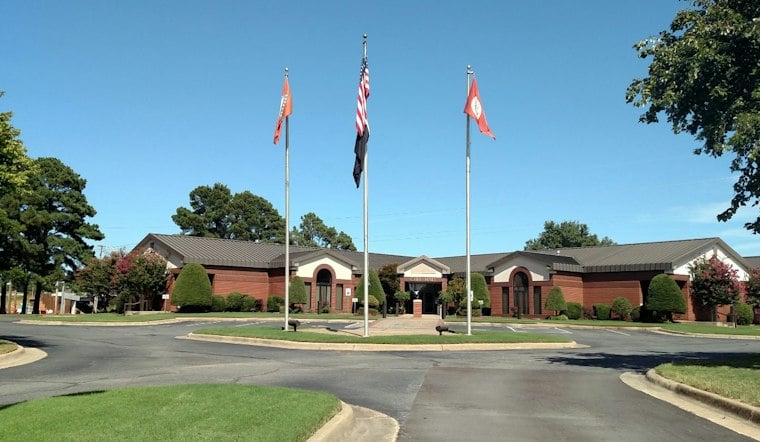
Jacksonville voters have narrowly decided to scrap the city's at-large voting system for city council elections, approving a ward-based alternative by a margin of just 39 votes out of the ballots cast. The Jacksonville NAACP is calling it a hard-won victory after what its leadership describes as nearly two years of pushing the city to change how council members get elected.
Jacksonville NAACP president Reginald Ford said residents in Wards 2 and 3 were underrepresented under the at-large system, which the organization has argued left council members disconnected from residents' concerns, according to a statement reported by THV11. The Jacksonville NAACP had advocated specifically for residents of Wards 2 and 3, arguing the at-large structure diluted their voice on the council.
The vote, held on November 3, 2026, split close: the ward-based initiative received 3,063 votes in favor against 3,024 against, per the station's reporting. That tally lines up with Pulaski County's own unofficial results, which show a partial breakdown crediting the initiative with 2,177 votes and roughly 50.31 percent support in one excerpt published by the Pulaski County Election Commission, though that county document is only a partial snapshot and does not itself spell out a certified, final outcome.
A Campaign Years in the Making
According to the NAACP's account, the organization conducted an education campaign on ward-based voting ahead of the election, and the effort traces back further than this fall's ballot fight. The Jacksonville NAACP reportedly presented a hybrid voting approach to the city council in early August 2025, only for the council to decline putting that hybrid proposal to a public vote, per the NAACP's statement relayed by THV11.
Earlier reporting from the Northwest Arkansas Democrat-Gazette described the initiative as the product of discussions that had gone on for nearly two years, according to Ford. The ballot question itself, per a notice of election from the Pulaski County Election Commission, asked voters whether to abolish the at-large voting system and establish a ward-based voting system for the city.
The NAACP's statement also points to a jump in turnout as evidence the push mattered: voter participation in Wards 2 and 3 increased by approximately 15 percent between the 2022 and 2026 elections, the organization said. The group further stated that three incumbent Jacksonville council members lost their seats, framing the results as a broader signal of voter appetite for change.
What Changes, and When
Jacksonville's city council will be reshaped by the ward-based voting initiative starting with the 2027 election cycle, and the new system applies to future city council elections going forward, not the races already underway. Upcoming runoff races will not be affected by the new ward-based system, THV11 reported; early voting for those runoffs starts Tuesday and runs through November 30, 2026, with runoff election day set for December 1, 2026.
The city of Jacksonville has acknowledged efforts to place the ward-based voting initiative on the November general election ballot and said it respects and honors the democratic process behind the initiative, according to the station's reporting. The NAACP, for its part, said it is encouraging elected officials to listen, compromise, and represent the entire community going forward.
The State Law Behind the Deadline Pressure
The timing of Jacksonville's vote intersects with a statewide filing deadline. Arkansas Act 283 of 2025, approved on March 12, 2025, requires that ordinances setting how city council members are elected be filed with the county clerk no later than August 31 of the year before the council election, according to the Arkansas General Assembly.
The same act specifies that a first-class city with an ordinance enacted under that provision must file it with the county clerk no later than January 1, 2026, and it spells out the consequence of inaction: a first-class city that does not file such an ordinance will have its council members elected at large by default. That statutory backdrop underscores why the timing of Jacksonville's ballot fight, and its narrow outcome, carries added weight for how the city's elections will run in the years ahead.




