

























































A Charlotte County man with a felony record stretching back nearly two decades is headed to prison for 12 years after a judge declared him a habitual felony offender for possessing a firearm as a convicted felon. Jaime Chenault was sentenced following an open plea to the court, meaning he chose to plead directly rather than negotiate a deal with prosecutors.
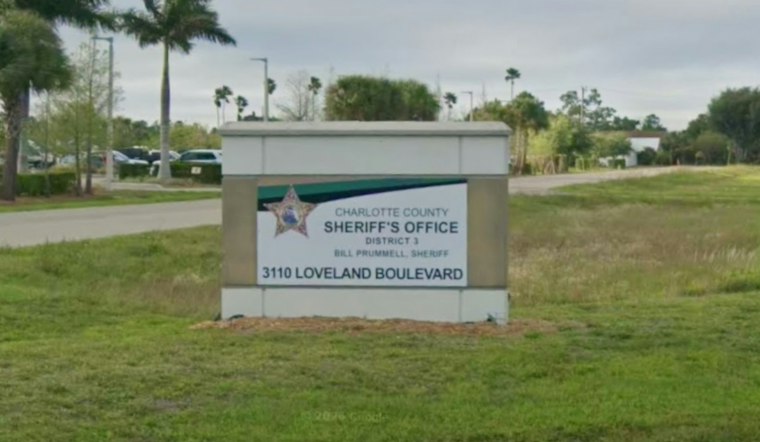
The case traces back to September 2025, when residents called the Charlotte County Sheriff's Office about a suspicious person outside a home, according to the Charlotte County Sheriff's Office. Deputies who responded say they found marijuana and a firearm on Chenault after his arrest, along with drug paraphernalia. The sheriff's office says Chenault also gave deputies a false name and date of birth, and that a records check turned up a warrant out of Tallahassee for violating his conditional release from prison.
Court records referenced in the sheriff's office update show Chenault had been released from prison in 2025 and violated the terms of his probation shortly afterward — meaning the September arrest came not long after he had regained his freedom. He was ultimately adjudicated guilty of possession of marijuana, possession of paraphernalia, and resisting arrest without violence, and received credit for time already served on those three charges.
A Record Dating Back to 2007
The habitual felony offender designation did not come out of nowhere. The sheriff's office update notes that Chenault served time in 2007 for a dozen charges of uttering a forged instrument and grand theft under $5,000, and that he was declared a habitual felony offender in 2008 after a string of charges that included aggravated assault, burglary to an occupied dwelling, trafficking in stolen property, grand theft, possession of a firearm by a convicted felon, and intimidation of a witness.
Florida law spells out exactly what that designation means. Under Florida Statutes § 775.084, a habitual felony offender is a defendant for whom a court may impose an extended prison term, and the law requires that status be determined in a separate proceeding, with the court obtaining and considering a presentence investigation before handing down the sentence. Defendants in Florida may also give up their right to a jury trial and plead directly to the court for sentencing, which is what Chenault did in this case.
Sheriff Says the Sentence May Not Be Enough
Sheriff Bill Prummell said Chenault had plagued the community and caused repeated trouble, and he went as far as to say the 12-year sentence might not be long enough given Chenault's history. Prummell also thanked his team for catching Chenault and securing the evidence used by the state attorney's office and the courts, a sentiment his office framed on Facebook as “This is great news for the people of Charlotte County!”
Assistant State Attorney Caitlin Sorenson prosecuted the case. Chenault's sentence also carries a six-month suspension of his driver's license tied to the case.
Another Habitual Offender Case in the County
Chenault's sentencing adds to a string of recent habitual-felony-offender cases out of Charlotte County. Earlier this year, Hoodline reported that Anel Angel Estremera was sentenced to 15 years in prison as a habitual felony offender for a 2024 burglary, with concurrent sentences covering burglary of a dwelling, possession of an electric weapon by a convicted felon, possession of ammunition by a convicted felon, and dealing in stolen property. The two cases are separate, but together they reflect how Florida's habitual offender statute is being applied locally to defendants with long criminal histories.




