

























































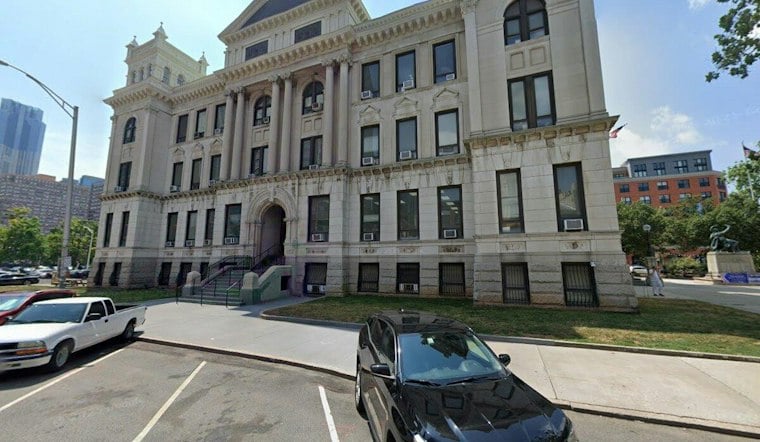
Jersey City Council members are set to consider a resolution Tuesday night backing the Break the Bonds NJ campaign, which calls on New Jersey to immediately divest $10.1 million in liquid Israeli bonds. The measure also calls on state Investment Director Shoaib Khan to sell or trade those bonds and backs legislation barring state investment in AI companies that collect personal data to determine immigration status.
The council's regular session convenes at 6 p.m. at City Hall, 280 Grove St., with a livestream on Microsoft Teams, according to Hudson County View. The resolution is sponsored by Ward D Councilman Jake Ephros and would also support Assembly bill A2003 and its companion, S470, which target AI firms that use personal data to determine immigration status.
A Legal Question Left Hanging
Before any vote, Councilman-at-Large Michael Griffin raised a pointed question during discussion: whether an executive order from the previous administration might conflict with the resolution. Ephros said he had been in touch with Mayor James Solomon's office about the issue but did not have a definitive answer yet, per the same account. Councilwoman Denise Ridley separately asked whether the law department had any insight into the potential conflict.
Acting Corporation Counsel Lisa Scorsolini told the council this was the first she was hearing of the question and that she would need to get back to members the following day. The report notes that Jersey City has no jurisdiction over the matter the resolution addresses, since the city cannot itself direct state investment decisions. The executive order in question was signed by former Mayor Steven Fulop, who had said combating antisemitism was a core civic responsibility and that political disagreement should not become a test of Israel's legitimacy or a people's right to exist.
Advocates See Statewide Momentum
The North Jersey Democratic Socialists of America told the outlet there was a strong chance the resolution would pass and said approval could pressure state representatives to repeal the statute authorizing New Jersey's investment in Israeli bonds, while building statewide momentum to divest from both Israeli bonds and Palantir. The group also argued the vote could prompt other New Jersey municipalities to adopt similar measures.
That Palantir reference traces back to February, when U.S. Representative Rob Menendez, who represents New Jersey's 8th District, urged the New Jersey State Investment Council to divest $130 million in Palantir funding, citing the company's ongoing $30 million agreement with U.S. Immigration and Customs Enforcement. New Jersey's Palantir holdings were valued at $130.9 million as of November 30, 2025, according to state officials cited by NJ.com.
A Broader Fight Over New Jersey's Anti-Boycott Law
NJ.com reported that Assemblyman Ravi Bhalla has said he plans to introduce legislation to repeal New Jersey's anti-boycott law, while former Gov. Chris Christie has said repealing it would be the wrong thing to do. The Jersey City resolution targets a separate statute, N.J.S.A. 52:18A-89.8, which authorizes state investment in Israeli bonds; Christie’s 2016 law restricts investment in companies that boycott Israel.
Jersey City's potential vote fits into a national pattern. The Internationalist Law Center has said more than 30 U.S. cities, counties, and states have taken divestment measures over the past three years, as reported by Dropsite News. A February report identified at least 14 campaigns targeting Israeli bonds nationwide, and Jewish Voice for Peace reported more than 10 active campaigns as of December 2025, according to Prism Reports.
How Other Cities and States Have Acted
Elsewhere, the scale of these campaigns varies widely. Palm Beach County commissioners voted not to reinvest $67.5 million in Israel bonds even as the county held close to $1 billion in such holdings, Prism Reports noted; Dropsite News reported that the county's Israeli bond stake, which stood near $1 billion in January, fell to roughly $932.5 million after a November 1 bond maturity reduced its share of the portfolio from 24.2% to 22.5%. In Rhode Island, more than 76% of Providence voters approved a ballot measure on November 3 requiring the city to divest from certain countries and companies, a result Providence for Palestine said made it the first U.S. city to adopt binding divestment through a popular vote, per Prism Reports.
Massachusetts has seen action too, though accounts of the dollar figure differ: Prism Reports reported that Cambridge's City Council voted on October 28 to divest more than $20 million in municipal funds from investments tied to apartheid and genocide, while Dropsite News put the figure at $24 million. The Easthampton City Council separately approved, unanimously, a resolution calling for divestment from four companies tied to Israel's military actions in Gaza. Portland and Belfast city councils both voted in 2024 on similar divestment measures, according to the same report.
In New York, organizers behind the Break the Bonds New York State campaign have targeted the New York State Common Retirement Fund, which Truthout reported holds more than $360 million in Israel Bonds, with organizers estimating Comptroller Thomas P. DiNapoli has purchased more than $145 million in such bonds since October 2023. State and local governments and public pension funds nationwide hold more than $1.6 billion in Israel Bonds in total, per the same report, and a Jewish Voice for Peace organizer said public treasurers in Michigan, Maryland, and Minnesota have already chosen not to reinvest following grassroots pressure. Whether Jersey City joins that growing list — and how the unresolved executive-order question gets answered — remains to be seen as council members prepare to take up the resolution.





