

























































Lisa Steinberg’s 1987 death led to a manslaughter conviction that New York’s highest court later affirmed. Nearly four decades later, a New York Post account of a dinner with Joel Steinberg revisited his continued denial of responsibility. Steinberg, a disbarred lawyer, was convicted in the case.
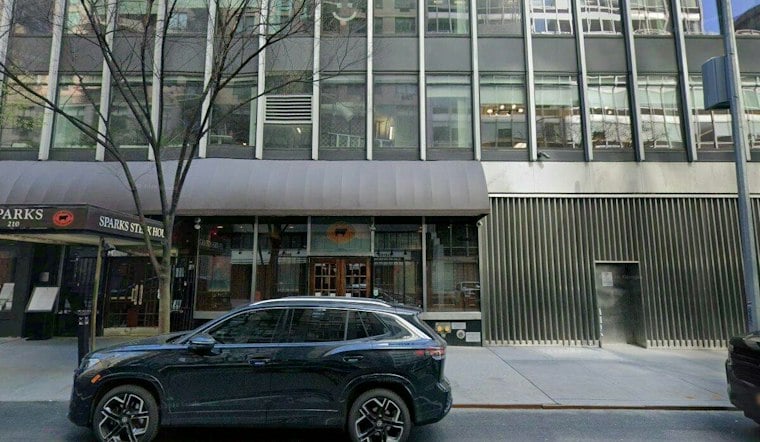
In the New York Post article, reporter Reuven Fenton says he spent days persuading Steinberg to meet and arranged the interview for the 30th anniversary of Lisa’s death. Fenton describes a seven-hour dinner at Sparks Steak House, where the two stayed until after midnight.
Fenton describes Steinberg as living in Harlem, decades after the Greenwich Village trial that drew national attention. According to the reporter, Steinberg spoke during the dinner about what he viewed as injustices he had suffered.
What Happened to Lisa Steinberg in 1987
Lisa Steinberg suffered severe blunt-force head trauma on the evening of November 1, 1987, inside the one-bedroom Greenwich Village apartment she shared with Steinberg and Hedda Nussbaum, according to a New York Court of Appeals opinion reproduced by law.cornell.edu. The court record states that Steinberg initially rejected Nussbaum's offer to call 911, only relenting after his own attempts to resuscitate the six-year-old failed. Prosecutors said at trial that Steinberg beat Lisa comatose that night and did not summon emergency help for 12 hours, according to UPI Archives.
Lisa never regained consciousness. The Cornell-hosted court record states that life support was discontinued on November 5, 1987, while a Vanity Fair archive account says St. Vincent's had declared her brain-dead the day before, on November 4, due to an acute subdural hematoma — accounts that differ slightly on the exact date of the brain-death declaration. Lisa died in the hospital that same week without regaining consciousness, per UPI Archives. Her casket was carried from a funeral home in New York en route to burial in Valhalla, New York, on November 12, 1987.
Manslaughter Conviction, Not Murder
A jury acquitted Steinberg of murder but convicted him of first-degree manslaughter, a verdict the Appellate Division later affirmed, according to the Cornell-hosted opinion. The New York Court of Appeals held that even someone without specialized medical knowledge can form the intent required for manslaughter by withholding necessary medical care from a victim. Hedda Nussbaum, who prosecutors said endured years in the relationship, was never tried; UPI Archives reported that charges against her were dropped because of injuries she had suffered at Steinberg's hands, and she went on to testify against him. Steinberg, already disbarred after his arrest for lying about his qualifications for a law license, served nearly 17 years of a maximum 25-year manslaughter sentence before his release in June 2004, according to NBC News — though a New York Times account of his release instead described it as coming 16 years after his conviction.
NBC News reported that Steinberg continued to deny responsibility for Lisa's death after walking out of prison, an assertion of a unique, loving relationship with his daughter that had already led to five rejections by the parole board. The case, the outlet noted, had pushed national attention onto adoption fraud, child abuse and spousal abuse, and child-abuse hotlines reportedly expanded nationwide afterward, with a poll finding two out of three Americans wanted more aggressive investigation of such cases.
What the court and child-protection record show
The Court of Appeals opinion cited above affirmed Steinberg’s manslaughter conviction and rejected the argument that specialized medical knowledge was necessary to form the intent to cause serious physical injury by withholding medical care. A New York State Assembly guide dates the state’s Child Protective Services Act to 1973, before Lisa’s death in 1987. That record establishes that New York’s statutory child-protection system predated the case; it does not establish that the law or hotline system changed because of Lisa’s death.
Decades Later, Still No Admission
Fenton writes that Steinberg said he did not accept Lisa’s death and insisted she was still alive. According to the Post account, Steinberg blamed doctors and said she died because someone pulled the plug. He did not acknowledge responsibility for her death during the interview.
The Post’s account includes earlier photographs of Steinberg: one taken in a New York City courtroom on November 17, 1988, and another as he left his Manhattan apartment on October 23, 2017.





