

























































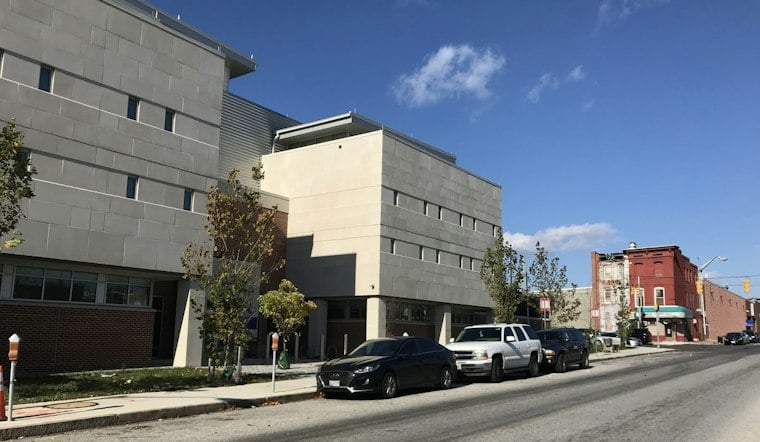
Johnston Square, a 110-acre pocket of East Baltimore with roughly 800 buildings, has watched its count of vacant homes fall from about 240 in 2008 to just 81 today. That decline did not happen by accident. It came from more than a decade of organizing, government money and nonprofit redevelopment work that turned a neighborhood once defined by abandonment into a test case for what it actually takes to beat back blight.
A Neighborhood Hemmed In By Highways and History
Bordered by Interstate 83 and Greenmount Cemetery, and sitting adjacent to Baltimore Penn Station and Johns Hopkins Hospital, Johnston Square has long occupied an odd position — surrounded by institutions and infrastructure, yet left behind by investment for decades, according to The Baltimore Banner. Reporter Hallie Miller's account describes a neighborhood where organizations guiding redevelopment have raised about $150 million over the past 13 years for housing, home repairs, parks and programming. Regina and Keith Hammond, who have lived in their home since 1984 and have been involved in neighborhood decisions for more than a decade, became central figures in that effort — and the Banner reports that Johnston Square's newest apartment building, The Hammond, was named in their honor.
The turning point traces back to 2002, when Darrell L. Brooks set fire to Angela Dawson's home in the neighboring Oliver community in retaliation, killing Dawson, her husband and their five children, per the Banner's reporting. BUILD, a local organizing coalition, expanded its East Baltimore efforts after that arson, and ReBUILD Metro, a nonprofit developer, entered Baltimore in the aftermath of the Dawson family killings. BUILD sent organizer Terrell Williams to focus on Johnston Square in 2012, the same year Regina Hammond met him and, with BUILD's help, formed a new community group.
Door-Knocking and Quick Wins Built Trust
Williams told the Banner that the community needed quick results, external partners, resident input and neighborhood connections to get moving. Organizers built support the slow way: door-knocking, recording residents' priorities, providing food at events and starting with achievable problems before tackling bigger ones. Regina Hammond said residents trust her because she lives in the neighborhood herself, and her community meetings reportedly last just one hour — a deliberate choice to keep people engaged rather than worn out.
ReBUILD Metro now holds an exclusive city agreement, dated to 2019, to control more than 550 Johnston Square properties and lots, working with neighborhood leaders on a long-term plan for housing, parks and services, according to the Banner. The nonprofit has also distributed about $3.5 million in home repair grants to 48 homeowners, offering that support specifically to longtime neighbors who stayed through the hard years.
One Grant, One Kitchen, One 69-Year-Old Holdout
Sharon Duncan, 69, who retired from the counseling center at MedStar Union Memorial Hospital in 2023, received a $75,000 home repair grant that she used to renovate her kitchen and floors, the Banner reports. ReBUILD Metro also plans to renovate two vacant homes next to her property. That repair work echoes a separate 2025 account from Baltimore Brew, which described a $5.5 million ReBUILD Metro project on Duncan's own block: 16 vacant houses converted into eight double-wide homes, two more rowhouses rebuilt, and three others torn down to create parking. Separately, WBAL-TV reported that the Mura Street project was funded with help from state resources and the city's Affordable Housing TIF Bond program.
The newest visible result of all that work is The Hammond at Greenmount Park, which the Banner reports cost $54.7 million and includes 109 units of mixed-income housing along with an Enoch Pratt Free Library branch — Baltimore's first new Pratt branch in more than 15 years. Maryland state leaders have also made available a low-interest loan and up to $20,000 in down-payment and closing-cost assistance for buyers in the area, per the Banner's reporting. Elsewhere in the neighborhood, the Johnston Square Farm & Garden is managed by the 6th Branch, and Saint Frances Academy is set to receive its first practice field, funded by $1.5 million in private money, according to the same report.
Rising Prices, Falling Violence — and a Citywide Goal
The changes show up in the numbers beyond vacancy counts. Johnston Square median home prices have grown nearly fivefold over the past decade, peaking at $244,000 in 2025 based on Live Baltimore data cited by the Banner. The outlet's own analysis also found that shootings and homicides in the neighborhood have declined sharply over the last ten years, alongside eased violent crime, rising property values and an influx of new residents.
In 2023, Mayor Brandon Scott, Gov. Wes Moore and other leaders set a goal of eliminating Baltimore's vacant homes entirely by 2038. Scott said this past August that everyone working together produces visible results, according to the Banner. The city still counts roughly 11,000 vacant houses overall — though WBAL has separately reported more than 11,500 vacant homes citywide citing the housing department's dashboard, and a different Banner report put the number of homes labeled uninhabitable at about 11,400, down from more than 14,000 in early 2023. Those varying figures reflect different counting methods rather than a single agreed-upon total. Baltimore has about 3,000 blocks the Banner says still need money and attention.
Can Johnston Square's Model Scale Citywide?
Not everyone is convinced the Johnston Square approach can simply be copied elsewhere. Liz Kozub, director of technical assistance at the Center for Community Progress, and Cecilia Gonzalez, executive director of Action Baybrook in Brooklyn, South Baltimore, both weighed in through the Banner's reporting. Gonzalez said residents who are already present must be protected as redevelopment moves forward. A 2023 report from czbLLC identified substantial resources, community engagement, broad collaboration and patience as the essentials for eliminating vacant housing anywhere in the city.
Williams, for his part, told the Banner that Johnston Square's success can be replicated elsewhere with trained organizers and investment in future community leaders. The neighborhood's turnaround has drawn partnerships with dozens of organizations and benefited from a mix of community organizations, city attention and community support, the Banner reports. Keith Hammond alone has overseen the greening of 30 lots in the neighborhood — small, visible proof, organizers say, that patient, grinding work can add up to real change.
It's also worth noting Johnston Square's population has fallen sharply over the decades, from 4,153 residents in 1990 to 1,906 by 2010, according to a 2020 report in The Baltimore Sun, even as median household income ticked up to $28,946 by 2016. That same Sun report described a 2020 redevelopment plan aiming to rehabilitate 700 mostly dilapidated properties over a decade, targeting a drop in the vacant-building rate from 52% to as little as 3%, with organizers saying at the time they expected the effort to cause little displacement of renters or homeowners. Whether Johnston Square's gains can be matched across Baltimore's thousands of remaining vacant and distressed blocks by 2038 remains, for now, an open question.



