

























































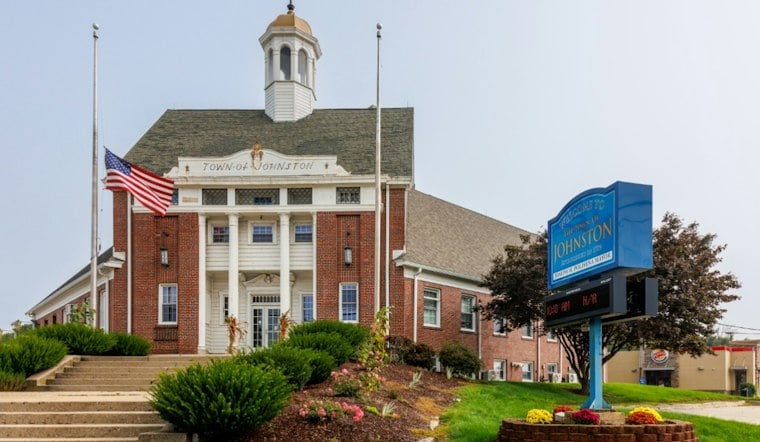
Johnston voters sent town officials back to the drawing board last week, rejecting a ballot measure that would have rewritten the town charter to give Johnston a clearer legal path to seize private property through eminent domain. The measure failed at the polls on Nov. 3, but town leaders say the fight over a contested 31-acre parcel on George Waterman Road is far from finished.
The vote came down firmly against the town, though exact tallies differ depending on the source. Johnston Sunrise reported the ballot question was defeated 53% to 46%, while the Pacific Legal Foundation, which represents the property owners, put the no vote at 53.74%. Either way, Johnston residents made clear they weren't ready to hand the town broader condemnation authority.
The ballot question traces directly back to a legal fight over land at 178 and 200 George Waterman Road, where the owners had proposed building a 252-unit low- to moderate-income apartment complex, according to Johnston Sunrise. The town had previously attempted to take the roughly 31-acre site, but a federal judge ruled on July 28, 2026, that the taking was unauthorized under Johnston's existing charter.
What the Federal Judge Actually Ruled
In its opinion, the U.S. District Court for the District of Rhode Island granted the property owners partial summary judgment, finding the town's charter did not provide constitutionally adequate authority for the condemnation. The court wrote that the taking itself was ultra vires and ultimately void from its inception, pointing to the absence of a compensation fund, a pledge of credit, or any enforcement mechanism in the town's charter.
The ruling did not resolve everything in the case. The court said it did not decide the merits of the property owners' civil-rights claim at the summary-judgment stage, deferring that question until discovery wraps up.
Town Officials Turn to a Backup Plan
Even before voters weighed in, Johnston had been preparing a fallback. At a special meeting on July 31, the town council approved two resolutions tied to its eminent-domain efforts, as reported by WPRI. One resolution created a Municipal Public Building Authority and authorized Mayor Joseph Polisena Jr. to appoint five members. The other placed the now-rejected charter question on the November ballot, seeking to amend Section 1-3 of the town charter to establish a funding and enforcement mechanism for condemnation authority.
With voters rejecting that charter fix, town officials have indicated the Municipal Public Building Authority is the route they'll lean on going forward. The same Johnston Sunrise report noted that town officials say they will pursue option number two if there is a need to acquire property for municipal use — a reference to that authority as the backup plan now that the charter amendment has failed.
Property Owners Say Protections Still Stand
Attorneys for the Santoro family, who own the George Waterman Road land, have pushed back on the idea that the town's July resolutions clear a path forward for this specific property. Per WPRI's reporting, the family's attorneys said those resolutions do not currently apply to the Santoro family's property, and the preliminary injunction remains in full force and effect. That injunction has kept the land protected from further town action while litigation continues.
As The Providence Journal frames it, Johnston officials are responding to the federal judge's rejection of the town's prior attempt to take the land, and town councilors want to pursue an alternative plan to acquire it. The town maintains the eminent-domain fight isn't over, even with the charter amendment defeated at the ballot box.
A Broader Housing Squeeze
The dispute unfolds against a backdrop of limited affordable housing in Johnston. A 2024 figure reported by Rhode Island Current put the town's affordable housing share at about 7.9%, with 261 additional affordable units needed to meet the state's 10% threshold. The outlet also noted that Johnston's planning board gave preliminary approval to a separate, smaller 32-unit development in the Shun Pike neighborhood back on Aug. 20, 2024, though that project is unrelated to the George Waterman Road dispute.
Rhode Island Current additionally reported that Johnston has estimated a new public safety complex would cost between $40 million and $50 million, a figure that has surfaced in broader town discussions about municipal property needs. For now, the Santoro family's land remains under the protection of the standing injunction, while Johnston officials signal they intend to keep looking for another way to bring the George Waterman Road parcel under town control.



