

























































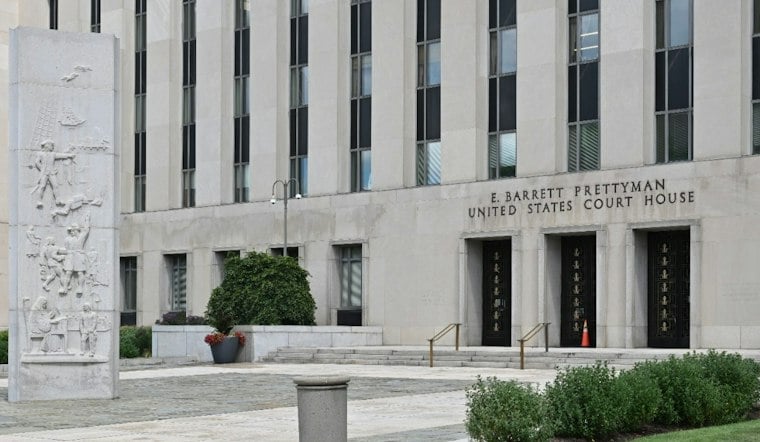
A federal judge has ordered U.S. Citizenship and Immigration Services to reconsider Ryan Castaneira’s petition to sponsor his Mexican wife, finding the agency used a proof standard that made its review substantially defective. The ruling does not approve the petition or decide that Castaneira poses no risk; USCIS must make a new determination under the lower preponderance-of-the-evidence standard, according to Tampa Free Press and the Yale Journal on Regulation.
The dispute arises under the Adam Walsh Act, which restricts certain people convicted of sex offenses involving minors from sponsoring family members, while allowing an exception if the Department of Homeland Security finds the petitioner poses no risk to the relative. Castaneira’s Georgia convictions followed online conversations with someone he believed was a 15-year-old girl but who was an undercover adult officer, according to the Georgia court record. USCIS denied his petition after requiring him to establish that he posed no risk beyond a reasonable doubt.
The dispute is over review of the process
The legal question is not simply whether courts can substitute their judgment for the government’s risk assessment. Federal law assigns the no-risk determination to the secretary’s sole and unreviewable discretion. In 2018, the Ninth Circuit held that courts could not review how the secretary exercised that discretion in an Adam Walsh Act no-risk determination, according to the court’s opinion.
A related Eleventh Circuit case involved Douglas Bourdon’s effort to challenge the denial of a petition for his wife. The court’s rehearing record says a 2019 panel ruled that courts could not review the denial; Judge Martin later dissented from the panel’s reasoning, according to the Eleventh Circuit record. These decisions illustrate limits courts have placed on reviewing no-risk outcomes; they do not establish how frequently such petitions are denied.
Castaneira’s case turns on a narrower distinction: whether a court may examine the procedure USCIS used without deciding the risk question itself. The D.C. Circuit returned the case to the district court to address whether agency precedent set a governing standard and whether USCIS failed to follow it. The appeals court also concluded that an undercover sting could qualify as an offense against a minor under the law, according to the Yale Journal on Regulation.
The precedent at the center of the proof-standard dispute, Matter of Chawathe, says that in ordinary immigration proceedings a claim generally must be shown to be more likely true than not, based on the evidence in the individual case. USCIS describes that standard in its decision. Judge Royce C. Lamberth concluded that it applied to the no-risk review here, rejecting the government’s position that USCIS could require the more demanding standard. He ordered reconsideration, not a particular outcome.
The practical result is that USCIS must reassess Castaneira’s petition using the preponderance standard. Whether the agency will find he meets the no-risk exception, and whether his wife will ultimately receive permanent-resident status through the petition, remain unresolved.



