

























































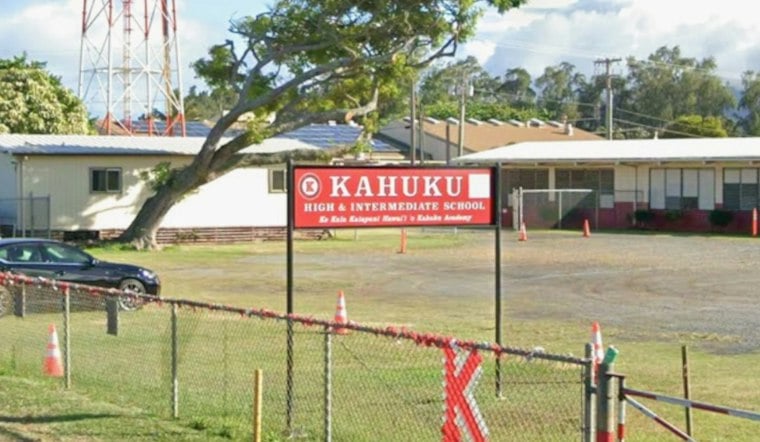
Students at Kahuku High and Intermediate School have spent more than a year coping with flickering lights, dead laptops and spotty internet, and now they're asking the state to explain why nothing has changed. The school, which serves over 1,300 students in grades seven through 12, has experienced frequent power outages and poor internet connection for more than a year, with no guarantee that a full fix is coming anytime soon.
The scope of the problem became public after students presented their concerns to the Koʻolauloa Neighborhood Board earlier this month, according to Honolulu Civil Beat. Odell Brink said students have reached a point where they can no longer manage the problems with small workarounds, the outlet reported. The Honolulu Fire Department backed up those concerns, identifying multiple fire hazards at the school this year, including the use of extension cords to help power two classrooms and a concession area.
Teacher Elizabeth Templeton told Civil Beat that laptop batteries in her classroom charge to only 1% or 2% despite being plugged in all day, and power surges have damaged some computer chargers. Student Tevaiata Chung, who attends a dance class in a classroom that has had power outages, said her classroom gets very hot without power and fans. Other students may need three or four attempts to find a working, charged computer, and some cannot access audiobooks or ebooks when the power goes out.
Teachers Improvise While Waiting for Fixes
Teacher Anna Yamana described going without her classroom landline for three weeks and without internet for a few weeks after a power surge damaged network switches, relying on her personal cell phone as a hotspot for her laptop in the meantime, per the same report. She eventually spent her own money on a second air-conditioning unit for her classroom. Richard Fajardo attributed some of Kahuku's electrical problems to an overloaded school electrical system, and others to Hawaiian Electric community outages, Civil Beat reported.
With weak network connections in parts of campus and outages becoming increasingly common, Kahuku teachers must now find lessons that do not require internet, laptops or other technology whenever the power drops. The Hawaiʻi Department of Education currently has an electrical assessment and two projects underway at Kahuku — one for telecommunications and internet, and another for electrical repairs. Civil Beat reports that telecommunications work could start as early as next month, while construction on the electrical repairs may not begin until 2028, depending on the permitting process.
Not an Isolated Case
Kahuku is far from the only Hawaiʻi campus dealing with aging infrastructure. Lānaʻi High and Elementary has relied on a temporary electrical line to route power to some classrooms for the past five years, with the department saying permanent repair to its underground line will start in 2027. At Kalāheo High School, students spent eight months in the dark last year before power was restored in May 2025, with state Rep. Michael Lee estimating that repairs and upgrades for the entire campus could cost $5.7 million.
Kahuku has also been contending with storm damage. Hawaiʻi News Now reported that the school's band room flooded during Kona low storms, with student Strain telling the station, “Instruments got soaked, and the room got kind of moldy.” The department said environmental remediation and abatement work at Kahuku began Oct. 8, with reconstruction completion anticipated in December, subject to air-quality clearances, according to Hawaiʻi News Now.
A Statewide Cooling Plan Under Scrutiny
The repair delays sit against a backdrop of broader scrutiny over how the department manages school infrastructure. A 2025 report found the department was unable to provide a list of schools with the completed electrical assessments required to install air conditioners, Civil Beat reported. A separate state audit, covered by GovTech, found the department spent nearly $105 million on heat abatement at 53 schools, air-conditioning 838 classrooms at an average cost of $125,000 per classroom — units that were designed to run for just five hours a day and keep temperatures between 75 and 78 degrees. At Waipahu Intermediate, cooling just three portable classrooms ended up costing nearly $1 million, averaging more than $314,000 each, according to the same audit coverage.
GovTech also reported that state auditors estimated more than $1 million in design plans were simply wasted, and concluded that Hawaiʻi still has no reliable plan to cool its classrooms nearly a decade after its Cool Classrooms Initiative began. DOE Superintendent Keith Hayashi said projects are prioritized based on facility condition, climate, funding, and infrastructure readiness, per GovTech. Civil Beat reports that the average age of Hawaiʻi school buildings is 72 years.
Hawaiʻi lawmakers gave the department greater authority over major construction projects in 2025. State Rep. Amy Perruso discussed electrical strain and aging facilities.
Community members and lawmakers continue to want more transparency about how school projects get prioritized and why repairs take months or years, with Racquel Achiu saying that publishing school repair priorities would reduce criticism, per the same account.
The department's 2027 budget request includes 36 health and safety projects, about half of them for electrical upgrades, Civil Beat reported. For now, families in Koʻolauloa are left watching the calendar, with the department anticipating that more than a dozen schools statewide will need major electrical upgrades in the coming years.





