

























































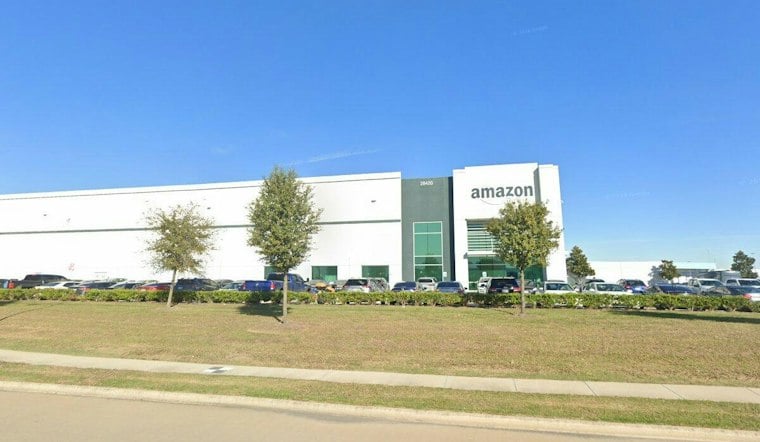
Drones could soon be buzzing over backyards in Katy after the City Council voted Monday to modify zoning in the West Ten Business Park, clearing the way for drone delivery company Zipline to build a takeoff, landing, docking and charging station behind a shopping center on Katy Freeway. The site, tucked behind the retail center at 27240 Katy Freeway, measures slightly under 3 acres and is planned to include six towers, each capable of holding up to six drones at a time.
Council Vote Modifies West Ten Business Park Zoning
The council's action, reported by Community Impact, modified the planned development district governing the West Ten Business Park specifically to allow the Zipline facility. Zipline, which the outlet describes as an international drone delivery company, now plans to apply for a building permit with the city. Jason Drews, Zipline's development manager, told the outlet the permit process can take four to eight weeks, with construction expected to run another eight to ten weeks after that.
Drews also said the proposed station will have six towers that can carry up to six drones each, and that the Katy site will cost more to build than the company's typical stations. Other Zipline charging stations run around $400,000 to $600,000, according to the Community Impact report, but Drews said the Katy facility will cost more because it's larger than the company's other locations.
How the Delivery System Is Supposed to Work
Under the model described in the report, residents will download Zipline's app and place an order with one of the company's business partners. A drone then picks up the order, flies to the customer, lowers a small pod containing the package, and returns to its tower to recharge. Zipline has a team that works with local businesses to get their products into that delivery pipeline, the outlet reported.
The company says it will not deliver tobacco products, alcohol or pharmaceuticals, and it won't fly over or deliver to schools or sports fields for safety reasons, according to the same report. Kerry McCormack, Zipline's government affairs manager, said the drones can decrease traffic and vehicle emissions while making streets safer. A separate report from DroneXL describes the company's Platform 2 aircraft cruising at roughly 70 mph while carrying an eight-pound payload.
A Growing Texas Footprint, With Some Mismatched Numbers
Katy isn't Zipline's first Texas stop. The company opened operations in Cypress, part of the Houston area, in April, according to DroneXL. The outlet also reported that a draft environmental assessment from the Federal Aviation Administration would allow Zipline up to 220,000 drone deliveries a day across five Texas metro areas, including Houston, San Antonio, Austin, Amarillo and El Paso — though that FAA document itself was not reviewed directly for this report.
Zipline has told Supermarket News its operations have logged 150 million commercial autonomous miles without a major safety incident, part of a multiyear agreement with Walmart to add 300 drone delivery sites nationwide. That builds on an earlier milestone: in March 2025, Zipline announced its drones had logged more than 100 million autonomous flight miles, according to CNBC, which also described the company's P2 Zips as capable of carrying up to eight pounds of cargo within a 10-mile radius. Elsewhere, in reporting on Zipline's Round Rock launch, Community Impact quoted company representatives describing a delivery weight limit of about five pounds — a different figure than the eight-pound capacity cited in the CNBC and DroneXL accounts, and it's not clear from available reporting whether the two figures describe different aircraft or different operating conditions.
Other Texas Cities Are Still Writing the Rulebook
Round Rock launched its first Central Texas delivery zone on Oct. 8, with Zipline making a delivery to Stony Point High School, Community Impact reported. Customers within a three-mile zone around the intersection of E. Palm Valley Boulevard and Kenney Fort Boulevard could begin placing orders the next day. But that hub sits in Round Rock's extraterritorial jurisdiction, outside the city's own zoning authority, according to DroneXL — prompting the city to say it's working with Zipline on a second hub inside city limits that it plans to use to help shape rules for future hubs.
Other Texas cities have taken varied approaches. Rowlett's City Council voted 6-0 in May 2025 to add unmanned aircraft hubs and kiosks as permitted zoning uses in nonresidential districts, per DroneXL. A planning and zoning commission elsewhere recommended approval of a special-use permit for a Zipline hub near Interstate 30, with commissioners and residents raising questions about noise, operating hours and FAA flight limits, according to Citizen Portal. And in Colorado, a proposed Northglenn ordinance would require drone operators to secure a one-year special-use permit and cap noise at 65 decibels at the property line, as reported by DroneLife, which also noted that Walmart and Wing plan to bring drone delivery to the Denver metro area next year as part of a broader expansion that includes Seattle.
Back in Katy, the city has said all development within its limits is subject to its adopted Zoning Ordinance and Subdivision Regulations, and that a planned development district like West Ten is meant to promote coordinated, cohesive development, according to the City of Katy. With the zoning hurdle cleared, the next steps for Katy's drone station rest on the building permit Zipline still needs to secure before any towers go up behind the Katy Freeway shopping center.





