

























































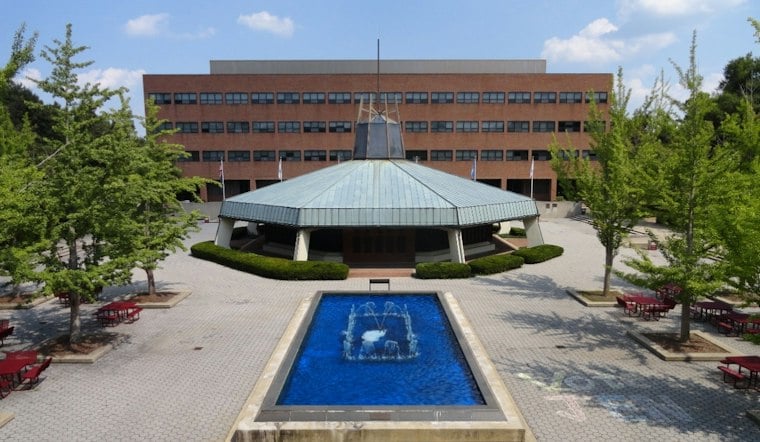
Eastern Kentucky University is pursuing a proposed College of Osteopathic Medicine that would become Kentucky's first public osteopathic medical school, and the state's leading physician group has now thrown its weight behind the effort. The Kentucky Medical Association says it supports both EKU's planned college and its broader strategy to expand rural residency training across the commonwealth, according to the seed reporting from Kentucky Today.
Doctors' Group Lines Up Behind Richmond Campus Plan
As reported by Kentucky Today, Kentucky Medical Association President Christine Ko and Executive Vice President Cory Meadows voiced the organization's support for EKU's efforts, according to the outlet. The proposed college would sit on EKU's campus in Richmond, and the university has framed it as a direct response to a physician shortage that hits rural counties hardest, per the same report. EKU President David McFaddin has pointed to the university's track record of training professionals who go on to serve Kentucky communities as part of the case for the new program.
The stakes behind that pitch are stark. According to EKU, 94% of Kentucky's counties already have a shortage of primary care providers, and only 17% of the state's primary care physicians practice in rural areas. A separate legislative fact sheet, cited by the Kentucky General Assembly's committee documents, states that 107 of Kentucky's 120 counties are designated as health professional shortage areas — a related but distinct measure from EKU's county-shortage figure.
A Pipeline Problem Years in the Making
EKU's own data shows the gap is not just about where doctors practice today but where they end up after training. Only 28.6% of Kentucky physicians who completed residency between 2013 and 2022 are practicing in medically underserved areas of the state, the university reports. And per EKU's reporting on the Kentucky Physician Report, just 16.2% of the state's physicians practice in Appalachian counties at all.
Statewide demand is only growing. Kentucky Lantern reports that the commonwealth is projected to need 3,000 more doctors by 2030, including specialists, even as the nationwide shortage of primary care physicians is expected to top 86,000 within a decade. Kentucky currently has 6,335 primary care physicians, the outlet notes, while nearly all of its 120 counties still need more. The state's three existing medical training programs — at the University of Pikeville, the University of Kentucky College of Medicine and the University of Louisville School of Medicine — received 13,416 applications in 2023 but enrolled only 510 students, according to EKU.
Funding Secured, Accreditation Still Ahead
Money has already started flowing toward the project. House Bill 900 includes $42 million for an escrow account required by the Commission on Osteopathic College Accreditation, plus $8 million in start-up funding, EKU says. Separately, the Council on Postsecondary Education's board approved a $50 million appropriation request to the General Assembly at a special meeting, according to the agency, to help EKU establish the doctoral program.
EKU will pursue accreditation through the Commission on Osteopathic College Accreditation, Kentucky Lantern reports, and the first class of EKU-trained doctors is expected to graduate in fall 2035 under that outlet's timeline. The university has said the college will emphasize educating physicians committed to practicing in rural and underserved communities, and it is working with hospitals, health systems, physician groups and federally qualified health centers across the state to build out residency positions for graduates once they finish their degrees.
That residency piece may matter as much as the medical school itself. Kentucky Lantern reports that from 2015 through 2024, just 50.8% of Kentucky residents who completed their residency training in-state continued practicing there, compared with 55.7% nationally among residents who stayed in their training state. EKU's strategy leans on that gap, aiming to keep more Kentucky-trained physicians in the state by placing residency training directly in the communities with the greatest need — a plan the Kentucky Medical Association now says it is ready to back.





