

























































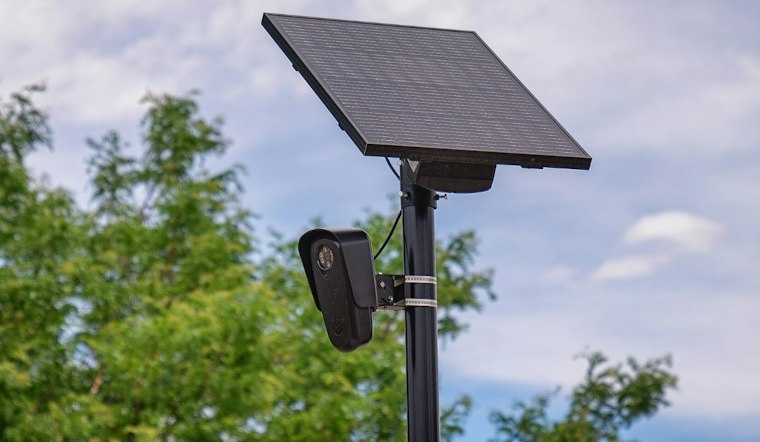
Kern County supervisors heard the sheriff’s office defend its use of automated license plate reader cameras on Nov. 10, as residents raised privacy concerns. The agenda called for a presentation and for supervisors to receive and file it—not to vote on whether the program should continue. The hearing therefore offered support and criticism, but did not settle the program’s rules or future.
The sheriff’s office presented investigative examples to explain how deputies use the system. Chief Deputy David Kessler also described limits on what the cameras collect and safeguards for searches, according to The Bakersfield Californian. KCSO says users need training, a case number and an approved investigative reason to search, and that it audits searches for misuse. Its transparency portal describes both searches of stored records and real-time alerts for vehicles on hotlists.
The inventory and retention picture is incomplete
Public descriptions of the camera system do not line up. KGET reported that the agenda referred to 54 Flock ALPR cameras. The Californian reported that Kessler described 66 fixed and 17 vehicle-mounted Axon cameras. The available accounts do not explain whether the figures refer to different equipment, system scopes or counts.
Retention is another open question. KGET reported that Flock data is automatically deleted after 30 days unless saved as investigation evidence. Pew Research Center found 30 days was the median retention period among agencies whose Flock transparency portals it reviewed, and reported that Flock lowered its platform’s default from 30 days to seven in August. Neither account establishes which setting Kern County uses; the available record does not say whether KCSO adopted the shorter window. Pew also cautions that its camera counts, based on volunteer mapping, are a lower-bound sample rather than a complete inventory.
State rules set requirements, not a county retention period
California requires ALPR operators and end-users to post policies designed to protect the information from unauthorized access, use, modification or disclosure. State law generally limits public agencies’ ability to sell, share or transfer ALPR information, subject to legal exceptions, according to the California Department of Justice. Those statewide requirements do not, on their own, establish Kern County’s retention period or verify how its safeguards work in practice.
Other California agency policies show why local details matter, but do not fill that gap. Berkeley’s published policy calls for vendor data to be purged after 30 days while allowing relevant vehicle data to be kept under the city’s records schedule. San Diego’s revised 2025 report says a sergeant-level administrator conducts weekly program audits. Those are Berkeley’s and San Diego’s practices, not evidence of Kern County’s rules.
Crime-solving claims meet limits in the research
At the hearing, supervisors voiced support for the cameras, including their potential value in rural areas, while residents objected on privacy and oversight grounds. The Californian reported that public comment on the item was universally opposed. The disagreement reflects a broader question: how much investigative value justifies the collection and retention of vehicle-location records, and what oversight can the public verify?
The National Institute of Justice says research has linked license plate readers to increased arrests and recoveries of stolen vehicles, but that wider effects on crime prevention and investigations remain unclear because rigorous evaluations have been limited. In a separate study summarized by the institute, auto-theft and robbery clearances improved after a fixed reader network was installed, but the changes were not statistically significant in multivariate analyses, and other factors may have contributed. The research offers context for the sheriff’s presentation; it does not independently establish the results of Kern County’s program.




