

























































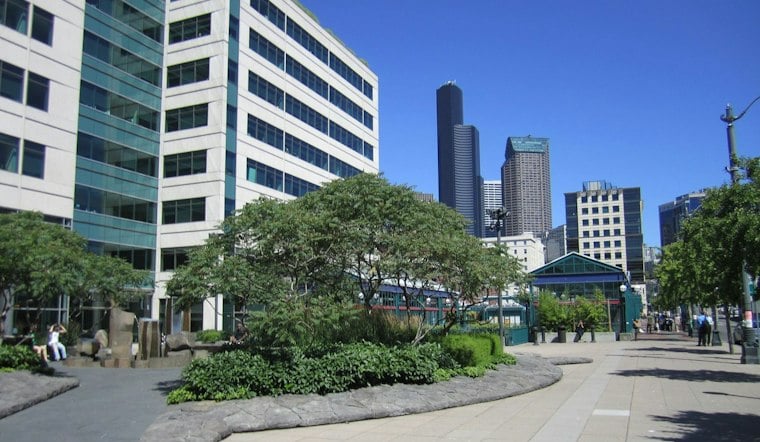
King County Executive Girmay Zahilay wants to finance 111 affordable apartments and retail space at 701 S. Jackson Street in Seattle's Chinatown-International District.
A Housing Plan for Jackson Street
The Jackson Street project would include 96 two-bedroom apartments, 14 three-bedroom units, and a single one-bedroom apartment, mostly serving families, according to The Urbanist. The homes would be available to residents earning at or below 67% of King County's area median income, which works out to roughly $90,000 a year for a family of three, per the same report.
The project has a tangled development history. Housing Diversity Corporation remains the project's developer under the current 111-unit plan, which King County Executive Zahilay folded into his proposed mid-biennial budget update alongside other housing commitments — including $4 million earmarked for the Pacific Tower Quarters building and $1.8 million for a veteran's housing project in Kirkland.
The Proposed Deal
Under the proposed arrangement, a separate entity called 701 Essential Housing would issue up to $90 million in tax-exempt bonds to pay for construction. King County would serve as a third party to a development services agreement alongside Housing Diversity Corporation and 701 Essential Housing, which would manage residential and retail subleases on the county's behalf.
The project's projected cost sits at $63.8 million, and county budget staff project King County will pay $37.5 million over the project's life — a figure that works out to just over $337,000 per unit across the 111 homes over three decades, the same staff analysis found. The county's annual payment is projected to peak at about $2.5 million in 2032. The county's general fund is currently designated as the project's primary funding source, though King County Chief Budget Officer Aaron Rubardt has said the executive and council could shift to a different funding source over time — including a countywide housing levy that the county has considered since shortly after Zahilay took office.
Potential Costs of the Deal
The proposal would give the county a role in the project's financing.
Those scenarios aren't abstract. A 30% increase in project costs could raise the county's contribution all the way to $77.2 million, more than double the current projection. A bond coupon rate just one percentage point higher than expected could add $20 million in costs, and a vacancy rate twice what's expected could cost the county another $13 million on top of that.
King County is currently maintaining general fund emergency reserves at just 8% under Zahilay's proposed second omnibus budget, and the county's executive and budget team are already planning 2028-2029 budget scenarios aimed at reducing risk and delivering a balanced budget.
County Defends the Model as a Fast Path to Housing
Callie Craighead, a spokesperson for the executive's office, said King County has used this type of financing model before for downtown office buildings, and that local universities have used similar structures for dormitories. She said the arrangement gives the county flexibility to fund housing quickly while leaving it with the land and facility once the lease ends, and noted the county could acquire the land and facility outright at the end of the agreement.
Rubardt said the arrangement could get affordable homes built relatively quickly, with county officials hoping for a 2029 opening. The pace of King County's broader Housing Finance Program offers some sense of scale for that ambition: the program awarded $23.7 million to eight affordable housing developments in its 2025 funding round, supporting 672 affordable homes across the county, according to King County.
Council Timeline Tightens as Questions Linger
The council held a substantive work session on the proposal after canceling an October 28 briefing when other agenda items ran long. Following that work session, the council held a closed-door discussion of the deal's legal risks, requested by Councilmember Jorge Barón.
Whether the council will add guardrails to the lease agreement before any vote remains an open question.




