

























































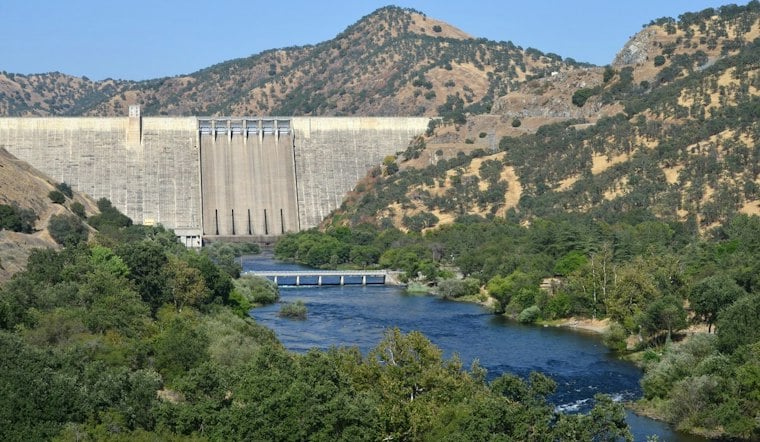
State water regulators say as much as 1.13 million acre-feet of Kings River water could be sitting unclaimed, a finding that has reignited a years-long standoff between a Kern County water district and the Fresno-area communities that depend on the river for their groundwater. The dispute centers on flood flows that have historically spilled out of the watershed through the James Bypass, and on whether that water should stay in the San Joaquin Valley's Kings River basin or be moved south.
The California State Water Resources Control Board's water rights office reported the 1.13 million acre-foot figure as excess and unused Kings River water, according to SJV Water. At the center of the fight is Semitropic Water Storage District, a Kern County agency that first filed for access to Kings River floodwater in 2017, seeking 1.6 million acre-feet, according to KMPH. Consolidated Irrigation District, Alta Irrigation District and Fresno Irrigation District filed a joint application the same year, with the McMullin Area Groundwater Agency following a few years later, per SJV Water's reporting.
Why the River Even Has Floodwater to Fight Over
The Kings River branches south into the old Tulare Lake bed, where floodwater can swing from a nuisance to a significant hazard for the intensive farming that occupies the lakebed, per the same account. When flows are heavy enough, water has historically exited the watershed through the James Bypass, moving north toward the San Joaquin River and ultimately the Sacramento-San Joaquin Delta. During the historic 1983 flood year, 2.3 million acre-feet passed through the bypass, compared with 767,000 acre-feet in 2023, according to an Administrative Hearings Office notice cited by SJV Water.
That capacity to lose water downstream is central to the legal fight. The state's 1967 designation of the Kings River as a fully appropriated stream — made 13 years after Pine Flat Dam became operational — was based on limited information about the true scale of the river's flood flows, the report notes. Kings River water has left the watershed through the James Bypass and Fresno Slough since 1968, raising the question of whether that spillage should count as available supply rather than waste.
What Semitropic Wants to Build
Semitropic has applied to divert up to 1,200 cubic feet per second from the river during flood releases, routing it into the California Aqueduct for delivery to Kern County and its floodwater recharge project, according to SJV Water's reporting. That figure represents a reduction from an earlier proposal of up to 2,200 cubic feet per second, as reported by The Fresno Bee. Semitropic's plan called for a 15,000-to-30,000-acre-foot reservoir near Kettleman City, with water shifted from the Tulare Lake basin to the Kern County basin via the aqueduct, according to SJV Sun.
The district envisioned a reservoir spanning 19,700 acres in the western curve of the old Tulare Lake bed, capable of holding up to 30,000 acre-feet of floodwater, per SJV Water. Semitropic has already paid Sandridge Partners L.P. $40 million for a project development easement on land in the Tulare Lake bed, the outlet reports. Project costs were estimated at up to $500 million as of 2015, and Semitropic had hoped Proposition 1 funding would cover about half of what it called the Tulare Lake Storage and Floodwater Protection Project — funding that requires storage projects to benefit the Delta in some way.
A Scaled-Back Plan After Funding Fell Through
Semitropic ultimately did not receive the Proposition 1 funding it sought, and the district has since scaled back its concept to moving Kings River floodwater directly through the aqueduct rather than building the full reservoir, according to SJV Water. District representative Jason Giantquinto has said the storage project would allow flexibility to increase natural flows in the Delta, and that the proposed reservoir could be used by the state to bank excess Delta water, per the same reporting. Semitropic has framed its diversion as a way to keep the water within the broader region rather than losing it downstream.
Fresno-area water officials see it differently. Consolidated Irrigation has delivered Kings River water to farms and communities since 1876 and says it will continue defending Kings River water rights on behalf of the whole basin, SJV Water reports. The small cities of Sanger, Selma, Parlier, Fowler and Del Rey all rely on groundwater that is replenished in part by Kings River recharge, and local districts say they need that water to keep their aquifers from falling further. Phil Desatoff and Jason Giantquinto have said neither side has negotiated or moved toward compromise during the dispute, according to the outlet's reporting.
Local districts have built several new recharge ponds since the conflict began, part of a broader push to capture floodwater before it can leave the basin. The Fresno Irrigation District alone has 720 acres of recharge basins, with another 150 acres under construction, KMPH reported. Those efforts have accelerated as agencies race to comply with the state's Sustainable Groundwater Management Act, the station's report notes.
A Record Runoff Still Shapes the Fight
The scale of what's at stake became clear during the 2022-23 water year, when the Kings River's runoff hit 4.4763 million acre-feet, surpassing the prior 40-year record set in 1982-83, according to the Kings River Conservation District. Kings River Water Master Steve Haugen said that runoff exceeded both the 1983 total of 4.47 million acre-feet and the 1969 total of 4.38 million acre-feet, calling it the wettest year since the dam on the Kings was built in 1954, according to the Hanford Sentinel. The Kings River Water Association projected the following water year's runoff would also reach roughly 4.5 million acre-feet, per the conservation district's release.
Water districts and canal companies maximized diversions for months during that high-runoff stretch, working to recharge groundwater and supply irrigation, the conservation district reported. Flood releases from the Kings River, combined with flows from rivers and streams to the south, also contributed to the re-emergence of Tulare Lake in Kings County that year, according to the same release. The Fresno Bee has drawn a historical parallel between Semitropic's export plan and an earlier era when San Joaquin Valley farmers petitioned the federal government to build Friant Dam and the Friant-Kern Canal, reshaping water flows across the region.
What Happens at the January Hearing
The fight now moves to the state's Administrative Hearings Office, which is set to hold a hearing on the Kings River's water-rights designation and will consider whether the State Water Resources Control Board should revoke the river's 1967 fully appropriated stream status, according to SJV Water. If the designation is revoked, it would open the river to new water permit applications, the outlet reports. Applicants in the proceeding, including Semitropic and the Fresno-area districts, have participated in Administrative Hearings Office proceedings, most recently in 2024.
A state notice from the Administrative Hearings Office separately lists a pre-hearing conference for January 5, 2027, at 9 a.m., according to the California State Water Resources Control Board, Administrative Hearings Office. The California State Water Resources Control Board has confirmed it received two petitions and supporting information requesting revision of the Kings River's fully appropriated stream status, though the ultimate outcome of the proceedings remains undecided. For the small cities and farming communities that have relied on the river for generations, the question of who gets to claim its floodwater is now squarely in the state's hands.




