

























































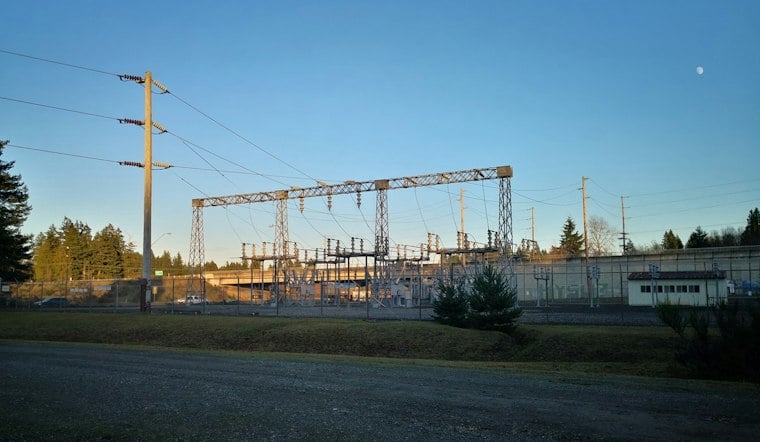
Kitsap County voters were turning down Proposition 1 in Tuesday's election-day returns, a measure that would have authorized the Kitsap Public Utility District to pursue its own electric service and potentially sever ties with Puget Sound Energy. Ballots will continue to be counted in the coming days, as reported by The Seattle Times.
The measure would have given KPUD the authority to buy or build infrastructure for publicly owned power, though commissioners placed it on the ballot in July after citing residents' concerns about high PSE bills, according to the Seattle Times report. Per the Kitsap Public Utility District, approval would not by itself determine whether the district actually provides electric service or how such service might be developed. Under Washington law, a public utility district without electric service must first win a general-election vote in an even-numbered year before it can construct or acquire electric infrastructure, the Seattle Times noted.
What Proposition 1 Would Have Triggered Next
Had voters approved it, KPUD estimated the feasibility study examining whether public rates could be cheaper would cost between $300,000 and $500,000, funded from the district's existing budget rather than new taxes, the utility district said on its FAQ page. The Seattle Times, citing KPUD, put the figure somewhat higher, at $300,000 to $600,000 to hire a consultant. KPUD said it would not begin a competitive process to select a firm for the study unless voters approved the measure, and that no power source had been chosen in advance — a feasibility study would evaluate potential supply options, including power available from the Bonneville Power Administration.
KPUD already provides water, sewer and telecommunications service in the county, but not electricity. Puget Sound Energy currently serves around 130,000 customers in Kitsap County, according to the Seattle Times. Supporters framed Proposition 1 as merely a first step toward exploring a public alternative to PSE, the paper reported, while PSE characterized the measure as rushed and uncertain.
A Lopsided Campaign Fight
The spending gap between the two sides of the campaign was stark. The Seattle Times reported that PSE spent $2.4 million opposing Proposition 1, a figure also cited by the Kitsap Sun, which attributed the number to Seattle Times reporting. KUOW offered a slightly different figure, reporting that PSE investors had poured nearly $2.5 million into the no campaign. By contrast, supporters of the measure spent around $7,000, the Seattle Times reported — spending so disproportionate that, per the paper, PSE's opposition effort ranked among the most expensive local ballot-measure campaigns in Washington over the past two decades.
This is not the first time PSE has fought a public-power push. The utility opposed similar efforts in Skagit, Island, Jefferson and Thurston counties in 2008 and 2012, the Seattle Times reported, and private utilities have opposed public-power campaigns across the country more broadly. Jefferson County voters passed a measure to sever ties with PSE in 2008 and began providing electricity about five years later, in 2013, according to the same report.
The Rate Increases Driving the Debate
The vote unfolded against a backdrop of sharp PSE price hikes. The Seattle Times reported that PSE electricity prices have doubled since 2020 and risen 45% in the past two years, increases that prompted outcry from customers, consumer advocates and the attorney general's office across western Washington. PSE is separately requesting a 29% price increase over three years, the Seattle Times reported — a figure in the same range as other local reporting. The News Tribune put PSE's filed residential rate-increase request at 29.32% for 2027 through 2029, which it said would add roughly $51 to the bill of a typical customer using 800 kilowatt-hours a month. A separate community-focused News Tribune piece described the proposed increase as roughly 28% for electricity and 21% for natural gas over three years, subject to approval. KUOW, meanwhile, described PSE as planning to raise rates 30% over the next three years and said PSE's rates have been rising faster than those of any other utility in the state — a characterization from that outlet's reporting.
PSE told The News Tribune that infrastructure improvements and compliance with Washington's clean-energy legislation are the main factors driving the proposed hikes, and the Washington Utilities and Transportation Commission has the authority to set final rates that may differ from what PSE requested. A supporter of the Kitsap measure told The News Tribune that Washington has 24 public utility districts offering electricity and that each has bills substantially below PSE's, while a policy director with a statewide PUD association cautioned that investor-owned utilities have not always charged more than consumer-owned ones, saying, “Historically, they vary. Sometimes it's been higher, sometimes it's been lower.”
Dueling Estimates on Acquisition Costs
Much of the campaign turned on how much it would cost KPUD to actually acquire PSE's local system, and the estimates varied widely by source. The Kitsap Sun reported that a PSE-commissioned study put potential acquisition costs between $1.2 billion and $1.5 billion. PSE's own fact sheet cited a July 2026 estimate from KPUD general manager Angela Bennink putting the purchase cost at $800 million to $1.2 billion. PSE argued in its materials that public electricity service would not end up being cheaper for customers, pointing to past municipalization fights elsewhere: the utility's fact sheet says Jefferson County proponents originally estimated a $47 million purchase but the final cost reached $109 million, and that Boulder, Colorado, spent approximately $30 million over a decade on a municipalization effort before abandoning it.
Under RCW 54.08.070, a proposal to construct or acquire electric facilities can be submitted to district voters by resolution of the PUD commission at a general election in an even-numbered year, according to the Washington State Legislature. With Proposition 1 trailing in Tuesday's returns and final counts still pending, it remains unclear whether KPUD will pursue a renewed push for public power or how soon another such measure might reach voters.



