

























































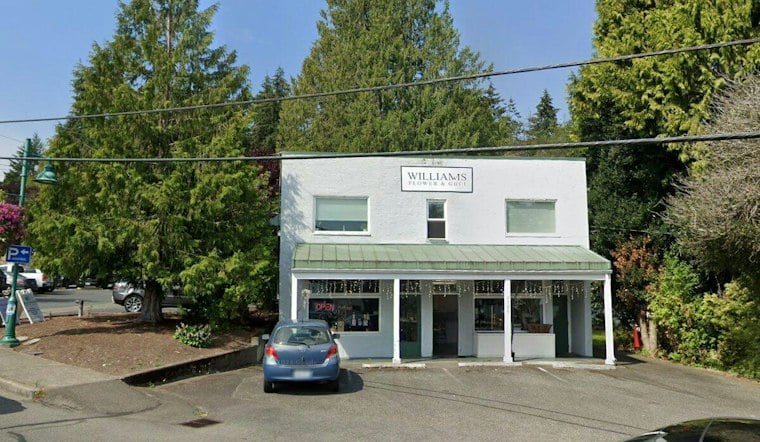
Kathleen van der Spek plans to open Kspek on Nov. 28 in Gig Harbor's downtown business district.
It will be her first brick-and-mortar shop, The News Tribune reports, for a beachy, vintage line of sweatshirts, jackets and bags made from vintage beach towels. Gig Harbor Now describes Kspek as her new retail and design studio, puts the opening on Small Business Saturday, and says the Sunset Chaser sweatshirt has sold more than 3,000 at $165.
Before the Downtown Studio
Van der Spek grew up on Lake Michigan, spent five years working for Tommy Bahama in Seattle, and in 2021 moved to Gig Harbor with her family and two children. She has said nostalgia for vintage beach towels inspired the work, and that the town's maritime character inspires both the designs and the audience.
The clothes have a paper trail longer than the lease she's about to use. She started the Kathleen van der Spek Collection, sold through her website, and in April 2023 began selling repurposed-fabric pieces through HarborNest. That is more than three years of towel-based apparel before a studio door. She ran the business from home until she needed more space. The downtown room is that next step, not a new label.
HarborNest will continue carrying her products after the opening. A local buyer who already knows the rack there will not have to switch shops to keep finding the line.
What the Towels Become
The towels are mainly from the 1980s and 1990s. Sweatshirts are one-of-a-kind combinations of those towels and the sweatshirt colors, so the pattern is the towel's own rather than a print run. Sunset Chaser is the direct version: a bright strip of beach towel around the middle. The News Tribune calls it the most popular item. Making a Scene uses more of the picture, with a beach-towel landscape cutout on the back and a patch on the front. Jackets and bags come from the same towels.
On her about page, van der Spek writes that the sweatshirts are "made from high-quality 80% ring-spun cotton blends, paired with carefully sourced vintage beach towels." The studio is also set up for shoppers who want a hand in the pairing. Customers will be able to choose the sweatshirt color and the towel strip, then add embroidery such as a monogram, a date or a place name.
That is the design-studio part in plain shopping terms. A finished piece on the rack is one errand. A chosen strip, or a name stitched into it, is a garment that still has to be made.
A Sewist in Briar
She describes the production as close at hand. Each Kspek piece is designed, cut and stitched either by her or by a professional sewist in Briar, Washington.
The Gig Harbor studio is the first shop of her own. It is not the first place the clothes have been sold. Gig Harbor Now reports that Kspek designs are already in eight Washington boutiques and one boutique in California. The website and HarborNest have been the other routes. Opening downtown, on the reported plan, adds a home counter without pulling the line off those other racks.
Three Different Waste Counts
Gig Harbor Now sets the upcycling next to a much larger clothing estimate: 85% of the clothing Americans consume, nearly 3.8 billion pounds a year, ends up in landfills. NIST has described a different stream, used clothes and other U.S. textiles, with about 15% reused or recycled and the rest going to landfill or incineration. The EPA count is older and broader. In 2018, it estimated textile generation at 17 million tons, 5.8% of municipal solid waste that year.
Those figures do not measure the same pile, and none of them is a sales number for a downtown studio. They do put a $165 sweatshirt built around one old towel in scale. Kspek is working towel by towel.
Holiday Hours and a Return Trip
Through the holiday season, Gig Harbor Now lists the hours as 10 a.m. to 6 p.m. Tuesday through Sunday. Completed designs are expected to be available for pickup within two weeks. A monogram, a date or a selected towel strip means coming back, not walking out the same afternoon.
Nov. 28 is still ahead of the calendar. Until that Saturday, the clothes remain where they already are: her website, HarborNest, and the boutiques carrying the line, with the downtown studio still a plan rather than a fitting room.





