

























































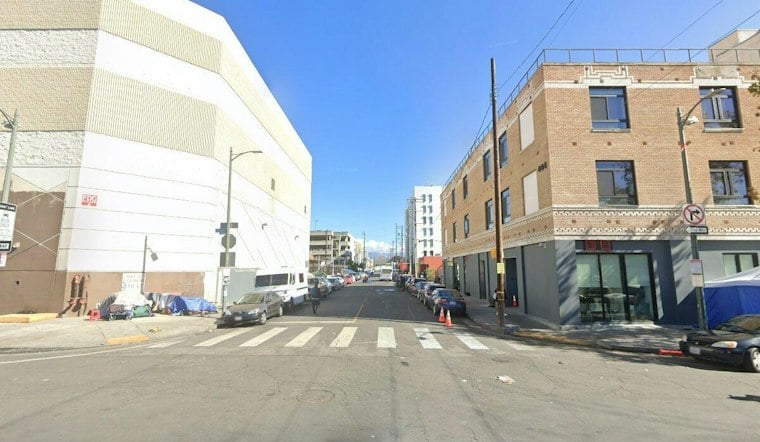
Los Angeles County has not handed out clean syringes or pipes at its Skid Row Care Campus since August, and more than two months later, officials still have not said when that will change. The pause comes as county health investigators track a growing HIV cluster tied to the neighborhood, with 15 people now linked to it as of Nov. 1, 11 of them women.
County spokesperson Thomas Lynch said the pause was intended to be temporary and began in part because of concerns that community stakeholders and local businesses raised to county leadership, according to LAist. The campus still distributes naloxone, wound-care supplies and safe-sex supplies, Lynch said, and staff are referring people who need clean syringes to programs elsewhere in the county. California lists 24 authorized syringe-services programs in Los Angeles County, with two based in or next to Skid Row.
The Los Angeles County Department of Public Health is investigating both substance use and sexual transmission as possible factors behind the HIV cluster, though no cause has been determined. The agency identified the cluster among people living in and around Skid Row in August, the same month the syringe and pipe pause began.
A Provider Switch Complicates the Timeline
The pause has unfolded alongside a major staffing shakeup at the 36,000-square-foot campus, which opened in May 2025 at 422 S. Crocker St. and offers showers, laundry, medical care and housing referrals in addition to harm-reduction supplies. Homeless Health Care Los Angeles, which had run the campus's harm-reduction and overdose-response programs since the 1980s and marked its 40th anniversary this year, notified California in September 2026 that it would permanently lay off 134 workers — including 117 at the Skid Row Care Campus — effective Tuesday, Nov. 3, 2026.
The county is bringing in nonprofits St. Joseph Center and LA Community Health Project to take over services, while Social Model Recovery Systems expands its existing presence on site and Wesley Health Centers continues providing healthcare there. Those incoming providers have already hired more than 80 people, nearly 90% of whom previously worked for Homeless Health Care Los Angeles, per the same LAist report. In a late-September Instagram post, Homeless Health Care Los Angeles said its Skid Row jobs program no longer exists, writing that it had offered income and pathways forward for people shut out of opportunity.
Officials Call It a Strengthening Effort
County departments have described the provider changes as part of an effort to strengthen operations, and County Supervisor Hilda Solis — who represents the Skid Row area and authored the 2022 motion that created the Skid Row Action Plan — said the decision to switch providers was made jointly by the county's health-services and homelessness departments. Solis said some services were paused to allow the incoming provider to onboard staff and establish operations, and that her commitment to the Skid Row Action Plan remains unchanged. The campus costs about $26 million a year to run, and its funding is secured through June 2027, though its budget for the following fiscal year had not been finalized.
USC researcher Ricky Bluthenthal called the pause in syringe distribution obviously a setback, telling LAist that reducing access to safe injection supplies during an active HIV outbreak seems particularly dangerous. He said harm-reduction programs provide social and material support along with consistent pathways to treatment for people using illicitly purchased drugs. The Los Angeles County Department of Health Services has said syringe-service recipients are three times more likely to reduce or stop drug use and five times more likely to enter substance-use treatment.
Residents and Advocates Split Over the Change
Not everyone in Skid Row wants the needle and pipe handouts to return. Don Garza, who has lived in the neighborhood for 27 years, said the handouts are not helping anyone and are accelerating overdose deaths, telling LAist that the area still needs overdose-prevention tools and naloxone — but not pipes and needles. A group called the Skid Row Coalition for Community Safety has also launched a campaign criticizing the county's handling of the campus.
The debate is playing out against a backdrop of federal pressure on harm-reduction funding nationally. President Trump signed an executive order in July 2025 directing agencies to stop funding so-called harm-reduction efforts, and federal health officials barred grantees from using federal money for pipes and drug-testing strips this past April; federal funding has long been barred for syringes altogether. The Skid Row Care Campus is funded through opioid settlement money, Medi-Cal managed-care plans, and state and county dollars rather than federal grants, and county officials have not said whether federal policy influenced their decision to pause distribution.
Harm-reduction efforts in Los Angeles date back more than three decades to the city's response to the HIV/AIDS epidemic, and the county declared a local public-health emergency in 2000 to authorize syringe exchange under a new state law at the time. California's Health and Safety Code includes Section 121349.1, concerning syringe exchange programs, according to California Legislative Information.
The pause applies only to the Skid Row Care Campus itself, not to the county's broader syringe-services network, and comes amid wider shifts in how people are using drugs locally. A study of people who inject drugs in Los Angeles and Denver during 2021 and 2022 found daily fentanyl smoking was higher in later periods, according to ScienceDirect.





