

























































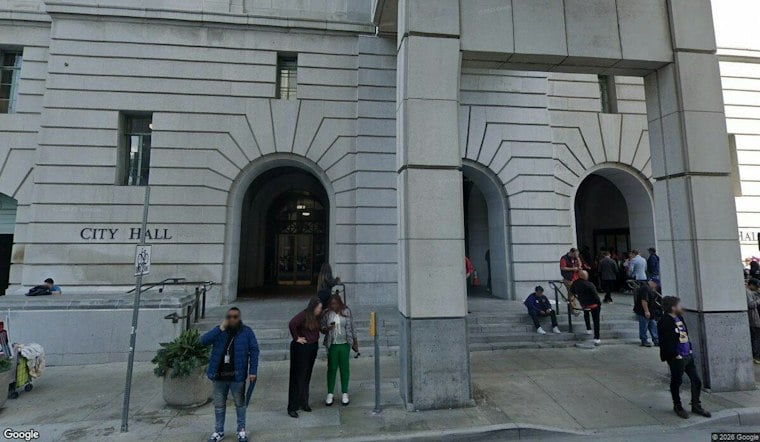
LA28 has named Phillips 66 as the official fuel partner for the 2028 Olympic and Paralympic Games in Los Angeles, and the backlash from inside City Hall was immediate. The Texas-based oil company will supply gasoline, renewable diesel and propane for vehicles and equipment during the Games, as well as fuel for the torch relay leading up to the opening ceremony, according to LA28.
The announcement, made earlier this month, has already drawn sharp criticism from climate activists and at least two members of the Los Angeles City Council, as LAist first reported. Councilmember Hugo Soto-Martinez called the sponsorship disgusting. Separately, Councilmember Katy Yaroslavsky said LA28 seems to have lost sight of what Los Angeles stands for and urged the organization to cancel the deal and try again. LAist reached out to all 15 Los Angeles City Council members for comment and received statements from three of them.
Not every council member is on board with the criticism. Councilmember Tim McOsker, who represents Wilmington, supported the sponsorship, pointing to Los Angeles's role as the Games' financial backstop if LA28 loses money. McOsker said rejecting the sponsorship would be fiscally irresponsible and would put more financial risk on Los Angeles taxpayers, and he noted the city council has no direct influence over LA28's sponsorship decisions.
A Company With Deep Roots in the South Bay
McOsker also said Phillips 66 has been a good partner to the community, including by accepting responsibility for cleanup of its former refinery site. Phillips 66 operated refineries in Carson and Wilmington for more than 100 years before recently closing them, and the company has been one of the region's major polluters, according to South Coast Air Quality Management District data cited in 2022. South Bay community members have reported environmental and health impacts, including asthma and cancer, from living near the refineries.
Phillips 66 announced in October 2024 that it would close the twin refinery complex, which produced about 8% of California's gasoline and employed roughly 600 workers and 300 contractors, according to the Los Angeles Times. At the time, the company said it was not pulling out of the California market and pointed to its network of 76-branded gas stations, adding it planned to replace the refineries' output partly with renewable diesel and sustainable aviation fuel from its San Francisco Bay Area refinery.
The refinery processed its final barrel of crude oil in late 2025; LAist separately reported on a redevelopment proposal for the Wilmington site and a later remediation framework. The South Bay complex is a 650-acre site, with its Wilmington and Carson facilities five miles apart and linked by pipeline, according to the same report. A review by Inside Climate News found that Phillips 66's estimated $205 million in closure expenditures appeared to cover infrastructure removal and asbestos rather than long-term soil and groundwater remediation, and the Inside Climate News investigation noted the regional water board had no estimate for the cost or timeline of full remediation as of the end of 2024. Phillips 66 has said it will remain responsible under state and federal law for any contamination stemming from the refinery's operations.
Activists Invoke a Past Dodgers Fight
Phillips 66 is also a partner, alongside Kinder Morgan and HF Sinclair, on the proposed Western Gateway pipeline project, which would carry fossil fuels to California from St. Louis. Environmental campaigner Zan Dubin, who led a multiyear effort to get the Dodgers to drop a corporate sponsorship deal with Phillips 66, has started a petition asking LA28 to end its own agreement with the company. Dubin said an oil company giant cannot be made appealing simply by associating it with a beloved sporting event.
Author and activist Bill McKibben went further, saying Phillips 66 should be rebranded the official carbon dioxide sponsor of the LA28 Games. LA28 spokesperson Jacie Prieto Lopez defended the partnership, saying the organization remains committed to its sustainability commitments and that fuel is required to transport athletes, fans and officials, power essential equipment, and support the torch relays. Phillips 66 did not respond to LAist's request for comment before publication.
LA28 has touted a sustainability plan that promotes a transit-first Games with no new permanent venues, along with a goal of reducing its carbon footprint by 10% compared with the 2024 Paris Games. The city of Los Angeles separately has a goal of running on 100% clean energy by 2035. Olympic and Paralympic events will still include corporate branding from Phillips 66, and the Games will unfold during Los Angeles's summer heat in 2028.
Money Looms Large in the Debate
LA28's overall budget sits at $7.2 billion, and the organization relies on domestic sponsorships for $2.6 billion of that total — a figure McOsker's comments underscore when he frames the fuel deal as a financial necessity rather than a choice. Opposition to the fossil-fuel partnership could grow as the Games draw nearer, LAist reported.
The dispute echoes a similar fight that took place ahead of the 2026 Winter Olympics in Italy. Greenpeace has criticized organizers of the Milan-Cortina Winter Games over a sponsorship deal with the Italian oil company Eni, calling on organizers to end the partnership, according to Reuters. Eni is one of the premium domestic sponsors of those Games, and Greenpeace has argued that polluters shouldn't get a podium at the Olympics, urging the International Olympic Committee to drop oil and gas sponsorships and citing the Olympic movement's ban on tobacco advertising.
Norwegian skier Nikolai Schirmer has separately gathered signatures asking the IOC to drop fossil fuel companies from its sponsor roster, according to Greenpeace International, which cited a 2024 IOC-commissioned study projecting that by the 2080s, more than half of locations suitable for hosting the Winter Olympics today will no longer be viable under current conditions. For Los Angeles, the question of whether an oil company's logo belongs on the 2028 Games now sits squarely between City Hall's competing instincts: guard the budget, or guard the city's image.





