

























































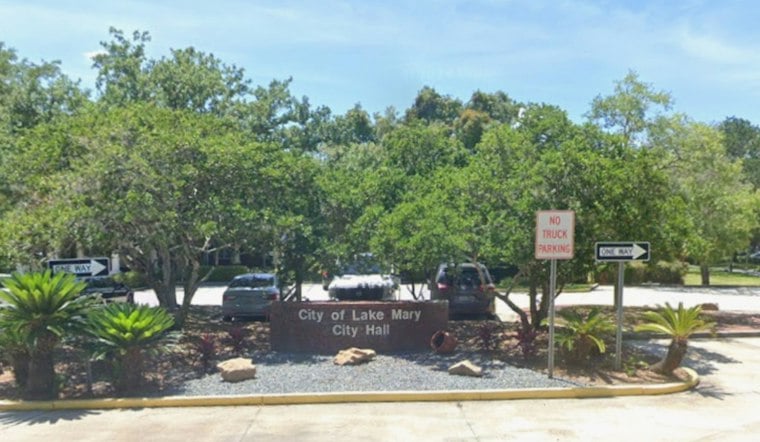
Lake Mary commissioners face a decision with a hard deadline attached: whether to stay inside a set of pending legal settlements over PFAS contamination in drinking water systems, or opt out and go it alone. City staff and the city attorney have already made their preference known, telling commissioners that sticking with the settlements is the better move, warning that walking away could mean delays and real money lost.
Lake Mary faces a Dec. 22 deadline to elect whether to remain in the settlements or withdraw, according to clickorlando.com. City staff and the city attorney believe participating is in Lake Mary's best interest, citing anticipated delays and substantial costs tied to opting out, the outlet reports. The city was notified of proposed settlements involving four additional companies among 29 total defendants named in the broader litigation: Amerex Corporation, Archroma U.S. Inc., Carrier Global Corporation and Nation Ford Chemical Company.
Those four names aren't abstract to municipalities that have already gone through this process. The settlement website for the Aqueous Film-Forming Foam litigation, known as pfaswatersettlement.com, says the court has granted final approval to settlements with Carrier, Amerex, Archroma and Nation Ford. The site states the settlements are designed to resolve claims tied to PFAS contamination in public water systems' drinking water, the exact category of claim Lake Mary has been asked to weigh.
What Counts as PFAS and Why It's in the Courts
PFAS, or per- and polyfluoroalkyl substances, are persistent synthetic compounds found in everything from non-stick cookware to firefighting foam, per the same report. Aqueous film-forming foam itself is used to extinguish liquid fuel fires, and plaintiffs in the broader wave of lawsuits generally allege that AFFF containing PFAS contaminated water supplies near military bases, airports and fire training facilities. PFAS cases have been centralized in multidistrict litigation before the U.S. District Court in South Carolina.
Regulatory pressure has been building alongside the lawsuits. In 2024, the EPA adopted the first national primary drinking water standards establishing maximum contaminant level goals for certain PFAS compounds, part of a broader rulemaking effort the agency initiated to set enforceable limits. The federal government's own Fifth Unregulated Contaminant Monitoring Rule data finder notes that the final UCMR 5 dataset was released in August 2026; maximum contaminant levels for five individual PFAS compounds and a PFAS Hazard Index limit were established under the April 2024 rule, which the EPA describes as legally enforceable.
Lake Mary's Own Water Supply and Testing History
Lake Mary's drinking water comes from six groundwater wells drawing from the upper Floridan Aquifer, according to the City of Lake Mary's 2025 Water Quality Report. The city treats that water with an ultraviolet light advanced oxidation process using hydrogen peroxide, along with granulated activated carbon and chlorination, and the report states that the city's treated drinking water meets all federal and state requirements.
The city also took part in the EPA's fifth Unregulated Contaminant Monitoring Rule testing round, sampling for 29 PFAS compounds and lithium during the third quarter of 2023 and second quarter of 2024, per the city's UCMR Public Notification. That notification states that, at the time it was written, no health standards such as maximum contaminant levels had been established for the unregulated contaminants tested.
A Second Contaminant Already Prompted a New Treatment Plant
PFAS isn't the first contamination concern to touch Lake Mary's water supply. The Orlando Sentinel reported in 2023 on higher levels of 1,4-dioxane in water across Seminole County, Lake Mary and Sanford, a chemical that has been linked to a former Siemens manufacturing site on Rinehart Road, clickorlando.com reports. The City of Lake Mary has since built a new water treatment plant that can better handle the 1,4-dioxane levels in its water, and nearby Sanford explored its own funding agreement to build a treatment plant using a similar ultraviolet-light advanced oxidation process to remove contaminants before distribution, according to the same report.
That earlier contamination history traces back further still. WUSF reported that Seminole County first identified 1,4-dioxane at three county water treatment plants during EPA-mandated sampling back in 2013, and reported in 2023 that the county would also be testing for PFAS.
How Other Cities Have Handled the Same Choice
Lake Mary isn't the only municipality weighing whether settlement money is worth the tradeoffs. In South Carolina, the Cayce City Council approved a class-action settlement with the same four companies named in Lake Mary's notice, Amerex, Archroma, Carrier and Nation Ford, over PFAS pollution affecting local water systems, according to thestate.com. Cayce Mayor Elise Partin said it wasn't yet clear how much money the city would receive from those four companies, and that Cayce was still pursuing payouts from other manufacturers.
Not every city has taken the settlement offered to it. Columbia, South Carolina, declined a settlement worth up to $12 million from a related 2024 federal court case in Charleston, where a judge approved a deal that could ultimately send billions of dollars from 3M and DuPont to roughly 11,000 local water systems nationwide, the outlet reported. Columbia said the amount wouldn't cover the cost of upgrading its water facilities and complying with new federal regulations. A 2023 study by the South Carolina Department of Health and Environmental Control also found excess PFAS levels in water sources serving municipalities drawing from the Broad and Saluda rivers, along with 50 other affected water systems statewide, underscoring how widespread the underlying contamination concerns are across the region.





