

























































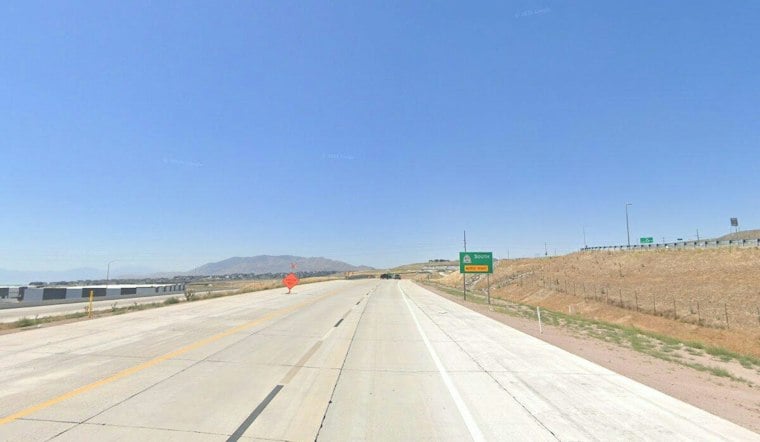
Nathan Curtis says he got about an hour of sleep, on and off, after the first overnight shift of construction work started up near his home at 4100 West and 2100 North in Lehi. By the third night, he says, he was running on empty — tired, frustrated, and increasingly convinced that nobody warned him this was coming.
Construction crews working on the median of 2100 North started the overnight shifts about three weeks before publication, beginning around 10:30 p.m., according to Lehi Free Press. Curtis says daytime road work is bearable, but the nighttime noise is a different story entirely — and he didn't need to dig far to find out why it's legal. Curtis says he obtained project documents through a public records request and learned that UDOT told him crews had a city permit allowing work around the clock, with noise capped at 105 decibels.
The Permit Behind the Noise
That permit is real, and it's broad. Lehi City granted UDOT and its subcontractors a noise-variance permit for night work on June 7, 2026, per the permit documents cited in the Lehi Free Press report. The variance authorizes nighttime work from 1 p.m. to 7 a.m. along the 2100 North corridor between Mountain View Corridor and I-15, and it covers a full year, from March 1, 2026, through March 1, 2027. The noise ceiling it sets, 105 decibels, is the same number Curtis says UDOT quoted him directly.
To put that number in context, Curtis says the documents he gathered put typical road noise at 70 to 75 decibels, rock concerts at 105 to 110 decibels, and a jet taking off at 120 decibels. By his own account, he said the freeway itself would push ambient noise in his area from roughly 63 decibels to more than 70 decibels once it's running. Curtis argues the crews don't need to work overnight for safety reasons tied to daytime traffic, and he's floated a potential fix: requiring broadband backup alarms instead of the sharper tonal alarms when night construction can't be avoided.
Curtis Takes His Case to the City Council
Curtis brought the issue before the Lehi City Council at its Nov. 10 meeting, where members heard his concerns directly. Afterward, council members Freeman and Stallings reached out to him, according to the Lehi Free Press account. Curtis says he wants the city and UDOT to explore building a physical barrier between the homes along the corridor and 2100 North itself.
That request echoes a separate, long-running fight in Lehi over highway noise. One resident told KUTV he had spent about two and a half years lobbying local and state leaders, as well as UDOT, for a noise wall near I-15 and 2100 North, saying truck and motorcycle noise near his yard gets especially loud during rush hour. UDOT's John Gleason told the station an earlier study determined the project did not meet requirements for a noise wall, though the agency said it would run a new analysis after changes to the original project concept. Separately, UDOT received a noise study on the broader project in July 2025 that found barriers between the freeway and homes would have minimal effect and did not support installing them.
A Noise Ordinance Still in Draft Form
Lehi's frustration with construction noise isn't limited to one road. In the Gateway subdivision, residents told KUTV they were hearing loud noises all day and through the night from a nearby company, prompting the city to consider revising its noise ordinance — though the station reported the proposed rewrite was still only a draft that the council was workshopping. Councilmember Michelle Stallings described the existing ordinance as cumbersome, telling the station it's difficult to understand and enforce.
Overnight construction noise has disrupted sleep elsewhere in Lehi, too. Residents near a Jordan River Trail detour reported losing sleep when paving was scheduled from 10 p.m. to 5 a.m. on a Monday and Tuesday, according to KUTV. A Utah statute excerpt reviewed in connection with this reporting states that construction on a state highway project or public transit facility must secure required noise permits from the local jurisdictional authority to work at night, though the excerpt provided does not spell out further requirements or address whether any particular permit complies.
A Multi-Year Project Still Years From Done
The 2100 North project is designed as a 2.8-mile east-west connection linking Mountain View Corridor to I-15 without stoplights. Construction on the $621 million project is expected to continue through late 2028, according to a construction-industry report. For residents like Curtis, that timeline means the question of whether nighttime work, and the noise it brings, gets reined in could shape years of sleepless nights to come.





