

























































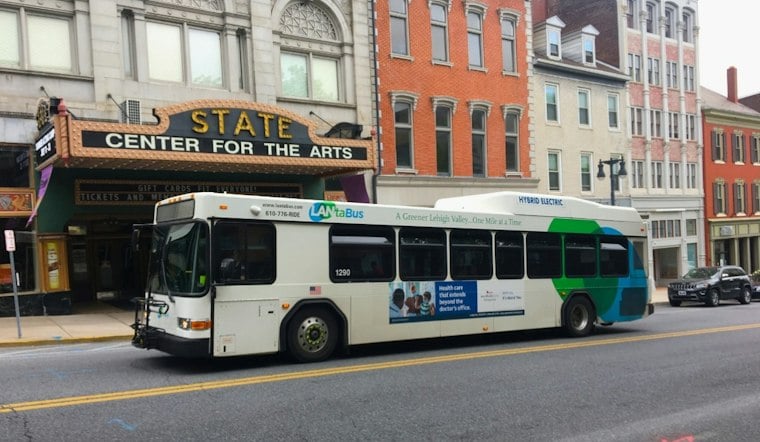
Bradley Snyder rides LANTA buses to get to work, to go shopping, and to visit his daughter — the kind of daily reliance that has made him watch closely as Pennsylvania's public transit agencies absorbed cut after cut over the past several years. Now, with Democrats holding control of state government following the recent elections, riders and advocates across the Lehigh Valley are asking whether Harrisburg will finally deliver the long-term funding fix transit agencies have needed since the state's last major transportation funding overhaul in 2013.
Governor Josh Shapiro said this past week that public transit funding is a priority, declaring “We will fund mass transit,” according to mcall.com. The statement came after Democrats secured a 26-24 majority in the state Senate and at least 111 seats in the 203-seat House, giving the party control of both legislative chambers and the governor's office. Shapiro has said he can guarantee Democrats will fund mass transit, though he has not announced a finalized funding plan.
LANTA's Years Of Cuts Weigh On Riders
LANTA carries over 12,000 people a day on bus trips, service that commuters like Snyder depend on for work schedules that can start as early as 5 a.m. and run until 11 p.m. or midnight. Despite that demand, the agency has cut service three times in the last 18 months and raised fares over the same stretch — part of a broader pattern in which, according to the same mcall.com report, LANTA has reduced routes by 7% and raised fares, including a 50-cent increase on single rides. Lehigh Valley riders are far from alone: the report notes that LANTA carries more than 5.6 million public-transit rides annually across the region, with about 4 million of those on fixed bus routes.
Pennsylvania transit agencies, including LANTA, have leaned on reserve funds, money flexed from other places, and remaining COVID relief dollars to stay afloat as state funding has lagged. Advocates say that patchwork approach cannot last, and they argue that reliable, dedicated funding could help maintain a consistent level of service while expanding routes to meet growing community needs. Local advocates say such funding could also address service gaps that persist across the Lehigh Valley.
A Push For A Decade-Long Fix
Connor Descheemaker, who campaigns for Transit For All PA!, called public transportation funding an urgent priority and said Pennsylvania needs a comprehensive funding solution lasting 10 years or more rather than another short-term patch. The group's legislative package seeks dedicated long-term transit funding across all 67 counties and is backed by more than 40 co-sponsors in the House and Senate, per the mcall.com report. Transit advocates say the next step now is ensuring Shapiro's commitment translates into lasting transit support rather than another round of stopgap measures.
The urgency traces back to the expiration of Act 89, the 2013 law that funneled Pennsylvania Turnpike toll revenue into transit, raising roughly $450 million a year through 2022, according to the Inquirer. Sources differ on the exact timing of that funding's end — a Transit For All PA co-convenor told state lawmakers it ended in 2022, while mcall.com reported the law expired in 2023. Either way, agencies have been scrambling to fill the gap ever since, and Descheemaker has said every single transit agency in Pennsylvania has lost service since 2020, according to wesanews.org.
Budget Proposal Still Years From Taking Effect
Shapiro's own budget proposal included a plan to begin transferring 1.75% of total sales and use tax revenues into the Public Transportation Trust Fund starting July 1, 2027, an amount estimated at $319.6 million, according to a budget overview from pennpolicy.org. That same analysis noted the proposal would not make any immediate structural change to how transit is funded in the current fiscal year, meaning agencies like LANTA have had to manage without a near-term fix. The Inquirer's reporting on the proposal describes it similarly, noting transit agencies would see their share of sales tax revenue rise from 4.4% to 6.1%, also projected at roughly $319 million annually once it begins in mid-2027.
Transit advocates have already voiced frustration that this year's budget deal fell short of resolving the underlying instability. Wesanews.org reported advocates saying this year's deal doesn't address future stability for the agencies that depend on it. The mcall.com report added that while legislators again failed to act on a permanent fix, organizers used the fight to build support they hope will produce results in 2027.
Other Agencies Face Even Steeper Cuts
LANTA's struggles mirror a statewide pattern. SEPTA's FY 2026 budget called for cutting service by 45% and raising fares by 21.5%, according to the pennpolicy.org budget overview — a system that more than 700,000 people rely on daily, per penncapital-star.com. Pittsburgh Regional Transit, meanwhile, reported a projected $100 million deficit for FY 2026 and warned it could be forced to reduce service, eliminate routes, raise fares, or delay and cancel capital projects without sustainable funding.
LANTA caught something of a reprieve earlier this year when PennDOT granted it $13 million to stabilize service over two years, according to the Inquirer, allowing the agency to make smaller cuts than the 20% reduction it had originally budgeted. Still, a LANTA spokesperson warned that without additional funding, the agency would likely be forced to make significant additional service reductions, a statement reported by mcall.com. For riders like Snyder, who structure daily routines around LANTA's schedule, that warning is a reminder that the state's long-running funding fight is not yet resolved — even as the political landscape in Harrisburg has shifted.





