

























































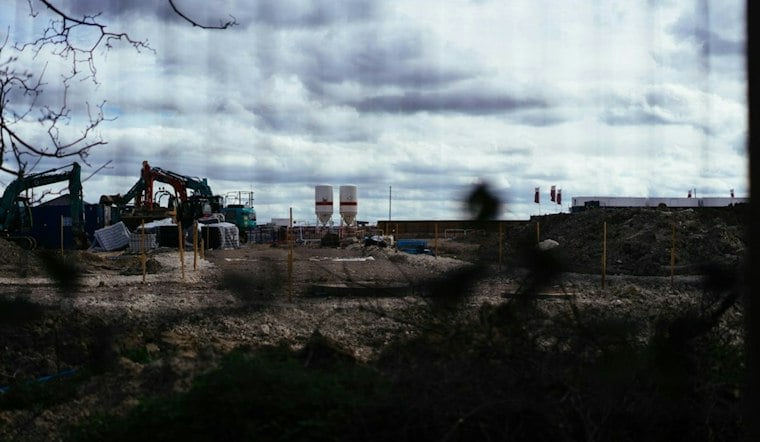
Lexington's city council has signed off on a batch of land moves meant to turn the idle footprint around its shuttered Tyson Foods plant into something new, approving the subdivision and annexation of roughly 419 acres the city recently bought from the meatpacker. The former production facility itself, however, stays outside city limits for now, even as the farmland and infrastructure around it start down the path toward industrial redevelopment.
Council Splits Acreage Into Three Tracts
The council approved creation of what's being called the South Industrial First Addition, along with annexation of the roughly 419 acres, according to Rural Radio. The land, located east and southeast of the former plant, will be split into three tracts, a move the city says is meant to simplify legal descriptions and get the property ready for industrial marketing and development down the road. As Central Nebraska Today reported, the acquired property includes both farmland near the plant and the wastewater treatment facility that once served it.
Notably, the annexation brings the newly acquired acreage into Lexington's corporate limits while leaving the Tyson production facility itself outside the city for now, the station's report notes. Officials have indicated that annexing the former plant itself could follow within the next six months, though that timeline isn't locked in.
Blight Designation Opens Door to Redevelopment Tools
Alongside the subdivision work, the council formally declared the area blighted and substandard, a legal designation under Nebraska law that unlocks redevelopment financing options. Lexington hired Omaha-based planning firm Hanna:Keelan Associates to evaluate the property, and the firm flagged aging structures, vacant property, underutilized land and obsolete platting as indicators of blight and substandard conditions, per the same account. The firm said it did not conduct an on-site inspection, instead relying on county records, satellite imagery and information supplied by the city.
The two primary buildings on the site were built in 1974 and 1981. Rural Radio put their average age at nearly 49 years, exceeding the state's 40-year benchmark, while Central Nebraska Today listed the structures' average age as 48 years. Either way, the firm concluded adequate criteria existed to declare the area both blighted and substandard, and the Lexington Planning Commission had recommended the full package of actions to the council on November 4.
Zoning Map and Jurisdiction Changes Still Pending Final Vote
The council also approved, on first reading, an ordinance updating Lexington's official zoning map and its extraterritorial zoning jurisdiction boundaries to reflect the newly annexed land, according to the same report. City officials have said the blighted and substandard designation would preserve redevelopment tools, including Tax Increment Financing, that may be needed to attract investment and repurpose the former processing plant.
The push to prepare the site follows Tyson's November 2025 announcement that it would close the 5,000-head-per-day plant, a decision that cost roughly 3,000 people their jobs, according to DTN Progressive Farmer. The city also separately approved a purchase of Tyson-associated wastewater treatment assets, sewer lines, easements and related personal property, along with transfer of the wastewater plant's environmental permits, DTN reported. A related purchase described in DTN's November 12, 2026, report covered about 160 acres, including a drainage ditch area and part of a county road.
No Confirmed Buyer Yet, but Talks Continue
Nebraska Sen. Pete Ricketts said in September that his staff was working with Tyson officials and Lexington city leaders to identify a new employer for the site, potentially including a dairy processor, DTN reported. Lexington and Tyson have said both parties will continue to collaborate in identifying potential redevelopment pathways and end users for the processing plant, according to a separate Rural Radio report. No buyer or final redevelopment plan has been confirmed.
Other towns have navigated similar transitions after losing a Tyson plant. In Berlin, Maryland, the town bought a former Tyson chicken-processing site in February 2016 for $2.5 million and later received a $500,000 state grant in 2021 to demolish unsafe sections, according to WATTPoultry.com. Berlin sold a parcel of that site to developers Palmer and Sandy Gillis for $1.2 million in 2025, with Phase 1 plans calling for a professional office building and a retail building likely to become a restaurant, while the town retained about 85% of the original land for projects including a skate park and a new Public Works facility.





