

























































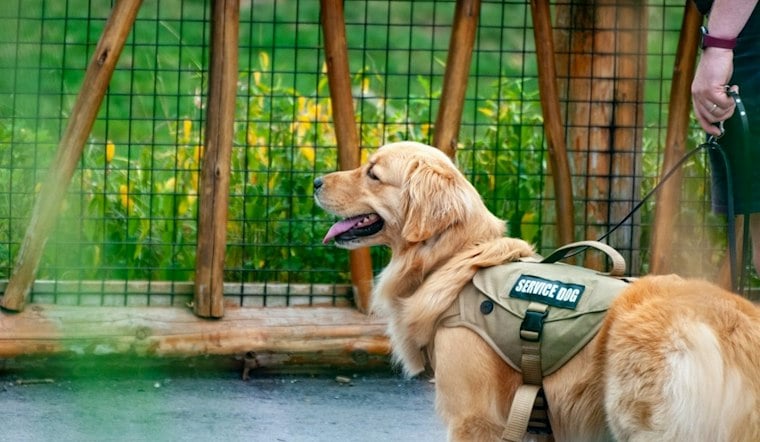
Four U.S. veterans walked out of Liberty Dogs' first graduation on Oct. 30 with service dogs of their own. Among them was Army veteran Sgt. Rich Earl, paired with Reagan, a two-year-old black Labrador retriever.
The ceremony was the Reno program's inaugural class, Nevada Business reported. Liberty Dogs says it opened the campus in summer 2026 and offers its programs to the veterans it serves at no cost. After matching, each team spent two weeks on campus learning to work together, with housing, meals and around-the-clock support included.
A Free Pairing, After a Long Raise
The no-cost promise sits on a volunteer pipeline that starts well before graduation. KUNR reported in July that puppy raisers commit to about 18 months of training, with weekly classes and structured routines at home. On its own site, Liberty Dogs says raisers generally keep puppies for 14 to 16 months before advanced training.
Either way, the organization says it covers the costs, food and veterinary care, and that no prior dog-training experience is required. In July, KUNR described a 27-acre South Reno campus still under construction and expected to open in September. The later account is simpler: the campus opened in summer, and the first class has already graduated.
What the Studies Measure
Research cited around the program is encouraging for veterans and narrower than a miracle claim. A Purdue University study, covered by Military Times, used self-reported data from 141 veterans who had received or applied for a dog through K9s for Warriors. Veterans with service dogs reported 22 percent higher life satisfaction than those still waiting, along with fewer PTSD symptoms and lower levels of depression.
Physical health did not differ between the groups. Veterans with dogs did report fewer missed workdays or on-the-job impairments tied to health issues. KUNR also summarized a University of Arizona study that found participants with service dogs had 66 percent lower odds of meeting PTSD diagnostic criteria after three months.
The Rest of the House
The benefit does not automatically travel to everyone under the same roof. A 2022 study in Taylor & Francis surveyed 88 U.S. military veteran spouses at baseline and again three months later. Forty-eight were in homes where the veteran received a service dog shortly after the first survey; 40 were in a waitlist group.
Spouses living with the dogs reported lower caregiver satisfaction and higher caregiver burden than spouses still waiting, and also greater participation in life activities. The researchers' caution was direct: spouses and children may not experience the same benefits as veterans, and clinicians should prepare families for bringing a service dog home.
That household wrinkle lands against a grim backdrop, not a local cure-all. A Department of Veterans Affairs report counted 6,488 veteran suicides in 2024, an average of 17.7 a day. A Nevada Department of Health and Human Services report says the state's veteran suicide rate per 100,000 varied from 2020 to 2024, peaking at 65.8.
Who Raises the Next One
Earl and Reagan's two weeks on campus were the last step, not the whole job. The dog had already been raised, fed and taken to the vet on Liberty Dogs' tab before the match. The organization is still looking for puppy raisers, and its pitch is unusually plain: no training résumé required, and the bills are covered.
Four teams are home. The next class still depends on someone keeping a puppy for well over a year.





