

























































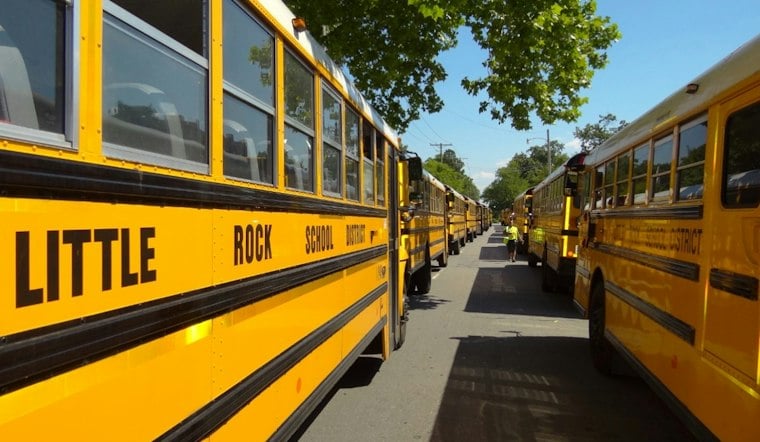
The Little Rock School Board voted to shut down Western Hills, McDermott and Mabelvale elementary schools after the current 2026-27 school year, a decision district officials say is necessary to stop years of bleeding money and students. The closures come as the district's operating fund balance has collapsed from more than $30 million in 2022-23 to just $11 million in 2025-26, leaving little room for error in a system that has already shed thousands of students over the past decade.
According to the Arkansas Democrat-Gazette, the board's vote split five in favor and two against, with board member Selandria Jackson and another member representing much of southwest Little Rock casting the dissenting votes. Jackson, whose district includes some of the schools most affected by years of closures, put it bluntly: “It's always the same areas that're hardest-hit.” District Superintendent Jermall Wright has said closures will stop once enrollment stabilizes, but for now the math is unforgiving — he told the board, “It is just hard to continue operating when you're losing such huge sources of revenue.”
A Decade of Shrinking Schools and Shrinking Budgets
Little Rock has now closed at least 10 traditional schools over the last decade, and the newspaper's reporting found that at least six of those closed campuses sat south of Interstate 630. Brady Elementary itself closed just last school year. The district's operating budget has been squeezed from multiple directions: state enrollment counts showed the district lost nearly 550 students between the prior year and the current year, continuing a decline that saw the district's 2025-26 enrollment of 18,964 students mark an 18% drop from the more than 23,000 enrolled in 2015-16, per the same outlet's reporting.
District officials have said Little Rock needs to cut roughly $4 million to $7 million in operating expenses quickly just to maintain long-term financial stability, warning that without closures the district could struggle to respond to emergencies, make payroll, or avoid a state takeover triggered by a fiscal distress designation. Eugene Krupitsky, cited in the same coverage, said falling birth rates make a return to last decade's enrollment numbers unlikely, and a district task force is now looking at increasing revenue and making further administrative cuts rather than relying on closures alone.
Where Students Will Go Next
Under the reassignment plan detailed in the LRSD Forward Parent Guide, assignment letters naming each child's new school were scheduled to arrive on October 26, 2026, with assignments based on home address. Western Hills students are slated for Bale Elementary, while students in the school's autism program will move to Williams Magnet Elementary. Families who prefer a different school can request a Transfer, No Transportation assignment, though the guide makes clear that those students will not receive district busing.
Western Hills was the district's lowest-enrolled traditional school and appeared in every closure option the LRSD Forward plan considered, according to the district's own materials. One of those families belongs to Rakya Deloch, who has four children. Deloch said Western Hills staff helped her family find a counselor for Logan, who has anxiety and a speech impediment.
Race and Wealth Gaps in Past Closures
Reporting from the Democrat-Gazette found that students of color and low-income students have been disproportionately represented among the traditional schools the district closed over the past decade — though that reporting did not establish the demographic makeup of Western Hills, McDermott or Mabelvale specifically. Two earlier examples illustrate the pattern elsewhere in the system: Meadowcliff Elementary, which closed after the 2021-22 school year, was 77% Black, 20% Hispanic and 3% white in its final year, compared with districtwide figures of 60% Black, 16% Hispanic and 20% white. Franklin Elementary, closed after the 2016-17 school year, was 90% Black and 92% low-income in its last year, against districtwide rates of 64% Black and 59% low-income at the time.
Board member Anika Whitfield invoked that history directly during the closure debate, saying, “I'm asking us not to repeat history.” Wright has said the district's highest-need schools have in recent years received lower student-teacher ratios and additional support staff even as they faced financial challenges that fall harder on them than on other campuses.
School Choice Pulls Students Elsewhere
Part of the enrollment drain traces to competition from charter and private options. Educational Freedom Accounts, a program established under Gov. Sarah Huckabee Sanders' 2023 LEARNS Act, provide taxpayer funds — just over $7,200 per student this year — for private school or homeschool expenses. The district, by contrast, receives more than $8,000 per student in state funding this year, and officials have said per-student education costs exceed $13,000 at some particularly low-enrollment schools and $14,000 at others, including Western Hills.
The district is betting its new $150 million West High School, set to open next fall and funded in part through a 2021 voter-approved millage extension, will help reverse the trend by drawing back students who left for other options and increasing both enrollment and funding. The board also considered closing Mabelvale Middle School but rejected that option because it would have required rezoning across the entire district — one of several alternatives weighed among a slate of seven schools, including Watson and Williams elementaries and Mann Middle School, that were floated for possible closure before the board settled on the final three.





