

























































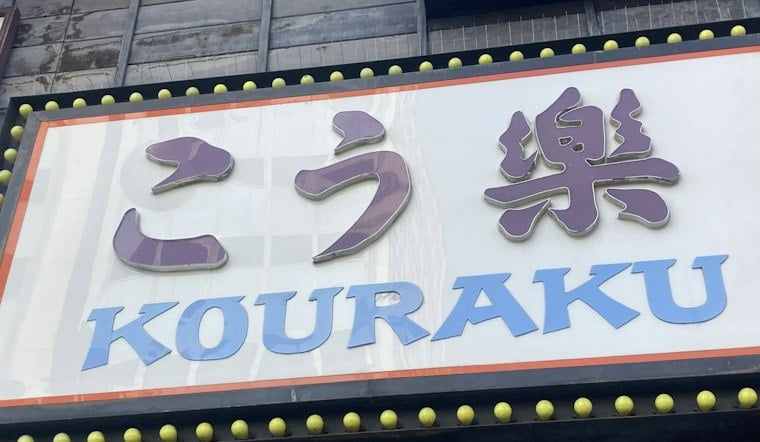
Kouraku, the Little Tokyo restaurant long known for dishing out Japanese-style Chinese comfort food, is marking a full half-century in business this weekend with a free street festival that shuts down a stretch of Second Street. The Kouraku Matsuri runs from 11 a.m. to 4 p.m. Sunday outside the restaurant at 314 E. Second St., according to the seed facts behind this report.
The festival takes over a portion of Second Street between San Pedro Street and Japanese Village Plaza, with carnival games, food samples, original Kouraku merchandise and activities for all ages planned, per organizers cited by MyNewsLA.com. Organizers say the lineup also includes a timed gyoza-folding challenge, along with a beverage experience reserved for guests 21 and older. According to Rafu Shimpo, the celebration will also feature food tastings and a variety of performances, with Second Street closed to traffic for the occasion and admission free.
Restaurant owner Mamoru Tokuda framed the party as a thank-you to the people who have kept the restaurant going. “We are very happy to celebrate 50 years of Kouraku with everyone,” Tokuda said, according to the seed facts, adding that he hopes people will enjoy the celebration with their families and friends. In comments to the same outlet, he described the broader motivation behind the event: “We are holding the Kouraku Festival to express our gratitude — a big ‘thank you’ — to the customers and the local community who have supported Kouraku for the past 50 years.”
From a Corner Storefront to a Little Tokyo Institution
Kouraku's roots trace back to 1976, when it opened at 240 E. Second St. in Little Tokyo, per the seed facts behind this report. The restaurant moved to its current address at 314 E. Second St. in 1986, the same year the late Hiroshi Yamauchi took over its operation, according to the Los Angeles Conservancy. Tokuda took ownership in 2023, after serving as a support system and restaurant consultant to the previous owners and their family during the COVID-19 pandemic, per organizers.
Writer Koji Steven Sakai, who has chronicled the restaurant's recent history, noted that Tokuda stepped in to take over the reins in January 2023. The menu that has carried Kouraku through five decades blends Chinese-influenced Japanese comfort food — ramen, fried rice, curry and handmade gyoza — with other Japanese favorites, a combination Rafu Shimpo describes as including tempura and katsudon alongside the restaurant's signature noodle dishes.
A City Honor and a Contested Title
In January 2025, the city installed a monumental marker at Kouraku recognizing it as America's oldest still-operating ramen shop, per organizers, with Rafu Shimpo reporting that the City of Los Angeles recognized the restaurant as the oldest ramen restaurant operating in the U.S. and installed a commemorative plaque on a lamppost out front. A 2010 Discover Nikkei article had already called Koraku the first Japanese ramen noodle restaurant in the United States, and noted that because the restaurant stayed open until 3 a.m., it became a popular spot for late-night dining.
Not everyone agrees on who served the first bowl of ramen in the neighborhood, though. Bill Watanabe told Rafu Shimpo that the first ramen shop in Little Tokyo was actually Sapporo Ramen, located on First Street, which is no longer in existence. Little Tokyo today counts nearly 100 food and beverage establishments, ranging from boba shops to fine dining, according to the same Rafu Shimpo report — a dense restaurant scene in which Kouraku has endured through multiple ownership changes and a pandemic that reshaped the neighborhood's dining landscape.
Anniversary Campaign Extends Beyond the Festival
Sunday's festival is only the headline event in a broader anniversary push that runs through Dec. 8, according to the seed facts. The campaign includes commemorative menus, a drawing contest and digital storytelling about the restaurant's history, giving longtime customers several more weeks to mark the milestone even after the street festival wraps up.





